
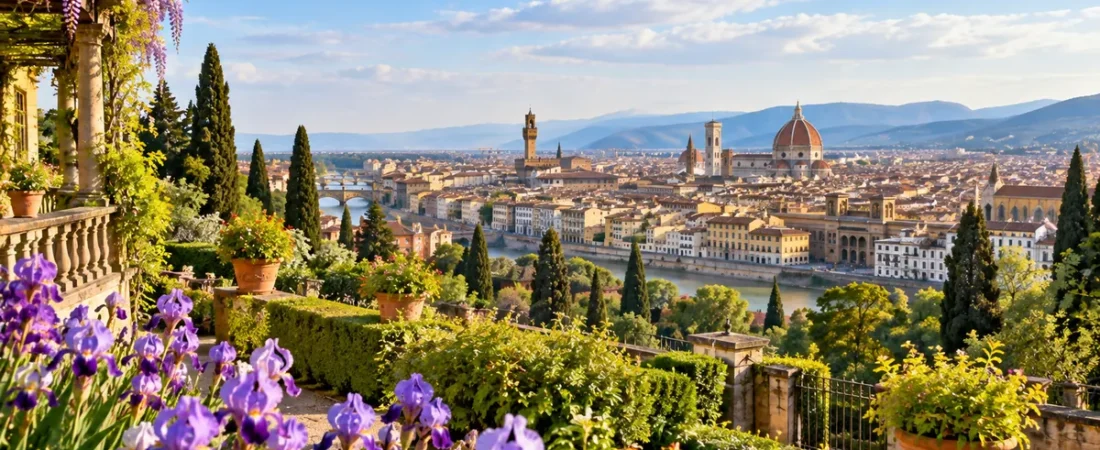
The best time to visit Florence for most travellers is during spring, particularly April and May, or early autumn, especially September and October. These periods usually provide a comfortable balance of pleasant temperatures, long sightseeing days and conditions well suited to exploring Florence on foot. However, they are popular months, so you should not expect an empty city.
Florence is a year-round destination, and every season offers advantages. Summer provides long days and a busy calendar of events but can be hot and crowded. Winter is cooler and quieter and can be excellent for museum-focused trips. Your ideal month ultimately depends on whether weather, smaller crowds, seasonal atmosphere or accommodation prices matter most.
If this is your first trip, start with our Florence travel guide for the city’s essential attractions, transport and practical information.
Price note: All prices in this article are approximate and were checked at the time of publication. Prices may change.
Best Time to Visit Florence at a Glance
For most first-time visitors, April, May, September and October provide some of the most comfortable conditions for exploring Florence.
Choose spring for flowers, mild sightseeing weather and longer daylight hours.
Choose summer for long days, outdoor evenings and major local events, but prepare for heat and substantial visitor numbers.
Choose autumn for generally pleasant walking conditions and a classic Tuscan atmosphere.
Choose winter if museums, quieter streets and potentially better accommodation value matter more than warm weather.
There is no universally perfect month. Florence’s museums, churches and historic streets make it rewarding throughout the year.
Florence in Spring: March to May
Spring is one of the most appealing seasons to visit Florence.
Temperatures gradually rise, daylight increases and gardens begin to come alive.
March
March is a transitional month.
Cooler days are still possible, particularly early in the month, but conditions generally become increasingly suitable for walking.
Visitor numbers usually feel more manageable than during the busiest parts of late spring and summer.
Pack layers and a light waterproof jacket because spring weather can change quickly.
April
April is an excellent month for travellers who want mild conditions without summer heat.
Gardens and green spaces become increasingly attractive, making this a particularly good time for Boboli Gardens and Florence’s elevated viewpoints.
Easter can significantly change the atmosphere and crowd levels.
One of Florence’s most famous traditions, the Scoppio del Carro, or Explosion of the Cart, takes place on Easter Sunday in Piazza del Duomo. The centuries-old celebration combines a historic procession with the spectacular ignition of a decorated cart.
If your trip coincides with Easter, expect Piazza del Duomo and surrounding streets to be extremely busy during the event.
May
May is one of the strongest all-round choices for Florence.
Days are warmer and longer, but conditions are generally more comfortable for sightseeing than during the hottest part of summer.
This is excellent weather for walking between the Duomo, Piazza della Signoria, Ponte Vecchio and Oltrarno.
The main disadvantage is popularity.
Do not assume May is a quiet shoulder-season month. Accommodation can book well in advance, and Florence’s major attractions can be very busy.
Florence in Summer: June to August
Summer offers long daylight hours and energetic evenings, but it is also the season when heat can have the greatest effect on your itinerary.
June
June can provide an excellent combination of long days and a lively atmosphere.
It is also one of Florence’s most interesting months for traditional events.
Florence celebrates its patron saint, St John the Baptist, on June 24. The festivities traditionally include a historic procession and evening fireworks visible from areas along the Arno.
June is also associated with the Calcio Storico Fiorentino, Florence’s historic football tradition. Matches take place in Piazza Santa Croce, with the final traditionally connected to the June 24 celebrations.
These events can make a June trip particularly memorable, but they can also bring road restrictions and substantial crowds around event areas.
July
July is typically hot.
Sightseeing in the middle of the afternoon can become tiring, particularly when your day includes long walks or outdoor attractions.
If visiting in July, adapt your schedule to the weather.
Start early, spend part of the hottest period inside museums and leave outdoor viewpoints and neighbourhood walks for later in the day.
Reserve accommodation with suitable air conditioning rather than assuming every historic property has it.
August
August remains hot and can feel quieter in some residential areas as Italians take summer holidays, but Florence itself continues to attract large numbers of international visitors.
Do not assume that August means an empty city.
Some independent restaurants and businesses may close temporarily for holidays, while major tourist attractions continue operating according to their published schedules.
Carry water, use sun protection and avoid scheduling too many outdoor attractions consecutively during the hottest hours.
Florence in Autumn: September to November
Autumn is another excellent season for Florence.
September can still feel summery, while October gradually introduces cooler temperatures.
September
September is one of the best months for travellers who want warm weather without planning their trip around the height of midsummer.
Early September can still be quite warm, so summer clothing remains useful.
Florence also remains popular during September. Book important museums and accommodation early rather than expecting dramatically smaller crowds immediately after August.
October
October can be particularly enjoyable for walking.
Temperatures are generally cooler than summer, and the changing season creates an attractive atmosphere around Tuscany.
Rain becomes a greater possibility, so bring a compact umbrella or waterproof layer.
Because Florence has so many museums and churches, occasional rain does not necessarily disrupt an itinerary. You can rearrange your day around indoor attractions.
November
November is cooler and generally wetter.
It can nevertheless be an interesting month for travellers prioritising museums and a quieter atmosphere.
Shorter daylight hours mean you should plan outdoor sightseeing carefully.
Schedule viewpoints, gardens and long neighbourhood walks during daylight and use late afternoons for museums, churches or cafés.
Florence in Winter: December to February
Winter receives less attention than spring and autumn, but it has genuine advantages.
The cooler weather makes long outdoor evenings less appealing, yet Florence’s concentration of museums, churches and historic buildings means there is still plenty to do.
December
December brings festive decorations and a different atmosphere to the historic centre.
Days are short and evenings can be cold, but the seasonal ambience can make Florence particularly attractive.
Christmas and New Year can create temporary spikes in visitor numbers, so the entire month should not be treated as uniformly quiet.
January
January can be one of the quieter periods for visiting Florence outside holiday weekends.
For travellers primarily interested in the Uffizi, Accademia and churches, this can be an appealing time.
You will need warm clothing, but cooler temperatures matter less when much of your itinerary is indoors.
Always check attraction schedules because winter maintenance and holiday arrangements can affect access.
February
February remains relatively cool, but daylight gradually increases.
It can be a good compromise for travellers who want fewer visitors without travelling during the coldest part of early winter.
Maintenance can occasionally affect major attractions. For example, Brunelleschi’s Dome closed temporarily for routine maintenance in February 2026, illustrating why checking official attraction information shortly before travelling is worthwhile.
Best Time to Visit Florence for Good Weather
For comfortable sightseeing weather, consider April, May, September or October.
These months generally avoid the strongest summer heat while still providing conditions suitable for long days of walking.
May and September tend to feel warmer, while April and October can be more changeable.
Bring layers regardless of the month because mornings and evenings can feel noticeably cooler than afternoons.
Best Time to Visit Florence for Fewer Crowds
For smaller crowds, consider January, February and November, excluding major holiday periods.
However, Florence is internationally popular throughout the year.
Even during quieter months, famous attractions such as the Uffizi and Accademia can become busy.
Visiting early in the morning can sometimes make a greater difference to your experience than simply choosing a particular month.
The Duomo area is especially pleasant early, before large numbers of day visitors arrive.
Best Time to Visit Florence on a Budget
Winter outside Christmas and New Year can offer better opportunities for lower accommodation prices.
January and February are particularly worth checking if keeping hotel costs under control is a priority.
Prices vary considerably according to events, weekends and demand, so compare exact dates rather than assuming an entire season will be inexpensive.
Staying slightly outside the immediate Duomo area can also help. Our guide to where to stay in Florence explains the advantages of Santa Maria Novella, Santa Croce, San Marco, Oltrarno and other neighbourhoods.
Best Time for Florence Museums
Florence’s major museums can be visited throughout the year, making museum-focused trips particularly suitable for autumn and winter.
January, February and November can provide a more relaxed experience than peak travel periods.
Regardless of season, reserve the Uffizi and Accademia when they are priorities.
Also check weekly closure days when planning your itinerary. Several major state museums normally close on Mondays, so building your entire museum schedule around a Monday can create problems.
Our 3 days in Florence itinerary separates the major museums across different days to avoid museum fatigue.
Best Time for Gardens and Viewpoints
Spring is particularly attractive for Florence’s gardens.
April and May bring increasing greenery and flowers, while temperatures are usually comfortable for walking through large outdoor spaces.
Boboli Gardens can require considerable walking, including slopes, so mild weather makes a noticeable difference.
Spring is also ideal for Piazzale Michelangelo and San Miniato al Monte.
Autumn offers another excellent opportunity for outdoor sightseeing, particularly during September and October.
Best Time for Events in Florence
Florence’s traditional calendar can influence when you choose to visit.
Easter – Scoppio del Carro
On Easter Sunday, Florence stages the historic Scoppio del Carro in Piazza del Duomo.
A decorated cart known as the Brindellone is brought through Florence before a dramatic ceremony involving fireworks.
The event is free to watch but attracts large crowds.
June – Calcio Storico
June brings the historic Calcio Storico Fiorentino tournament.
Four teams representing Florence’s traditional districts compete in a distinctive sport combining elements of several physical games.
Matches take place in Piazza Santa Croce.
June 24 – Feast of San Giovanni
June 24 celebrates St John the Baptist, Florence’s patron saint.
The day traditionally features civic celebrations, the Calcio Storico final and evening fireworks.
If you enjoy major cultural events, June can be particularly exciting.
If you prefer quieter streets, you may want to avoid these specific event dates.
How Weather Changes Your Florence Itinerary
Florence is best explored on foot, which makes weather more important than it might be in a destination where visitors rely heavily on public transport.
During summer, plan outdoor sightseeing early and late in the day.
Use the hotter afternoon period for the Uffizi, Accademia or other indoor attractions.
During rainy spring or autumn days, reverse that approach and use clear periods for Ponte Vecchio, Piazzale Michelangelo and Oltrarno.
Winter requires more attention to daylight.
Visit viewpoints earlier and leave museums for the late afternoon.
A flexible itinerary works better than assigning every attraction to a rigid hour several months before travelling.
What to Pack for Florence by Season
Spring
Bring comfortable walking shoes, light layers, a waterproof jacket and a compact umbrella.
Summer
Pack breathable clothing, sun protection, comfortable footwear and a reusable water bottle.
Remember that churches may require shoulders and knees to be covered, so carry a suitable lightweight layer.
Autumn
Bring layers, walking shoes and rain protection.
A light jacket becomes increasingly useful as autumn progresses.
Winter
Pack a warm jacket and layers suitable for cold mornings and evenings.
Comfortable weather-resistant shoes are particularly useful during wet periods.
When Should You Avoid Florence?
There is no month when Florence needs to be completely avoided.
Instead, certain periods suit different types of travellers less well.
If you struggle with heat, July and August may be uncomfortable.
If you dislike crowds, Easter, late spring, summer and major June event dates may not be ideal.
If you want gardens, long evenings and outdoor dining, January may feel too quiet and cool.
If budget is your main concern, avoid assuming that beautiful spring weather comes without increased accommodation demand.
So, What Is the Best Month to Visit Florence?
For many first-time visitors, May and September provide an excellent balance.
Both offer long enough days for extensive sightseeing and generally favourable conditions for walking.
April and October are excellent alternatives if you are comfortable with somewhat more variable weather.
Travellers focused on museums and lower seasonal demand should consider January, February or November.
Summer suits visitors who enjoy long days, lively evenings and Florence’s major June events and who are comfortable sightseeing in warmer conditions.
Ultimately, the best time depends on the experience you want rather than a single perfect month.
Once you choose your dates, use our Florence travel guide to plan the essentials, compare neighbourhoods in where to stay in Florence, and organise your sightseeing with our 3 days in Florence itinerary.
Explore more places through our destinations page or browse our complete collection of itineraries.