
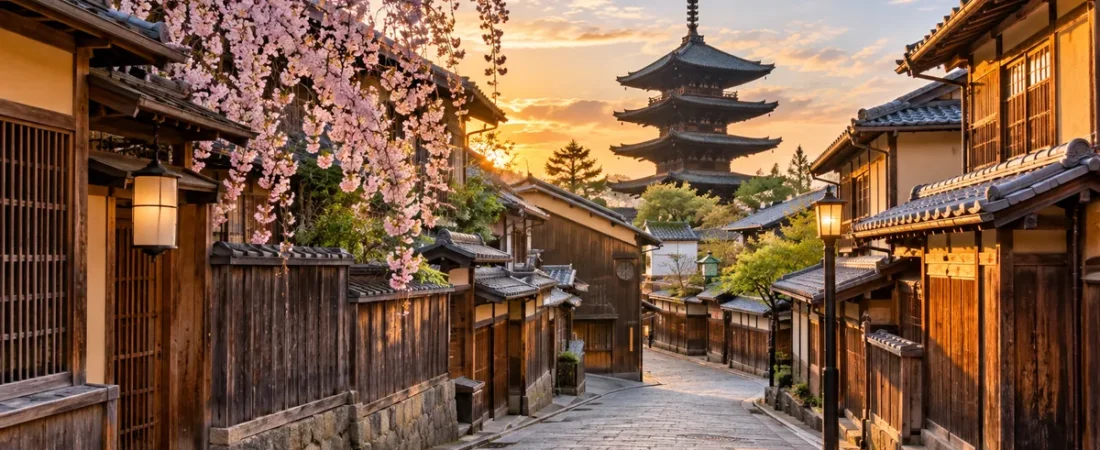
Choosing where to stay in Kyoto can make a major difference to your trip. Kyoto’s famous temples, historic streets, gardens and neighbourhoods are spread across a surprisingly large area, so the most convenient place to stay depends on what you want to see and how you prefer to travel.
For most first-time visitors, Downtown Kyoto around Shijo-Kawaramachi or Shijo-Karasuma offers the strongest balance of sightseeing, restaurants, shopping and transport. Kyoto Station is especially practical for day trips and travellers arriving by train, while Gion and Higashiyama provide the most atmospheric historic surroundings.
Before choosing your neighbourhood, read our Kyoto Travel Guide for an overview of the city’s major attractions, transport and essential travel tips.
Price note: All prices in this article are approximate and were checked at the time of publication. Prices may change.
Best Areas to Stay in Kyoto at a Glance
Here are the main areas worth considering:
- Downtown Kyoto: Best overall for first-time visitors
- Kyoto Station: Best for transport and day trips
- Gion: Best for traditional Kyoto atmosphere
- Higashiyama: Best for temples and early-morning sightseeing
- Arashiyama: Best for scenery and a quieter stay
- Nijo and Imperial Palace area: Best for a calmer central location
- Northern Kyoto: Best for repeat visitors and quieter neighbourhoods
- Kurama and Kibune: Best for a peaceful mountain escape
Your ideal base depends on whether convenience, historic atmosphere, nightlife, transport connections or tranquillity matters most.
1. Downtown Kyoto: Best Overall for First-Time Visitors
The area around Shijo-Kawaramachi and Shijo-Karasuma is one of the most practical bases for a first trip to Kyoto.
This central district places you close to restaurants, cafés, department stores, Nishiki Market and the Kamo River. Gion is within walking distance from parts of Kawaramachi, while railway and subway connections make it relatively easy to reach other districts.
Why Stay in Downtown Kyoto?
Downtown works particularly well if you want a neighbourhood that remains lively after the temples close.
Advantages include:
- Excellent restaurant selection
- Shopping and department stores
- Walking access to Nishiki Market
- Easy access towards Gion
- Hankyu and subway connections
- Numerous hotels
- Convenient evening atmosphere
Possible Drawbacks
Downtown Kyoto is busy and commercial compared with quieter neighbourhoods.
Hotels in the most convenient locations can also command higher prices during cherry-blossom season, autumn foliage and major festivals.
Who Should Stay Here?
Downtown Kyoto is particularly suitable for first-time visitors, couples, food lovers and travellers spending 3 or 4 days in the city.
If you are unsure which Kyoto neighbourhood to choose, this is one of the safest all-round options.
2. Kyoto Station: Best for Transport and Day Trips
Kyoto Station is the city’s principal transport hub and an exceptionally convenient place to stay if you expect to use trains frequently.
JR services connect the station with destinations including Fushimi Inari and Arashiyama, while the Shinkansen provides connections towards Osaka, Nagoya and Tokyo.
The area also contains hotels across multiple price categories, restaurants, shops and useful luggage facilities.
Advantages of Staying Near Kyoto Station
- Excellent rail connections
- Convenient for Shinkansen travellers
- Easy arrival and departure with luggage
- Good selection of hotels
- Numerous restaurants and shops
- Useful for day trips
- Direct access to the subway
Staying near the station can be especially valuable if Kyoto forms part of a longer Japan itinerary.
Possible Drawbacks
The immediate station surroundings feel more modern and commercial than Gion or Higashiyama.
You will usually need public transport to reach Kyoto’s most atmospheric historic streets.
Who Should Stay Here?
Choose Kyoto Station if transport convenience is your main priority, especially if you plan excursions to Osaka, Nara or other destinations.
It is also an excellent choice for short stays and travellers carrying substantial luggage.
3. Gion: Best for Traditional Kyoto Atmosphere
Few neighbourhoods create the sense of being in historic Kyoto as effectively as Gion.
The district developed around Yasaka Shrine and remains known for traditional wooden buildings, teahouses, restaurants and its geiko and maiko culture.
Staying here allows you to experience some streets in the early morning and evening, outside the busiest sightseeing hours.
Nearby Attractions
Depending on your hotel’s precise location, you may be close to:
- Yasaka Shrine
- Hanamikoji
- Kennin-ji
- Maruyama Park
- Shirakawa
- Kamo River
- Higashiyama
Kiyomizu-dera is also accessible from the wider area.
Advantages of Staying in Gion
- Beautiful traditional atmosphere
- Excellent evening walks
- Restaurants and teahouses
- Convenient for eastern Kyoto sightseeing
- Easy access to Yasaka Shrine
- Memorable setting for a special trip
Possible Drawbacks
Accommodation can be expensive, particularly at traditional ryokan and premium properties.
Some streets also attract heavy daytime visitor traffic.
Gion is a real residential and working district rather than an open-air tourist attraction. Follow local photography rules, respect private property and avoid blocking streets.
Who Should Stay Here?
Gion is ideal for couples, photographers, first-time visitors seeking atmosphere and travellers celebrating a special occasion.
4. Higashiyama: Best for Temples and Historic Streets
Higashiyama covers one of Kyoto’s most attractive sightseeing areas.
Its temple-filled streets make it particularly appealing to visitors who want to begin exploring early, before large daytime crowds arrive.
The wider district includes or provides convenient access to Kiyomizu-dera, Yasaka Pagoda, Kodai-ji and numerous smaller temples.
Why Stay in Higashiyama?
One of the greatest advantages is being able to walk through historic streets early in the morning.
Areas that become crowded during peak sightseeing hours can feel dramatically different shortly after sunrise.
Advantages
- Excellent historic atmosphere
- Numerous temples nearby
- Beautiful walking routes
- Convenient for Kiyomizu-dera
- Excellent for photography
- Quieter early mornings
Possible Drawbacks
Higashiyama is not as convenient for railway transport as Kyoto Station or central Kawaramachi.
Some properties are also located on sloping or narrow streets, which can make arrival with large luggage more difficult.
Who Should Stay Here?
Choose Higashiyama if temples, historic streets, walking and photography are your main priorities.
5. Arashiyama: Best for Scenery and a Quieter Stay
Arashiyama is one of Kyoto’s most famous sightseeing districts, but relatively few visitors stay overnight.
That can be an advantage.
Once many day visitors leave, the district becomes considerably calmer. Staying locally also gives you an opportunity to visit the bamboo grove early in the morning.
Nearby attractions include:
- Arashiyama Bamboo Grove
- Togetsukyo Bridge
- Tenryu-ji
- Katsura River
- Smaller temples around Sagano
- Scenic walking routes
Advantages of Staying in Arashiyama
- Beautiful natural scenery
- Easier early access to the bamboo grove
- Quieter evenings
- Traditional ryokan options
- River and mountain surroundings
- Excellent autumn scenery
Possible Drawbacks
Arashiyama is some distance from eastern Kyoto.
Restaurants and cafés may close earlier than in Downtown Kyoto, so evening options are more limited.
Who Should Stay Here?
Arashiyama suits couples, repeat Kyoto visitors and travellers who value scenery and tranquillity more than nightlife or central convenience.
It can also be an excellent choice for one special ryokan night during a longer Kyoto stay.
6. Nijo and Kyoto Imperial Palace Area: Best for a Quieter Central Stay
The areas around Nijo Castle and Kyoto Imperial Palace offer an appealing compromise between convenience and residential atmosphere.
Unlike the busiest parts of Downtown Kyoto, these neighbourhoods often feel calmer while remaining reasonably central.
Nearby attractions include:
- Nijo Castle
- Kyoto Imperial Palace
- Kyoto Gyoen National Garden
- Local cafés
- Residential streets
Railway and subway connections vary depending on the exact accommodation location, so check the nearest station before booking.
Advantages
- Quieter than Downtown
- Central positioning
- Access to major historical sites
- More local atmosphere
- Useful subway connections in selected areas
- Good for longer stays
Possible Drawbacks
There is less evening activity than around Kawaramachi.
Hotels located deep within residential streets may also require longer walks to stations.
Who Should Stay Here?
This area suits couples, families and visitors who prefer peaceful evenings without staying far outside central Kyoto.
7. Northern Kyoto: Best for a More Local Experience
Northern Kyoto contains several famous attractions but receives fewer overnight visitors than the central districts.
The wider northern area provides access to sights such as Kinkaku-ji, Kitano Tenmangu and numerous temples.
Accommodation options are less concentrated, and transport convenience depends heavily on the exact property.
Advantages
- Quieter residential atmosphere
- Fewer tourists in many streets
- Access to northern temples
- Interesting local restaurants and cafés
- Suitable for slower travel
Possible Drawbacks
- Less convenient for first-time visitors
- Fewer hotels
- Greater reliance on buses or taxis in some locations
- Longer journeys to Kyoto Station
- Limited nightlife
Who Should Stay Here?
Northern Kyoto is more suitable for repeat visitors, longer stays and travellers interested in experiencing residential Kyoto.
For a first 3-day visit, Downtown or Kyoto Station will generally be more convenient.
8. Kurama and Kibune: Best for a Mountain Escape
Kurama and Kibune lie in Kyoto’s northern mountains and provide a dramatically different experience from central Kyoto.
Forested landscapes, shrines, mountain scenery and traditional accommodation create a peaceful setting.
Kibune is particularly known for Kifune Shrine and seasonal riverside dining, while Kurama is associated with Kurama-dera and mountain walks.
Advantages
- Peaceful mountain setting
- Beautiful scenery
- Traditional accommodation
- Excellent escape from city crowds
- Particularly attractive in autumn
Possible Drawbacks
These areas are far from central Kyoto and are not practical bases for a first sightseeing-focused visit.
Transport services are also less frequent than in central districts.
Who Should Stay Here?
Consider Kurama or Kibune for one night during a longer Kyoto trip rather than as your primary sightseeing base.
Kyoto Accommodation Tax
Kyoto City charges an accommodation tax on overnight stays.
From March 1, 2026, the tax is calculated per person, per night according to the accommodation charge.
The current structure is:
- Under ¥6,000 per person per night: ¥200
- ¥6,000 to under ¥20,000: ¥400
- ¥20,000 to under ¥50,000: ¥1,000
- ¥50,000 to under ¥100,000: ¥4,000
- ¥100,000 or more: ¥10,000
The applicable accommodation charge is generally based on the lodging component rather than meals and consumption tax.
When comparing hotels, check whether the accommodation tax is already included in the displayed total or needs to be paid separately.
Should You Stay in a Hotel or Ryokan?
Kyoto offers everything from hostels and business hotels to international luxury hotels and traditional ryokan.
Hotels
Hotels generally provide the easiest experience for visitors who prioritise convenience, modern facilities and predictable room layouts.
Business hotels around Kyoto Station and central districts can provide particularly practical accommodation.
Ryokan
A ryokan offers a more traditional Japanese lodging experience, often featuring tatami flooring and Japanese-style rooms.
Higher-end ryokan may include elaborate meals and personalised service.
Rather than staying in a ryokan for your entire trip, budget-conscious travellers could consider spending one special night in a ryokan and using a conventional hotel for the remainder.
Guesthouses and Hostels
Guesthouses and hostels can reduce accommodation costs and often provide opportunities to meet other travellers.
Check bathroom arrangements, luggage policies and quiet hours before booking.
Is It Important to Stay Near a Station?
Yes, particularly on a short trip.
Kyoto’s attractions are spread across the city, and official tourism guidance recommends using railways and subways where practical because buses serving popular attractions can become crowded.
A hotel within comfortable walking distance of a useful railway or subway station can save considerable time.
Do not choose accommodation based only on straight-line distance from an attraction. Check the actual transport connections you will use each day.
Best Kyoto Area by Traveller Type
First-Time Visitors
Choose Downtown Kyoto, particularly around Shijo-Kawaramachi or Shijo-Karasuma, for a strong combination of food, transport and sightseeing.
Kyoto Station is an excellent alternative if you prioritise transport.
Couples
Choose Gion, Higashiyama or Arashiyama for atmosphere and memorable surroundings.
Families
Kyoto Station and Downtown Kyoto provide easy access to restaurants, shops and transport.
Families may also appreciate larger rooms or apartment-style accommodation farther from the busiest historic streets.
Budget Travellers
Look around Kyoto Station and less tourist-heavy parts of central Kyoto.
Compare the total accommodation cost rather than only the room rate, remembering to account for Kyoto’s accommodation tax.
Luxury Travellers
Gion, Higashiyama and Arashiyama offer some of Kyoto’s most atmospheric premium accommodation.
Solo Travellers
Downtown Kyoto and Kyoto Station are particularly convenient because restaurants, transport and services remain close at hand.
Repeat Visitors
Consider Arashiyama, the Imperial Palace area or northern Kyoto for a different experience from the main tourist districts.
When Should You Book Kyoto Accommodation?
Book early if your trip coincides with Kyoto’s busiest periods.
Demand can be particularly strong during:
- Cherry-blossom season
- Autumn foliage
- Gion Matsuri
- Japanese holiday periods
- Popular weekends
Affordable and conveniently located properties are often among the first to sell out.
Booking early also gives you more freedom to choose a neighbourhood based on your itinerary rather than accepting whatever remains available.
Where Should First-Time Visitors Stay in Kyoto?
For most first-time visitors, Downtown Kyoto around Shijo-Kawaramachi or Shijo-Karasuma is the strongest all-round choice.
It combines restaurants, shopping, useful transport and convenient access to Gion and eastern Kyoto.
Choose Kyoto Station instead if you expect to make several day trips or want the easiest possible arrival and departure.
Choose Gion or Higashiyama if traditional atmosphere matters more than transport convenience.
Choose Arashiyama if you prefer scenic surroundings and peaceful mornings.
There is no single perfect Kyoto neighbourhood for everyone. The right choice depends on your itinerary, trip length and priorities.
Final Thoughts
Kyoto rewards careful accommodation planning because its attractions are spread across several distinct districts.
First-time visitors usually benefit from a central and well-connected base, while travellers returning to Kyoto can consider quieter neighbourhoods such as Arashiyama or the Imperial Palace area.
Wherever you stay, check the actual walking distance to the nearest useful station, consider how many times you will need to cross the city and remember to include Kyoto’s accommodation tax in your budget.
For an overview of the city’s temples, attractions, transport and essential planning advice, see our Kyoto Travel Guide.
Explore more places through our destinations page or browse our complete collection of itineraries.