
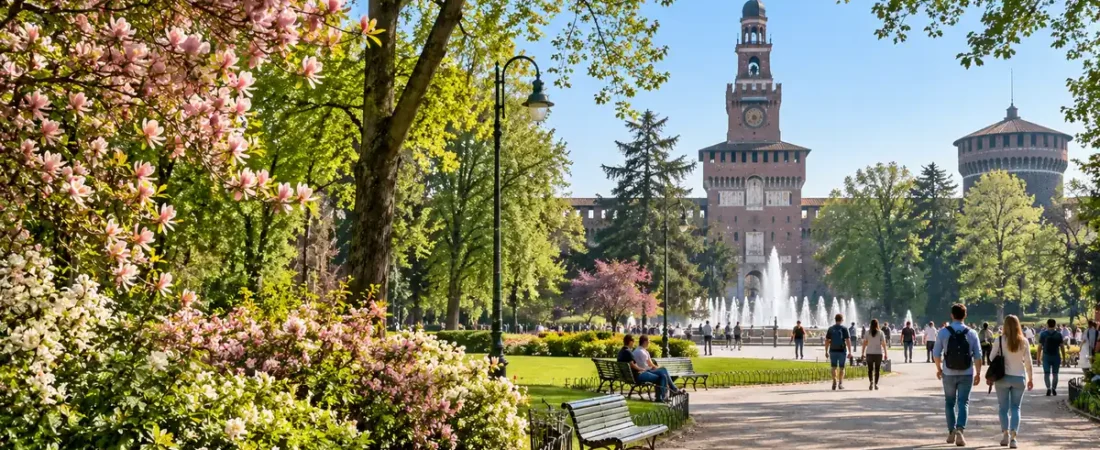
The best time to visit Milan for most travellers is spring or early autumn, particularly April to May and September to early October. These periods usually offer comfortable conditions for walking, longer daylight than winter and a lively atmosphere throughout the city.
However, Milan is a year-round destination, and the ideal month depends on what you want from your trip. Summer brings long days but hotter conditions, winter can offer a quieter sightseeing experience, and major fashion and design events can dramatically change accommodation demand at certain times of year.
This guide explains Milan’s seasons, weather, crowds and major events so you can choose the right time for your visit. For an overview of attractions and practical planning, start with our Milan travel guide.
When Is the Best Time to Visit Milan?
For a first sightseeing trip, April, May, September and early October are particularly attractive periods.
Temperatures are generally more comfortable for spending long periods outdoors than during midsummer or winter, and Milan’s parks and neighbourhoods are enjoyable to explore on foot.
There is one important consideration: Milan hosts major international events throughout the year.
Fashion weeks and the Salone del Mobile design fair can significantly increase demand for accommodation. If your main purpose is ordinary sightseeing rather than attending these events, check Milan’s event calendar before confirming flights and hotels.
Our where to stay in Milan guide can help you compare neighbourhoods once you have chosen your travel dates.
Milan Weather Throughout the Year
Milan has a continental climate rather than the consistently warm Mediterranean conditions some travellers associate with Italy.
Winters can be cold, while summers are generally hot and can feel humid.
Milan’s official tourism information indicates typical January temperatures around 0–5°C, while July temperatures commonly fall around 20–30°C.
Rain can occur throughout the year, with autumn—particularly October and November—among the wetter periods.
Weather varies from year to year, so use these seasonal patterns for planning rather than treating them as a forecast for your exact travel dates.
Milan in Spring: March to May
Spring is one of the most attractive seasons for visiting Milan.
The city gradually becomes greener, daylight increases and outdoor sightseeing becomes more comfortable.
Milan in March
March is a transitional month.
Early March can still feel distinctly cool, particularly in the mornings and evenings, while later in the month can bring milder days.
Pack layers and a light waterproof jacket rather than assuming spring means consistently warm weather.
March can be a good option for travellers who want to avoid summer heat while still having more daylight than in midwinter.
Milan in April
April is an excellent sightseeing month from a weather perspective, with spring conditions making walking around the city more pleasant.
Parco Sempione and Milan’s other green spaces become increasingly attractive, and outdoor cafés begin to feel more appealing.
However, April is also an important month in Milan’s international design calendar.
The Salone del Mobile and the wider Milan Design Week attract substantial numbers of visitors. The next Salone del Mobile is scheduled for 13–18 April 2027.
If you are visiting specifically for design, this can be one of the most exciting times to experience Milan.
If you are not attending the event, accommodation can be harder to secure around those dates, so check prices before booking transport.
Milan in May
May is one of the strongest all-round choices for a first visit.
Conditions are generally suitable for long sightseeing days, gardens and parks are green, and there is plenty of daylight for exploring.
You can comfortably combine indoor attractions such as museums and churches with long walks through Brera, around Sforza Castle and beside the Navigli canals.
May can still experience rain, so carry a compact umbrella or light waterproof layer.
Milan in Summer: June to August
Summer brings long days and plenty of activity, but it also brings Milan’s hottest conditions.
Milan in June
June offers long daylight hours, making it possible to fit a lot into each day without rushing.
Early summer can be particularly enjoyable for evening walks, outdoor dining and aperitivo.
As temperatures rise, schedule demanding outdoor sightseeing for the morning where possible.
If you have 3 days in the city, our 3 days in Milan itinerary groups nearby attractions together to reduce unnecessary travel.
Milan in July
July is usually hot.
The city’s official tourism information places typical July temperatures broadly around 20–30°C, although individual days can be hotter.
Heat can make long afternoon walks less comfortable, especially in exposed areas around major squares.
Start early, spend part of the hottest period inside museums, churches or galleries, and resume outdoor exploration later in the afternoon.
Air conditioning becomes an important consideration when choosing accommodation.
Milan in August
August has a different character.
Many international visitors continue arriving, but some Milanese leave the city during the traditional Italian summer holiday period. Certain independently operated restaurants and smaller businesses may reduce their hours or close temporarily.
Major tourist attractions remain the focus for visitors, but it is sensible to check individual businesses before making a special journey.
August can also be very hot.
The advantage is that parts of the city may feel less dominated by everyday commuter and business activity.
Milan in Autumn: September to November
Early autumn is another excellent period for Milan, but it includes some of the city’s biggest events.
Milan in September
September is one of Milan’s most interesting months.
Summer heat generally begins easing as the month progresses, while the city becomes busy again after August.
It is also a major fashion month.
For example, the Spring/Summer 2027 edition of Milano Fashion Week runs 22–28 September 2026.
Fashion Week creates an exciting atmosphere, particularly around fashion districts and event venues, but it can also affect hotel availability and prices.
Travellers who are not interested in fashion may prefer dates outside the main event period.
Milan in October
October can provide comfortable sightseeing conditions, particularly during the first part of the month.
Autumn colours begin appearing in Milan’s parks, and cooler temperatures can make long walking days easier than during summer.
However, rainfall becomes a greater consideration. Milan’s official tourism information identifies October and November as the period when average rainfall reaches its annual peak.
Bring a waterproof jacket or umbrella and include some indoor attractions in your plans.
Milan works particularly well in changeable weather because major museums, churches, galleries, shopping arcades and cafés provide plenty of alternatives when rain arrives.
Milan in November
November is cooler, wetter and darker.
It is not the classic period for outdoor sightseeing, but travellers comfortable with autumn weather may appreciate experiencing Milan outside the warmer peak periods.
This is a good time to focus more heavily on museums, galleries, restaurants, cafés and shopping.
Daylight is shorter, so plan outdoor attractions earlier.
Milan in Winter: December to February
Winter offers a different Milan experience.
Temperatures are lower, days are shorter and warm clothing is essential, but Christmas decorations and indoor cultural attractions can make the season rewarding.
Milan in December
December brings festive decorations and Christmas shopping to the centre.
The area around the Duomo and Galleria Vittorio Emanuele II becomes particularly atmospheric during the holiday season.
The major advantage is atmosphere rather than weather.
Expect cold conditions and limited daylight compared with spring and summer.
Milan in January
January is one of Milan’s coldest periods.
Official tourism information indicates typical temperatures around 0–5°C.
Snow is possible, although it should never be assumed for a particular trip.
January can work well for travellers primarily interested in museums, restaurants and shopping rather than long outdoor days.
Winter sales can also make this an interesting period for visitors interested in Milan’s shopping scene.
Milan in February
February remains cold, but daylight gradually begins increasing.
It is also an important month on Milan’s fashion calendar.
The Autumn/Winter 2027–2028 women’s Milano Fashion Week is scheduled for 23 February–1 March 2027.
If your dates overlap a major fashion event, reserve accommodation well ahead.
Best Time for Sightseeing in Milan
For sightseeing, April–May and September–early October provide a particularly good balance.
Milan is a city best explored partly on foot. Attractions around the Duomo, Brera and Sforza Castle can be connected by walking, while neighbourhoods such as Navigli reward slower exploration.
Moderate temperatures make this considerably easier.
If your dates are flexible, check for major trade fairs and fashion events before booking.
Best Time to Visit Milan for Fewer Crowds
There is no completely crowd-free period because Milan is a major business, cultural and tourism destination throughout the year.
However, parts of late autumn and winter outside major events and holidays can feel less pressured than popular spring and early-autumn periods.
January can be worth considering if you do not mind cold weather.
November can also suit travellers who prioritise museums, food and shopping over outdoor sightseeing.
Regardless of season, visit major attractions early in the day where possible.
The Duomo area can become busy even outside traditional peak months.
Best Time for Milan’s Parks and Outdoor Areas
Spring is particularly attractive for Milan’s parks.
Parco Sempione is pleasant as vegetation returns, and longer daylight makes it easier to combine the park with Sforza Castle and Brera.
May offers a particularly good combination of greenery and comfortable walking conditions.
Early autumn can also be excellent.
By October, autumn colours begin changing the appearance of parks, although rainfall becomes more frequent.
Best Time for Navigli
Navigli can be enjoyed year-round, but warmer months make its outdoor atmosphere particularly appealing.
Late spring and early autumn are ideal for walking beside Naviglio Grande in the late afternoon and staying for aperitivo or dinner.
Summer evenings can also be lively, although daytime heat may make it better to visit after temperatures begin falling.
In winter, restaurants and bars still make Navigli worth visiting, but the canal-side outdoor experience is less central to the evening.
Best Time for Shopping in Milan
Milan is a major shopping destination throughout the year.
Travellers interested in seasonal sales may prefer winter or summer sale periods, although exact dates and participating retailers can vary.
Fashion enthusiasts may deliberately choose Fashion Week because of the atmosphere surrounding the city.
However, many runway shows and industry events are not open to ordinary visitors.
You can still enjoy the energy around Milan’s fashion districts without attending the official shows.
When to Avoid Milan’s Biggest Events
You do not necessarily need to avoid major events.
They can make Milan exceptionally energetic and interesting.
The issue is accommodation.
Milan Fashion Week and Salone del Mobile bring large numbers of industry professionals and visitors into the city, potentially increasing demand for hotel rooms and short-term accommodation.
For travellers planning a straightforward sightseeing holiday, travelling immediately before or after these events can sometimes provide a simpler experience.
For design enthusiasts, fashion followers and industry visitors, the opposite is true—the events themselves may be a major reason to travel.
What to Pack for Milan by Season
Spring
Bring layers, comfortable walking shoes, a light jacket and rain protection.
Temperatures can change considerably between morning and afternoon.
Summer
Pack lightweight clothing, comfortable footwear, sun protection and a reusable water bottle.
Choose accommodation with air conditioning if that is important to your comfort.
Autumn
Layers become increasingly important as the season progresses.
Bring an umbrella or waterproof outer layer, particularly during October and November.
Winter
Pack a warm coat, closed shoes and appropriate layers.
Gloves and a scarf can be useful during colder periods, especially early in the morning and after sunset.
How Many Days Should You Spend in Milan?
3 days is a comfortable length for a first visit.
That gives you enough time to experience the Duomo and rooftops, The Last Supper, Sforza Castle, Brera, modern Milan and Navigli without trying to see everything in a single day.
Our 3 days in Milan itinerary provides a day-by-day route.
Visitors with additional time can explore more museums or use Milan as a base for excursions elsewhere in Lombardy.
So, What Is the Best Month to Visit Milan?
There is no single perfect month, but May and September are excellent choices for many first-time visitors.
May provides spring greenery, long enough days for extensive sightseeing and generally more comfortable walking conditions than midsummer.
September offers a lively city and late-summer to early-autumn conditions, although Fashion Week can affect accommodation during part of the month.
April is another excellent option if your dates do not clash with a major event—or a particularly exciting choice if Milan Design Week is exactly why you are travelling.
October can be pleasant but brings a greater chance of rain.
Winter works well for travellers who prefer museums, shopping and restaurants and do not mind colder, shorter days.
Whichever month you choose, Milan rewards good planning. Check major event dates before reserving accommodation, book high-demand attractions in advance and build enough flexibility into your schedule to adapt to the weather.
Explore more places through our destinations page or browse our complete collection of itineraries.