
Finding rewarding free things to do in Jorhat is easier than many visitors expect. The city’s historic memorials, religious spaces, traditional neighbourhoods, markets, riverside scenery and public cultural life can provide memorable experiences without admission charges.
Although the experiences in this guide are free, you may still need to pay for transportation, food, parking or optional donations. Access arrangements can also change, so confirm locally before travelling to sites outside central Jorhat.
1. Visit Dhekiakhowa Bor Namghar
Dhekiakhowa Bor Namghar is one of the most important Vaishnavite religious and cultural sites in the Jorhat district. The peaceful complex provides an opportunity to learn about Assamese devotional traditions and the important community role played by namghars.
Entry for respectful visitors is normally free. Dress modestly, remove your footwear where instructed and avoid disturbing prayers or ceremonies. Donations may be offered but are voluntary.
The atmosphere is particularly memorable during religious celebrations, although festival periods can be much busier than an ordinary day.
2. Explore Raja Maidam
Raja Maidam is associated with the final Ahom ruler, Purandar Singha, and provides a quiet introduction to Jorhat’s royal history.
The landscaped surroundings make this a pleasant place for a short walk and reflection. Look for the shape of the burial mound and consider how the area connects modern Jorhat with the history of the Ahom kingdom.
General outdoor access is normally free, but visitors should respect any barriers and posted instructions.
3. See Lachit Borphukan’s Maidam
The maidam associated with Lachit Borphukan honours one of Assam’s most celebrated military commanders. He is remembered particularly for his leadership during the Battle of Saraighat.
Visiting the memorial is a valuable free experience for travellers interested in Assamese history. Take time to read any available information and observe the design of the grounds rather than treating it only as a quick photo stop.
Opening access can occasionally be affected by maintenance or official events, so checking locally is sensible.
4. Walk Along Gar-Ali
Gar-Ali is one of Jorhat’s historically significant urban roads. Its name is connected with an embankment or defensive line from the Ahom period.
Walking part of Gar-Ali is free and offers a closer look at present-day city life. Shops, traffic, religious buildings and older structures reveal how Jorhat has developed around its historic routes.
The road can be busy, so use pavements where available and cross carefully.
5. Browse Chowk Bazaar
You do not have to buy anything to enjoy the sights and sounds of Chowk Bazaar. Walking through the market introduces you to local vegetables, fruit, spices, household products and the rhythm of everyday commerce in Jorhat.
Visit during active morning hours for the liveliest atmosphere. Always ask permission before taking close-up photographs of vendors or their merchandise.
Sampling food or purchasing produce is optional and paid, but browsing the market itself is free.
6. Explore Jorhat’s Local Produce Markets
Beyond Chowk Bazaar, smaller neighbourhood markets offer another free way to observe daily life. Displays change with the agricultural seasons and may include leafy vegetables, bananas, herbs, fish and produce from surrounding rural areas.
A market walk can be especially interesting for travellers who enjoy food culture. Try identifying unfamiliar ingredients and noticing how local products differ from those found in other parts of India.
Keep pathways clear and avoid interfering with customers or vendors.
7. Visit Burigosain Devalay
Burigosain Devalay is a respected temple in central Jorhat. Visitors can quietly observe the temple’s religious atmosphere and learn about the diverse traditions that form part of the city’s identity.
There is normally no compulsory admission charge for worshippers or respectful visitors. Offerings and donations are optional.
Photography may be restricted in sacred areas. Follow instructions from temple authorities and avoid visiting only for photographs during active worship.
8. Visit Bilvesvar Siva Temple
Bilvesvar Siva Temple is another religious site that can be visited without purchasing an admission ticket. The temple provides a calm break from a busy sightseeing schedule and an opportunity to observe local devotional customs.
Visitors should wear respectful clothing and leave footwear in the designated area. Avoid interrupting prayers, touching religious objects without permission or photographing people at close range.
Transport to the temple is not free, but entry itself is generally free.
9. Spend Time at Nimati Ghat
Nimati Ghat is an important river gateway and a departure point for ferry journeys towards Majuli. You can visit the ghat, observe river traffic and watch daily activity without boarding a ferry.
The changing light over the Brahmaputra makes the area particularly atmospheric in the late afternoon. Maintain a safe distance from the water and follow all instructions from officials and ferry staff.
Swimming or bathing must not be attempted. Local safety restrictions have applied at Nimati and other ghats because of strong currents and drowning risks.
Optional paid activity: Ferry journeys and vehicle transfers are not free.
10. Watch Boats on the Brahmaputra
Watching passenger vessels and working boats from a safe public viewing area is a simple free experience. The river’s scale becomes much more apparent when you spend time beside it rather than merely arriving for a ferry.
Clouds, water levels and boat activity create a different scene throughout the day. Use a telephoto lens if you want close images instead of approaching restricted operational areas.
Never enter the water or step onto unstable riverbanks.
11. Enjoy Sunset Near Nimati
A sunset near the Brahmaputra can be one of Jorhat’s most memorable free experiences. On a clear evening, the sky may reflect across the wide river while boats move between the banks.
Arrive with sufficient daylight to identify a safe public viewing position. Leave before the area becomes difficult to navigate in darkness, especially during the monsoon.
Sunset viewing is free, although transportation to and from Nimati must be included in your Jorhat travel budget.
12. View Tea Landscapes from Public Roads
Tea is central to Jorhat’s identity. You can appreciate rows of tea bushes, shade trees and the wider landscape from public roads without purchasing a formal plantation tour.
Tea estates are private working properties. Do not enter fields, factories, staff areas or estate roads without permission. Never photograph workers at close range unless they agree.
Viewing the landscape from a lawful public area is free.
Optional paid activity: Authorised tea-estate tours, tastings and factory visits may charge a fee and require advance arrangements.
13. Walk Through Jorhat’s Older Neighbourhoods
A self-guided walk through older parts of Jorhat can reveal traditional houses, shaded lanes, small religious buildings and traces of the city’s changing architectural character.
This activity is best enjoyed slowly. Look at rooflines, timber details, gardens and the relationship between residential areas and commercial roads.
Remain on public streets and avoid photographing inside private homes. Early morning and late afternoon generally provide more comfortable walking conditions.
14. Photograph Traditional Assamese Architecture
Jorhat offers opportunities to observe Assamese architectural elements in namghars, temples, older homes and community buildings.
Create a free photography theme around gateways, bamboo work, sloping roofs, carved details or red-and-white decorative patterns. This gives your city walk a purpose without requiring a paid guide.
Photograph only from public areas unless permission is granted. Some religious and government buildings may restrict photography.
15. See Rajmao Pukhuri
Rajmao Pukhuri is among the notable places identified by the Jorhat district administration. The historic water body offers a quieter perspective on the city’s landscape and heritage.
A brief stop can be combined with a wider walk through Jorhat. Enjoy the view only from safe, publicly accessible areas and do not enter the water.
Conditions around the site may vary by season. Respect fencing, signs and local safety directions.
16. Look for Birds in Jorhat’s Green Spaces
You do not need to enter a wildlife sanctuary to begin observing Jorhat’s birdlife. Trees, gardens, wetlands, quiet roads and open areas may attract kingfishers, egrets, mynas, drongos and other common species.
Early morning is often the most productive time. Bring binoculars if you already own them, remain quiet and avoid approaching nests.
Birdwatch only from public places where access is allowed. The experience is free and can add an enjoyable nature element to a city visit.
Optional paid activity: Visiting Hollongapar Gibbon Sanctuary may involve entrance, guide, vehicle or camera charges.
17. Observe Daily Life Around Jorhat’s Public Squares
Public junctions and gathering areas show another side of the city. Residents commuting, students travelling to class, vendors setting up and auto-rickshaws moving between neighbourhoods all form part of everyday Jorhat.
Choose a safe place away from traffic and spend a few minutes observing the city rather than moving constantly between attractions.
Be considerate when photographing people. Wide street scenes are less intrusive than close portraits taken without permission.
18. Browse Assamese Textiles and Handicrafts
Browsing shops selling gamusas, mekhela chadors, bamboo products and local crafts is free, even if you decide not to purchase anything.
The experience can help you recognise traditional patterns, weaving styles and useful souvenirs. Ask shopkeepers before handling delicate products or taking photographs.
Purchases are optional and should be included separately in your budget.
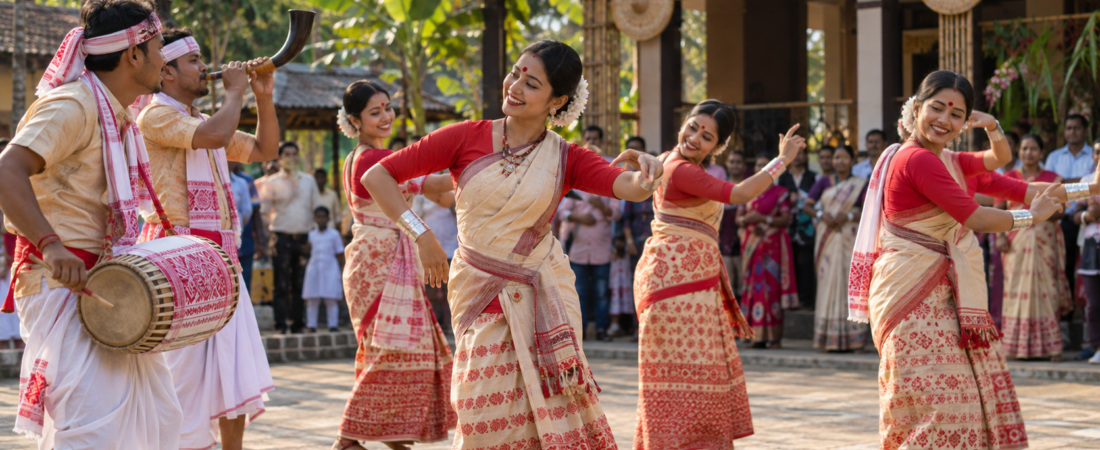
19. Attend a Free Public Bihu Celebration
Travellers visiting around Rongali Bihu in April or Magh Bihu in January may encounter public cultural programmes, music or community celebrations.
Some outdoor events can be watched without an admission ticket. Bihu dance, dhol performances and traditional clothing offer a vivid introduction to Assamese culture.
Not every event is free, and programmes change each year. Check the current local schedule and confirm whether tickets are required before attending.
20. Look for Free Cultural Performances
Schools, colleges, community organisations and cultural groups occasionally organise public music, dance, theatre and literary programmes in Jorhat.
Posters, hotel noticeboards and local social-media announcements can help you identify events taking place during your stay. Confirm that an event is open to visitors and free before travelling to the venue.
Behave respectfully and avoid blocking the view of local attendees while taking photographs or videos.
21. Experience Festival Decorations
Even when a festival performance requires a ticket, seeing public decorations, illuminated streets and community preparations may still be free.
Durga Puja, Bihu and other celebrations can transform neighbourhoods with temporary displays and gathering spaces. Walk only through areas open to the public, and follow crowd-control instructions.
Food, transport, offerings and special performances are optional paid expenses.
22. Create a Self-Guided History Walk
Combine Gar-Ali, Raja Maidam, religious buildings and older neighbourhoods into your own free history walk.
Before setting out, read about Jorhat’s role as an important centre of Upper Assam and its connections with the later Ahom period. Understanding the background makes ordinary streets and memorials far more meaningful.
Our Jorhat travel guide can help you identify suitable stops.
23. Take a Free Photo Walk
Jorhat provides varied subjects for travel photography, including markets, auto-rickshaws, historic sites, traditional textiles, religious architecture and everyday street scenes.
Choose a theme such as “red and white in Jorhat,” “morning markets” or “historic details.” A theme encourages you to look carefully without needing to visit paid attractions.
Always ask before photographing individuals, religious ceremonies or private property.
24. Walk Through a Rural Village Area
The outskirts of Jorhat include rural roads, agricultural land and quiet settlements. Walking along an appropriate public road can provide a contrast with the city centre.
Do not enter fields, plantations or residential compounds without permission. Avoid isolated routes after dark and ask your accommodation provider to recommend a safe area.
The walk is free, but transportation to a suitable starting point may cost extra.
25. Enjoy a Slow Morning in Jorhat
One of the simplest free activities is to experience Jorhat without a strict sightseeing schedule. Walk through a nearby neighbourhood, listen to the morning sounds, watch shops open and observe daily routines.
A slow morning can be particularly enjoyable after a busy day trip. Choose an area near your accommodation so you do not need to pay for transport.
Our guide to where to stay in Jorhat can help you select a convenient base.
Book Your Jorhat Experiences
Ready to start planning? Compare popular Jorhat tours and activities, check current prices and availability, and book the experiences that suit your trip.
Affiliate disclosure: If you book through these links, we may earn a commission from Viator. This does not increase the price you pay.
Optional Paid Experiences Near Jorhat
The following popular experiences are not included among the free activities:
- Ferry travel to Majuli
- Local transport on Majuli
- Hollongapar Gibbon Sanctuary visits
- Authorised tea-estate or factory tours
- Planetarium or science-centre admission
- Private guides
- Taxi hire
- Food tastings
- Craft and textile purchases
Prices and access arrangements may change. Confirm current fees directly with the attraction, forest authority, ferry operator or authorised guide before travelling.
How to Explore Jorhat for Free
Group nearby attractions
Combine central markets, religious sites and historic streets on a single walking route. This reduces transport expenses and avoids unnecessary journeys across the city.
Start early
Morning conditions are usually more comfortable for walking, market visits and birdwatching. You will also have more time to change plans if access to a site is restricted.
Ask before entering
Tea estates, institutional campuses and private residential areas may appear open but are not public attractions. Request permission instead of assuming access is allowed.
Respect religious sites
Wear modest clothing, remove footwear where required and keep conversations quiet. Donations are voluntary unless a clearly displayed charge applies to a separate service.
Carry water responsibly
Bring a reusable water bottle, but make sure the water is safe to drink. Take all rubbish with you when bins are unavailable.
Check seasonal conditions
Heavy monsoon rain can affect roads, riverbanks and walking routes. The best time to visit Jorhat is generally during the cooler, drier months from November to March.
Use a practical itinerary
Several free activities can be combined with Jorhat’s major attractions. Our 3 days in Jorhat itinerary provides a useful structure for organising your visit.
Are Jorhat’s Free Attractions Worth Visiting?
Yes. Jorhat’s appeal is not limited to formal tourist attractions. Its identity is found in historic memorials, namghars, markets, river activity, textiles, neighbourhoods and Assamese cultural traditions.
Free activities also encourage travellers to slow down and observe details that are easy to miss during a tightly scheduled tour. A market conversation, a quiet memorial or an evening beside the Brahmaputra can be as memorable as a paid attraction.
Transportation may still be necessary for places outside the city centre. Build these costs into your plan even when the attraction itself has no admission charge.
Final Thoughts
The best free things to do in Jorhat include visiting Dhekiakhowa Bor Namghar, exploring Raja Maidam, seeing Lachit Borphukan’s Maidam, browsing local markets, walking along Gar-Ali and safely watching the Brahmaputra at Nimati Ghat.
You can also enjoy public festival celebrations, traditional architecture, birdwatching, textile browsing and self-guided photography without paying an entrance fee.
Confirm local access arrangements, respect private property and follow safety instructions around rivers and working tea estates. With thoughtful planning, Jorhat offers enough free cultural and outdoor experiences to fill several rewarding days.
Explore more places through our destinations page or browse our complete collection of itineraries.