
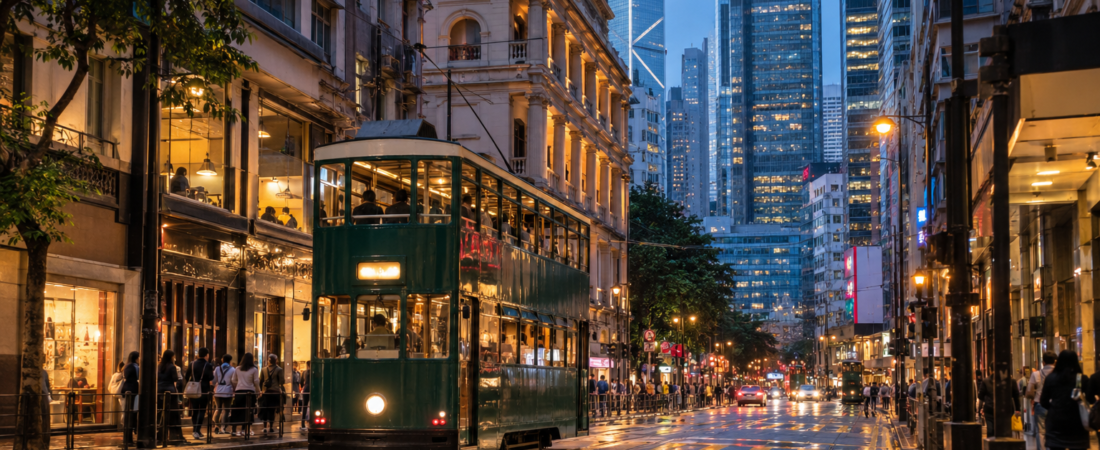
Hong Kong brings together dramatic harbour views, densely packed neighbourhoods, forested hills, traditional markets, historic temples and one of Asia’s most recognisable skylines. This Hong Kong travel guide covers the essential attractions, best areas to stay, public transport, local food and practical advice you need when planning your first visit.
Although the city initially appears fast and complicated, its efficient transport network makes it surprisingly manageable. You can ride a century-old tram, cross Victoria Harbour by ferry, hike through green countryside and eat at a neighbourhood noodle shop—all within the same day.
Price note: All prices in this article are approximate and were checked at the time of publication. Prices may change.
Why Visit Hong Kong?
Hong Kong offers far more than skyscrapers and shopping centres. Its compact urban districts sit beside beaches, country parks, islands and mountain trails. Visitors can explore historic neighbourhoods in the morning, enjoy dim sum at lunchtime and watch the skyline illuminate beside Victoria Harbour after sunset.
The city also has a distinctive cultural identity shaped by Cantonese traditions and international influences. Street markets, temples, modern museums, heritage buildings and contemporary architecture exist remarkably close to one another.
Hong Kong works well as a short city break, an extended stopover or part of a wider journey through Asia. If you are comparing Asian destinations, our Singapore travel guide and Bangkok travel guide offer additional ideas.
Top Tours & Experiences in Hong Kong
Discover popular Hong Kong tours and experiences. Check current availability, ratings and prices before you book.
Affiliate disclosure: If you book through these links, we may earn a commission from Viator. This does not increase the price you pay.
Top Attractions in Hong Kong
1. Victoria Peak
Victoria Peak provides the classic elevated view across Hong Kong Island, Victoria Harbour and Kowloon. Clear late afternoons are particularly rewarding because you can see the city in daylight, watch the sunset and stay as the buildings illuminate.
The historic Peak Tram is the most memorable way to reach the upper terminus. It normally operates daily from 7:30 a.m. to 11:00 p.m., including public holidays. Ticket combinations and promotional prices vary, especially when Sky Terrace 428 admission is included, so check the official Peak website before visiting.
You can also enjoy excellent views without paying for the observation deck. Walk along Lugard Road, which follows the wooded hillside and opens onto several panoramic viewpoints.
2. Victoria Harbour and the Tsim Sha Tsui Waterfront
The Tsim Sha Tsui promenade is one of the best places to appreciate Hong Kong’s skyline. The waterfront walk passes the historic Clock Tower, cultural venues and the Avenue of Stars, where sculptures and handprints celebrate the city’s film industry.
A Symphony of Lights is usually presented across Victoria Harbour at 8:00 p.m. The outdoor show is free, although weather or special events can affect arrangements. Arrive early if you want an unobstructed waterfront position.
3. Star Ferry
The Star Ferry is both practical public transport and one of Hong Kong’s most enjoyable inexpensive experiences. The short crossing between Central and Tsim Sha Tsui provides open views across the harbour.
Adult fares on the Central–Tsim Sha Tsui route are currently approximately HK$5 on weekdays and HK$6.50 on Saturdays, Sundays and public holidays. Exact fares can depend on the service and ticket type.
Try crossing shortly before sunset, then remain on the Kowloon waterfront as the skyline lights appear.
4. Central and Sheung Wan
Central combines landmark towers, historic buildings, elevated walkways, luxury shopping and busy commercial streets. Nearby Sheung Wan has traditional medicine shops, dried-seafood businesses, independent cafés and attractive heritage streets.
Visit Man Mo Temple on Hollywood Road, explore the antique shops around Upper Lascar Row and walk through the revitalised Tai Kwun heritage complex. The Central–Mid-Levels Escalator provides an unusual way to move through the sloping neighbourhoods.
5. Ngong Ping and the Big Buddha
Lantau Island provides a quieter contrast to central Hong Kong. The Ngong Ping 360 cable car travels from Tung Chung across mountains and water to Ngong Ping Village, near the Tian Tan Buddha and Po Lin Monastery.
The cable car normally operates from 10:00 a.m. to 6:00 p.m. on weekdays and from 9:00 a.m. to 6:30 p.m. on Saturdays, Sundays and public holidays. A standard-cabin round trip currently costs approximately HK$295 for an adult. Maintenance, strong winds and severe weather can interrupt operations, so check the official service status before travelling.
Access to the outdoor Big Buddha is generally free, although some monastery facilities, meals and special experiences may cost extra.
6. West Kowloon Cultural District
West Kowloon combines waterfront public spaces with two major cultural institutions: M+ and the Hong Kong Palace Museum.
M+ focuses on visual culture, including art, design, architecture and moving images. Its usual hours are 10:00 a.m.–6:00 p.m. Tuesday to Thursday and on weekends, with extended opening until 10:00 p.m. on Friday. It is normally closed on Monday.
The Hong Kong Palace Museum usually opens from 10:00 a.m.–6:00 p.m. on Monday, Wednesday, Thursday and Sunday, and until 8:00 p.m. on Friday, Saturday and public holidays. It is generally closed on Tuesday except when a public holiday applies. Museum admission varies according to the exhibitions included, so consult the official ticket pages before booking.
7. Mong Kok and Temple Street
Mong Kok is one of Hong Kong’s busiest neighbourhoods, filled with shopping streets, small restaurants and market areas. Explore streets specialising in trainers, electronics and everyday goods, but remember that individual market hours can change.
Temple Street Night Market in Jordan is best visited in the evening. It offers food, souvenirs, clothing and a lively street atmosphere. Bargain politely where appropriate and check prices before purchasing.
8. Wong Tai Sin Temple
Wong Tai Sin Temple is a colourful religious complex associated with Taoism, Buddhism and Confucianism. Visitors come to admire its architecture, make offerings and practise kau chim fortune seeking.
General entry is ordinarily free, although donations and certain services are optional. Dress respectfully, avoid interrupting worshippers and follow photography restrictions.
9. Hong Kong’s Hiking Trails
A large part of Hong Kong consists of hills, country parks and undeveloped coastline. Popular walks include Dragon’s Back, sections of the MacLehose Trail and paths around the Peak.
Dragon’s Back is one of the most accessible choices for visitors, offering ridge views before descending towards the southeastern side of Hong Kong Island. Carry enough water, use sun protection and avoid exposed trails during extreme heat, thunderstorms or typhoon conditions.
Best Areas to Stay in Hong Kong
Tsim Sha Tsui
Tsim Sha Tsui suits first-time visitors who want harbour views and convenient access to major attractions. It has extensive shopping, dining and MTR connections, while the Star Ferry provides a scenic route to Central.
Central and Admiralty
Central and Admiralty are convenient for business travellers, short visits and people who want quick access to Hong Kong Island attractions. Hotels are generally expensive, but transport connections are excellent.
Sheung Wan
Sheung Wan offers a mixture of heritage streets, cafés, traditional businesses and convenient access to Central. It can feel more relaxed than the central business district while remaining well connected.
Causeway Bay
Causeway Bay is a busy shopping and dining district with strong public-transport connections. It suits visitors who enjoy energetic streets, large shopping centres and late-opening restaurants.
Mong Kok and Jordan
Mong Kok and Jordan provide easy access to markets, local restaurants and Kowloon street life. Accommodation options range from simple guesthouses to full-service hotels, but rooms may be smaller than expected.
Getting Around Hong Kong
MTR
The MTR is normally the quickest way to travel between major visitor districts. Stations have clear signs, and many announcements are provided in Cantonese, Mandarin and English.
Individual fares depend on distance. The Adult Tourist Day Pass currently costs HK$75 and covers eligible MTR journeys for 24 consecutive hours, while the Child Tourist Day Pass costs HK$35. Airport Express travel and certain special services are not included.
Octopus Card
An Octopus card is useful for MTR journeys, buses, ferries, trams and purchases at many shops. Visitors can add value as needed and tap the card when entering or leaving applicable services.
Airport Express
The Airport Express connects Hong Kong International Airport with Tsing Yi, Kowloon and Hong Kong stations. Current adult Octopus fares from the airport are approximately HK$73 to Tsing Yi, HK$105 to Kowloon and HK$120 to Hong Kong Station. Smart Ticket fares are slightly higher.
Trams
Hong Kong’s double-decker trams—often called “ding-dings”—operate across the northern side of Hong Kong Island. They are slower than the MTR but provide an inexpensive and atmospheric way to see neighbourhoods between Kennedy Town and the eastern districts.
Buses, Ferries and Taxis
Buses are valuable for reaching places away from the MTR, including beaches, hiking routes and parts of Lantau Island. Ferry services connect the central city with outlying islands.
Urban taxis are metered. Additional charges may apply for luggage, tolls or journeys involving certain tunnels. Keep your destination written in Chinese when visiting a less familiar location.
Best Time to Visit Hong Kong
October to December generally offers comfortable temperatures, lower humidity and good conditions for walking and outdoor viewpoints. This is a popular period, so accommodation can become more expensive.
January and February are cooler and occasionally damp. March and April are mild but can be humid, cloudy or foggy.
May to September is hot, humid and rainy. Tropical cyclones are possible during the warmer months and can disrupt flights, ferries, cable cars and outdoor attractions. Follow Hong Kong Observatory warnings and transport announcements whenever severe weather is forecast.
Food to Try in Hong Kong
Hong Kong’s food scene ranges from traditional neighbourhood businesses to international fine dining. Popular dishes and experiences include:
- Dim sum, including steamed dumplings, buns and rice rolls
- Wonton noodles served in a clear broth
- Roast goose or char siu with rice
- Pineapple buns, which normally contain no pineapple
- Egg tarts with flaky or shortcrust pastry
- Claypot rice topped with meat, vegetables or preserved ingredients
- Fish balls, siu mai and other street snacks
- Hong Kong-style milk tea
- Egg waffles served warm from street-side shops
Busy restaurants may expect diners to share tables, particularly at lunchtime. Some traditional establishments accept cash only, so carry a modest amount of Hong Kong dollars.
Suggested 3-Day Hong Kong Route
Day 1: Hong Kong Island
Explore Central, Sheung Wan and Man Mo Temple. Ride a traditional tram, then travel to Victoria Peak during the late afternoon. Finish with dinner around Central, Wan Chai or Causeway Bay.
Day 2: Kowloon and Victoria Harbour
Walk through Mong Kok and Jordan before visiting West Kowloon or Tsim Sha Tsui. Take the Star Ferry and return to the waterfront for A Symphony of Lights at 8:00 p.m.
Day 3: Lantau Island
Take the MTR to Tung Chung and continue by cable car to Ngong Ping. Visit the Big Buddha and Po Lin Monastery before returning to the city. Check the weather and cable-car service status that morning.
Practical Hong Kong Travel Tips
- Carry an Octopus card or another accepted payment method for public transport.
- Stay near an MTR station if this is your first visit.
- Keep some cash for traditional restaurants, markets and smaller businesses.
- Wear comfortable shoes because many neighbourhoods are steep.
- Carry an umbrella during humid or rainy periods.
- Check official typhoon and rainstorm warnings before outdoor trips.
- Stand on the right side of escalators unless signs indicate otherwise.
- Avoid eating or drinking inside MTR paid areas.
- Confirm visa and entry requirements for your nationality before departure.
- Purchase suitable travel insurance covering delays and medical treatment.
- Check live attraction hours before travelling, especially on public holidays.
- Allow extra time when crossing the harbour or travelling to the islands.
Frequently Asked Questions
How many days are enough for Hong Kong?
3 days are sufficient for the principal districts, Victoria Peak, the harbour and one Lantau Island excursion. Four or five days allow more time for museums, hiking, local neighbourhoods or an outlying island.
Is Hong Kong expensive?
Accommodation and major ticketed attractions can be costly. However, the MTR, trams, ferries, local restaurants and free hiking trails make it possible to control daily expenses.
Is Hong Kong suitable for first-time visitors?
Yes. Public transport is efficient, major signs are commonly available in English and visitor districts are straightforward to navigate. Planning each day by geographical area reduces unnecessary journeys.
Is English widely spoken?
English is used throughout the transport system and at many hotels and attractions. It may be less widely spoken in smaller local businesses, so having a translated destination name can be useful.
Do visitors need cash?
Cards and mobile payments are widely accepted, but cash remains useful at markets, traditional restaurants and small shops. An Octopus card is convenient for both transport and many everyday purchases.
Final Thoughts
Hong Kong is most rewarding when you experience both its famous skyline and its local neighbourhoods. Combine Victoria Peak and Victoria Harbour with tram journeys, street markets, traditional food and at least one excursion beyond the dense urban centre.
Plan activities by district, remain flexible when the weather changes and leave time for simple experiences such as riding the Star Ferry or exploring a neighbourhood without a fixed route.
Book Your Hong Kong Experiences
Ready to start planning? Compare popular Hong Kong tours and activities, check current prices and availability, and book the experiences that suit your trip.
Affiliate disclosure: If you book through these links, we may earn a commission from Viator. This does not increase the price you pay.
Explore more places through our destinations page or browse our complete collection of itineraries.