
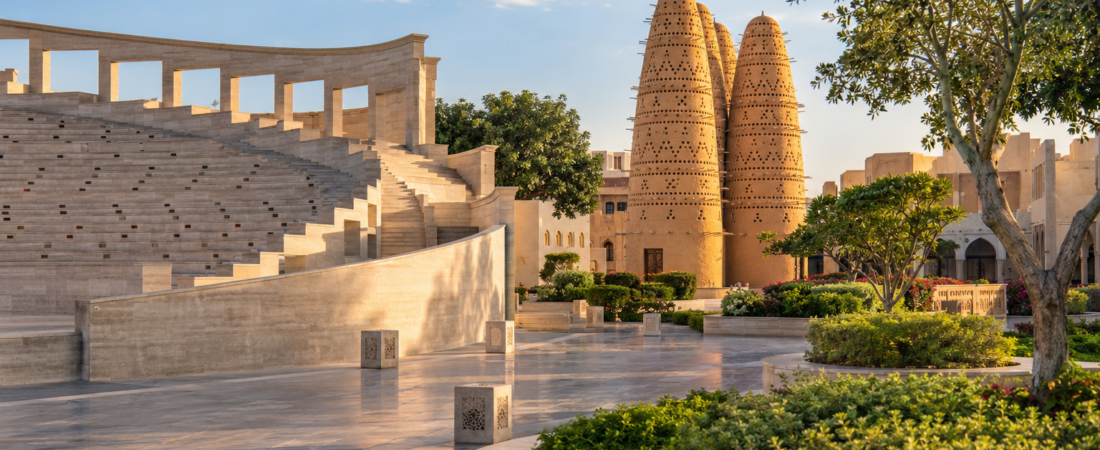
The best time to visit Doha is from November to March, when temperatures are comfortable enough for outdoor sightseeing, desert trips, waterfront walks and evenings at Souq Waqif. January and February usually offer the coolest weather, while November and March provide warmer days that are still suitable for exploring.
The ideal month ultimately depends on your priorities. Visit between December and February for the mildest conditions, choose November or March for warm weather with easier outdoor sightseeing, or consider summer if lower hotel rates and indoor attractions matter more than spending time outside.
Use our complete Doha travel guide to plan the attractions, transport and practical details for your visit.
Best Time to Visit Doha at a Glance
| Travel period | Weather | Crowds | Best for |
|---|---|---|---|
| November to March | Mild to warm | Moderate to high | First-time visits and outdoor sightseeing |
| April to May | Hot and increasingly humid | Moderate | Short city breaks and indoor attractions |
| June to September | Extremely hot and humid | Generally lower | Hotels, museums, shopping and stopovers |
| October | Hot but gradually improving | Moderate | Travellers comfortable with warm weather |
| Ramadan | Seasonal and changes annually | Varies | Culture and evening atmosphere |
When Is the Best Time to Visit Doha?
For most travellers, November through March is the best period to visit Doha. The days are generally sunny, evenings are cooler and long periods outdoors are much more comfortable than during summer.
This period is ideal for:
- Walking along the Doha Corniche
- Exploring Souq Waqif
- Visiting Katara Cultural Village
- Spending time at The Pearl and Lusail Marina
- Taking a desert safari
- Dining outdoors
- Relaxing on beaches
- Exploring parks and public spaces
- Attending seasonal events
December, January and February provide the coolest conditions. November and March are warmer but still suitable for most outdoor activities, especially when sightseeing is planned for mornings and evenings.
Doha Weather by Season
Doha has a dry desert climate with year-round sunshine, mild winters and extremely hot summers. Rainfall is limited and occurs mainly during the cooler months.
Average monthly temperatures range from approximately 17°C in January to 36°C in July, although daytime summer temperatures can exceed 40°C. Humidity can make coastal areas feel considerably hotter, particularly from June through September.
Winter in Doha: November to February
Best for: First-time visitors, outdoor sightseeing, beaches, events and desert excursions
Winter is Doha’s most comfortable and popular travel season. Days are normally mild to warm, while mornings and evenings can feel pleasantly cool.
November
November marks the beginning of Doha’s most comfortable season. Early in the month can remain warm, but conditions usually improve as the month progresses.
This is a good time for:
- Corniche walks
- Katara Cultural Village
- Desert excursions
- Outdoor dining
- Beach visits
- Exploring The Pearl
- Evening markets
November suits visitors who enjoy warm weather but want to avoid the extreme heat of summer.
December
December brings mild days, cooler evenings and a lively atmosphere. Qatar National Day takes place on 18 December, and celebrations or special programmes may be held around Doha.
The comfortable conditions are ideal for following our 3 days in Doha itinerary.
December is also a popular travel month. Hotels can become more expensive around holidays, major events and National Day celebrations, so reserving accommodation early is advisable.
January
January is usually one of Doha’s coolest months. Average monthly temperatures are around 17°C, although daytime conditions are often warmer and comfortable in direct sunshine.
It is an excellent month for walking, parks, outdoor attractions and desert activities. Evenings can feel cool near the water, particularly around the Corniche, Katara and The Pearl.
Pack a light jacket, cardigan or sweater for nighttime outings and strongly air-conditioned indoor spaces.
February
February remains mild and comfortable, making it another excellent month for a first visit. Outdoor sightseeing can usually continue throughout the day without the intense heat experienced later in the year.
Occasional rain, wind or cooler spells are possible. Rainfall is normally limited, but short showers may temporarily affect outdoor plans.
February is particularly suitable for:
- Museums combined with outdoor walks
- Souq Waqif in the afternoon and evening
- Desert camping
- Kayaking and nature trips
- Outdoor sporting events
- Waterfront dining
Spring in Doha: March to May
Best for: Warm-weather trips, smaller crowds and travellers combining indoor and outdoor attractions
Spring begins with pleasant conditions but becomes progressively hotter. March can still be an excellent month, while late April and May require more careful planning.
March
March is one of the best shoulder-season months to visit Doha. The weather is warmer than January or February but generally remains suitable for sightseeing.
Outdoor attractions are most comfortable in the morning and late afternoon. Midday breaks become increasingly useful as the month progresses.
March is a good choice if you want:
- Warm, sunny days
- Beach time
- Desert activities
- Outdoor evenings
- Fewer winter layers
- A mixture of indoor and outdoor sightseeing
April
Temperatures rise noticeably in April. Early mornings and evenings can still be pleasant, but midday conditions may feel uncomfortable during longer outdoor visits.
Plan museums, malls and indoor attractions during the hottest hours. Save the Corniche, Katara Hills, Souq Waqif and The Pearl for later in the day.
April can work well for a short city break if you are comfortable with heat and structure the itinerary carefully.
May
May is hot, and daytime temperatures can approach summer levels. Humidity may also increase near the coast.
Outdoor sightseeing should be limited to early mornings and evenings. Taxis or the Doha Metro become more practical than walking between attractions.
May is better suited to travellers focusing on:
- Museums
- Shopping
- Hotel facilities
- Restaurants
- Indoor family attractions
- Short stopovers
Visitors intending to spend significant time outside will usually find November through March more comfortable.
Summer in Doha: June to September
Best for: Indoor attractions, luxury hotels, shopping and short stopovers
Summer in Doha is extremely hot. Daytime temperatures frequently exceed 40°C, and high humidity can make the air feel even warmer.
Walking long distances outside during the middle of the day is not recommended. Even short journeys between a metro station and an attraction can feel demanding.
However, Doha remains open and active throughout summer. Hotels, museums, shopping centres, restaurants and public transport are strongly air-conditioned.
June
June brings intense heat and strong sunshine. Outdoor attractions are best visited shortly after sunrise or after sunset.
Visitors should use taxis or the metro for longer journeys, carry water and avoid planning consecutive outdoor stops.
July
July is usually among the hottest months of the year. Average monthly temperatures are around 36°C, while afternoon highs can exceed 40°C.
This is not the best month for a traditional sightseeing holiday. It may still suit travellers planning a stopover centred on museums, restaurants and indoor attractions.
August
August remains extremely hot and often humid. Beach visits may sound appealing, but strong sunshine and high water temperatures can make daytime coastal activities uncomfortable.
If visiting in August, select accommodation with good indoor facilities and schedule outdoor sightseeing after sunset.
Our guide to where to stay in Doha explains the best neighbourhoods for museums, beaches, metro access and short stopovers.
September
September continues to feel like summer. Temperatures gradually begin to fall, but humidity can remain high, particularly in the evenings.
Late September may be slightly more manageable than July or August, although outdoor sightseeing still requires caution.
Autumn in Doha: October
Best for: Warm-weather travellers, early-season outdoor activities and city breaks
October is a transitional month. The beginning can remain very hot, while late October generally becomes more comfortable.
Morning and evening sightseeing is usually easier than in peak summer. Outdoor cafés, seasonal attractions and cultural programmes also begin becoming more active as cooler weather approaches.
October can be a reasonable compromise for travellers who want:
- Warm beach weather
- Fewer peak-winter visitors
- Longer evenings outdoors
- A combination of museums and sightseeing
Travellers sensitive to heat should choose November or later.
Doha Month-by-Month Weather Guide
The following temperatures are approximate typical ranges. Actual conditions vary from year to year.
| Month | Typical daytime conditions | Travel experience |
|---|---|---|
| January | Mild, around 20–24°C | Excellent for outdoor sightseeing |
| February | Mild to warm, around 21–25°C | Excellent for sightseeing and desert trips |
| March | Warm, around 25–29°C | Very good, especially mornings and evenings |
| April | Hot, around 30–35°C | Outdoor plans require midday breaks |
| May | Very hot, around 35–40°C | Best for indoor-focused trips |
| June | Extremely hot, often above 40°C | Limit outdoor sightseeing |
| July | Extremely hot and humid | Best for indoor attractions |
| August | Extremely hot and humid | Best for hotels, malls and museums |
| September | Very hot and humid | Outdoor plans remain limited |
| October | Hot, gradually becoming more comfortable | |
| November | Warm and pleasant | One of the best months to visit |
| December | Mild with cooler evenings | Excellent for most activities |
Best Time for Outdoor Sightseeing
Visit between November and March if your main priorities include Souq Waqif, the Corniche, Katara Cultural Village, The Pearl, Mina District and Lusail Marina.
During this period, you can spend longer outside and move between nearby attractions without requiring constant air-conditioned breaks.
January and February offer the coolest weather. November and March are better for travellers who prefer warmer days.
Best Time for a Desert Safari
The cooler months from November to March are best for desert trips, dune activities and visiting the Inland Sea.
Morning and late-afternoon excursions are particularly enjoyable. Sunset tours provide softer temperatures and attractive desert light.
Desert temperatures can fall quickly after sunset in winter. Carry a light jacket if your excursion continues into the evening.
Although desert tours operate during warmer months, summer heat can make daytime activities uncomfortable. Follow your licensed tour operator’s safety guidance.
Best Time for Beaches and Water Activities
The most comfortable periods for beaches are generally:
- March to early May
- Late October to November
Winter beach days can also be pleasant, although the water and air may feel cool to some visitors, particularly in January.
Summer offers very warm sea temperatures, but extreme heat, humidity and strong sunshine can reduce comfort. Visit beaches early in the morning, use sun protection and avoid extended exposure around midday.
Best Time for Walking and Photography
December through February provides comfortable temperatures and clearer conditions for long walks.
Good photography locations include:
- Doha Corniche
- Mina District
- Souq Waqif
- MIA Park
- Katara Cultural Village
- Qanat Quartier
- Porto Arabia
- Lusail Marina
The hour shortly after sunrise and the period before sunset normally provide softer light. Blue hour is particularly effective for photographing Doha’s illuminated skyline and waterfront.
Dust, humidity and seasonal haze can occasionally reduce visibility, so allow some flexibility if skyline photography is important.
Best Time for Museums and Indoor Attractions
Doha’s museums can be visited throughout the year, making the city suitable for a stopover even during summer.
Important indoor attractions include:
- National Museum of Qatar
- Museum of Islamic Art
- 3-2-1 Qatar Olympic and Sports Museum
- Msheireb Museums
- Mathaf: Arab Museum of Modern Art
- Qatar National Library
- Shopping centres and family attractions
Museum hours vary by day. Several Qatar Museums institutions close on different weekdays and open later on Fridays. Check current schedules before arranging your itinerary.
In summer, plan museums and indoor attractions during the afternoon and reserve outdoor locations for early morning or evening.
Visiting Doha During Ramadan
Ramadan follows the Islamic lunar calendar, so its dates move approximately 10 or 11 days earlier each year.
Visiting Doha during Ramadan can be culturally rewarding. The city becomes especially lively after sunset, when families and friends gather for iftar and evening activities.
Travellers should expect some changes:
- Restaurants may remain closed or operate limited services during daylight hours
- Museums and attractions may follow revised schedules
- Shops may stay open much later at night
- Public transport hours can change
- Evening traffic can increase around iftar
- Entertainment schedules may be adjusted
Non-Muslim visitors are not expected to fast, but eating, drinking or smoking openly in public during daylight hours should be avoided. Hotels may provide food in designated areas.
After sunset, Souq Waqif and other gathering places can have a particularly festive atmosphere. Confirm the exact Ramadan dates and opening schedules for your travel year before booking.
Visiting Doha During Eid
Eid al-Fitr follows Ramadan, while Eid al-Adha occurs later in the Islamic calendar. Both holidays bring family gatherings, celebrations, shopping promotions and special events.
Hotels, malls and popular attractions can become busy. Some businesses may follow reduced hours during the first part of the holiday, while entertainment venues may extend their schedules later.
Book accommodation early if your visit coincides with Eid and check opening arrangements shortly before travelling.
Visiting Doha During Qatar National Day
Qatar National Day is celebrated on 18 December. The period may include cultural programmes, decorations and public celebrations.
December already has some of Doha’s best weather, so National Day can be an exciting time to visit. However, road closures, security arrangements and larger crowds may affect travel around central areas.
Confirm the official event programme and transport arrangements closer to your visit because celebration locations can change.
When Is Doha Most Crowded?
Doha’s busiest travel period generally runs from November to March, when cooler weather attracts more visitors and outdoor events are common.
Crowds and hotel demand can increase during:
- Major sporting events
- International conferences
- School holidays
- Qatar National Day
- Eid holidays
- Large exhibitions and festivals
- December and New Year travel periods
Doha rarely feels crowded in the same way as some major European or Asian capitals. However, hotel prices can rise sharply during significant events even when attractions remain manageable.
Cheapest Time to Visit Doha
The hottest months, particularly June through September, can offer better hotel availability and lower accommodation rates.
However, any savings come with a significant trade-off: outdoor sightseeing is limited by extreme heat and humidity.
For a better combination of value and manageable weather, consider:
- Late March
- Early April
- Late October
- Early November
These shoulder periods may offer more competitive accommodation than the coolest winter weeks while still allowing some outdoor activities.
Hotel prices are influenced by events as much as by weather. Always check Doha’s event calendar before assuming a particular week will be inexpensive.
Best Time to Visit Doha with Children
Families usually find November through March most comfortable. Children can enjoy parks, beaches, outdoor promenades and cultural attractions without spending the entire day in extreme heat.
December and January are particularly suitable for combining indoor museums with outdoor activities.
During summer, families should focus on:
- Indoor play areas
- Museums
- Hotel pools with shaded facilities
- Shopping centres
- Aquariums and educational attractions
- Evening activities
Carry water, sun protection and a light layer for heavily air-conditioned buildings.
What to Pack for Doha by Season
November to March
Pack:
- Light clothing for daytime
- A cardigan or light jacket
- Comfortable walking shoes
- Sunglasses
- Sunscreen
- Modest clothing for mosques and cultural sites
Winter evenings near the water can feel cooler than expected.
April, May and October
Bring:
- Lightweight, breathable clothing
- Strong sun protection
- A reusable water bottle
- A hat
- Comfortable footwear
- A light layer for air-conditioned buildings
June to September
Pack:
- Loose, breathable clothing
- High-protection sunscreen
- Sunglasses and a hat
- A refillable water bottle
- A light layer for powerful indoor air conditioning
Clothing should remain respectful by covering shoulders and knees in museums, mosques, markets and other public places.
Final Verdict: When Should You Visit Doha?
For the best overall experience, visit Doha between November and March.
Choose January or February for the coolest weather and comfortable daytime sightseeing. Select November or Marchif you prefer warmer days, beaches and outdoor evenings.
October and April can work for travellers who tolerate heat and plan activities carefully. Summer is most suitable for stopovers, indoor attractions, shopping and hotel-based stays rather than extensive outdoor sightseeing.
Whatever month you select, check the weather forecast, event calendar, museum schedules and religious-holiday arrangements shortly before travelling. This will help you adjust your plans and make the most of your time in Qatar’s capital.
Explore more places through our destinations page or browse our complete collection of itineraries.