
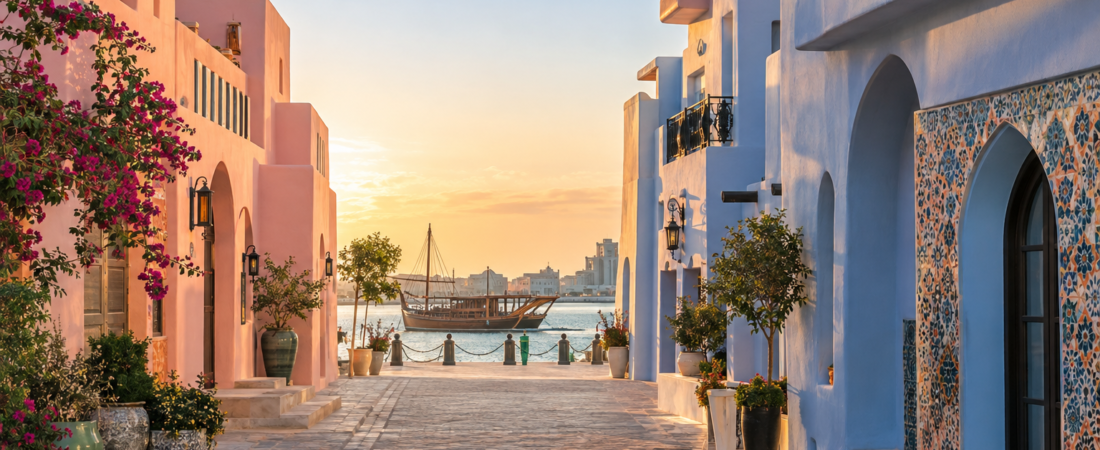
Planning your first visit to Qatar’s capital? This 3 Days in Doha Itinerary combines the city’s most important museums, atmospheric markets, waterfront scenery, cultural landmarks and modern neighbourhoods without making each day feel rushed. You will experience historic Doha around Souq Waqif, explore the city’s striking museums and finish among the colourful canals and marinas of The Pearl.
Price note: All prices in this article are approximate and were checked at the time of publication. Prices may change.
Doha is relatively compact, and many major attractions are connected by its clean and affordable metro system. 3 days gives you enough time to understand the city’s heritage, enjoy its waterfront and see how traditional Qatari architecture sits alongside ambitious modern development.
For more background on the city, practical planning advice and its main attractions, read our complete Doha travel guide.
Top Tours & Experiences in Doha
Discover popular Doha tours and experiences. Check current availability, ratings and prices before you book.
Affiliate disclosure: If you book through these links, we may earn a commission from Viator. This does not increase the price you pay.
3 Days in Doha Itinerary at a Glance
Day 1: Traditional Doha and the waterfront
- National Museum of Qatar
- Mina District at Old Doha Port
- Museum of Islamic Art and MIA Park
- Doha Corniche
- Souq Waqif and Falcon Souq
Day 2: Msheireb and modern Doha
- Msheireb Museums
- Msheireb Downtown Doha
- Imam Muhammad ibn Abd al-Wahhab Mosque
- West Bay
- Katara Cultural Village
- Katara Hills
Day 3: Education City, The Pearl and Lusail
- Qatar National Library
- Education City Mosque
- The Pearl
- Qanat Quartier
- Porto Arabia
- Lusail Marina Promenade
Before Starting Your Doha Itinerary
Getting around Doha
The Doha Metro is usually the easiest and most economical way to move between major neighbourhoods. Its Red, Green and Gold lines connect the airport, Souq Waqif, the National Museum, Education City, Katara and Lusail.
Standard metro travel is capped at approximately QAR 6 per day. Children under five travel free, while older children generally pay the regular fare. Purchase or top up your travel card at a station vending machine and remember to tap in and out.
Some attractions, including sections of The Pearl and Katara, require additional walking or a short Metrolink bus or taxi journey. Taxis and ride-hailing services are useful during the hottest part of the day.
Museum closure days
The National Museum of Qatar is normally closed on Tuesdays, while the Museum of Islamic Art is normally closed on Wednesdays. Both museums have later opening times on Fridays because of Friday prayers.
If either closure affects your visit, exchange the museum portions of Day 1 with activities from another day. Opening arrangements may also change during Ramadan, public holidays and special events.
What to wear
Light, breathable clothing works best in Doha’s climate. Dress respectfully when visiting mosques, museums and traditional areas by covering shoulders and knees. Women should carry a scarf if they plan to enter a mosque.
Day 1: Doha’s Heritage, Museums and Souq Waqif
Your first day explores the historic heart of Doha. Most stops are situated around the eastern Corniche and can be connected by metro, taxi or a manageable walk in cooler weather.
9:00 AM: National Museum of Qatar
Begin at the National Museum of Qatar, one of the city’s most recognizable buildings. Designed to resemble a desert rose, the museum uses immersive galleries, archaeological objects, films and restored heritage spaces to tell Qatar’s story.
The exhibitions cover the peninsula’s natural environment, Bedouin culture, pearl diving, maritime trade, the discovery of oil and Qatar’s rapid transformation. Allow around 2 to 3 hours if this is your first visit.
The restored Palace of Sheikh Abdullah bin Jassim Al Thani, incorporated into the museum complex, provides an interesting contrast to the dramatic modern architecture surrounding it.
At the time of checking, Qatar Museums’ standard museum admission for an adult non-resident was approximately QAR 50, while children aged 16 and under could enter free. Residents of Qatar and eligible categories may also qualify for free admission. Reserve a timed ticket through Qatar Museums before visiting because ticket categories and exhibition access can change.
Typical opening hours:
- Sunday, Monday, Wednesday and Saturday: 9:00 AM–7:00 PM
- Tuesday: Closed
- Thursday: 9:00 AM–9:00 PM
- Friday: 1:30 PM–7:00 PM
The nearest station is National Museum on the Gold Line.
12:00 PM: Lunch near the museum
Have lunch at the museum café or continue to the nearby Mina District, where you will find several cafés and restaurants. Choosing a nearby lunch stop saves time and avoids unnecessary travel during the hottest part of the day.
1:00 PM: Mina District at Old Doha Port
Continue to the colourful Mina District at Old Doha Port. Its pastel façades, patterned doorways and waterfront lanes make it one of Doha’s most photogenic neighbourhoods.
Walk through the pedestrian streets, visit the fish market area and enjoy views of traditional wooden boats in the harbour. Exploring the public areas is free, although cafés, restaurants and shops are optional expenses.
The area can become very hot around midday. In warmer months, keep this visit short or move it later in the afternoon.
2:30 PM: Museum of Islamic Art
Travel to the Museum of Islamic Art, positioned on a purpose-built island beside the Corniche. Its collection covers more than 1,400 years of Islamic art and includes ceramics, manuscripts, jewellery, metalwork, textiles and objects from across Asia, Africa and Europe.
Allow approximately two hours for the permanent collection and any temporary exhibitions included with your ticket.
At the time of checking, standard adult non-resident admission was listed at approximately QAR 50, with free admission for children aged 16 and under and qualifying residents. Check the Qatar Museums booking page before arriving because exhibition schedules and ticket availability can change.
Typical opening hours:
- Sunday, Monday, Tuesday and Saturday: 9:00 AM–7:00 PM
- Wednesday: Closed
- Thursday: 9:00 AM–9:00 PM
- Friday: 1:30 PM–7:00 PM
4:30 PM: MIA Park and the Doha Corniche
After the museum, walk through MIA Park. This landscaped waterfront space has excellent views across the bay toward West Bay’s modern skyline.
Continue along the Doha Corniche, a seven-kilometre waterfront promenade curving around Doha Bay. You do not need to walk its entire length. The section between MIA Park and the traditional dhow harbour provides some of the best city views.
A traditional dhow cruise is an optional paid activity. Prices vary considerably according to the boat, trip duration and whether the cruise is private or shared. Confirm the total price and length of the ride before boarding.
6:00 PM: Explore Souq Waqif
Spend the evening at Souq Waqif, when the lanes become cooler and livelier. Although the market has been carefully restored, its narrow passages, mud-rendered buildings and small shops preserve the feeling of a traditional commercial district.
Look for spices, perfumes, incense, textiles, dates, handicrafts and souvenirs. You can also visit the nearby Falcon Souq, where falconry equipment and trained birds reflect the sport’s importance in Qatari culture.
Exploring the market is free. Individual shops commonly close during part of the afternoon and reopen in the evening, so nighttime is generally the best period to visit.
Finish with dinner at one of the souq’s restaurants. You will find Qatari, Lebanese, Yemeni, Syrian, Persian, Indian and other regional cuisines.
Day 2: Msheireb, West Bay and Katara Cultural Village
Day 2 shows Doha’s transition from traditional courtyard neighbourhoods to contemporary architecture and cultural developments.
9:00 AM: Msheireb Museums
Start at Msheireb Museums, a group of restored heritage houses in Msheireb Downtown. The exhibitions explore family life, the history of slavery in the region, the development of Qatar’s oil industry and the changing character of Doha.
The four houses are:
- Bin Jelmood House
- Company House
- Mohammed bin Jassim House
- Radwani House
Entry is generally free, although opening days and access to individual houses can vary. Allow around 90 minutes to two hours and check the official schedule before visiting.
11:00 AM: Walk through Msheireb Downtown Doha
Explore the surrounding Msheireb Downtown Doha, a modern district influenced by traditional Qatari architecture. Shaded walkways, courtyards, public art and restored buildings make the area comfortable to explore on foot.
Stop at Barahat Msheireb, a large open-air square surrounded by cafés and restaurants. The district is directly connected to Souq Waqif, but visiting it during the daytime reveals architectural details that are easy to miss at night.
12:30 PM: Lunch in Msheireb
Have lunch in Msheireb before continuing. The district contains everything from casual cafés to more expensive restaurants, so it is easy to adjust the meal to your budget.
2:00 PM: Imam Muhammad ibn Abd al-Wahhab Mosque
Take a taxi to the Imam Muhammad ibn Abd al-Wahhab Mosque, also known as Qatar State Grand Mosque. The enormous complex sits on elevated ground and offers impressive views toward Doha’s skyline.
Non-Muslim visitors may be permitted to enter outside prayer times, but access can change. Dress conservatively, follow staff instructions and avoid visiting during prayers. Women may be asked to cover their hair.
There is no regular admission charge. If entry is unavailable, you can still respectfully view the exterior architecture from permitted public areas.
3:30 PM: West Bay
Continue to West Bay, Doha’s modern business district. Walk along accessible portions of the waterfront and see the district’s distinctive towers, including the cylindrical Burj Doha and other contemporary high-rises.
West Bay is more about modern architecture than traditional sightseeing, so around 45 minutes is usually sufficient unless you plan to stop for coffee or visit a shopping centre.
4:30 PM: Katara Cultural Village
Take the Red Line to Katara station and explore Katara Cultural Village, a large arts and cultural district between West Bay and The Pearl.
Important places to see include:
- Katara Mosque, decorated with blue-and-gold tilework
- The smaller Gold Mosque
- Katara Amphitheatre
- Pigeon towers
- Art galleries and exhibition spaces
- Katara Beach
- 21 High Street
- Public artworks along the waterfront
Walking through Katara’s public areas is free. Individual exhibitions, performances, beach facilities and activities may have separate charges.
Check the programme for temporary exhibitions or performances before your visit. Access to mosques should always be respectful and may be restricted during prayer times.
6:30 PM: Sunset at Katara Hills
Walk up Katara Hills in the late afternoon. The landscaped paths provide elevated views over the cultural village and Arabian Gulf.
The hills are especially pleasant around sunset, when temperatures are lower and Katara’s buildings begin to illuminate. Bring water and wear comfortable footwear.
7:30 PM: Dinner at Katara
Stay for dinner at Katara. For a quick local favourite, try karak tea with a light snack or chapati. The cultural village also offers seafood, Middle Eastern and international restaurants at several price levels.
Day 3: Education City, The Pearl and Lusail
Your final day combines Doha’s educational architecture with two of the region’s most ambitious modern waterfront developments.
9:00 AM: Qatar National Library
Take the Green Line to Qatar National Library station. The library’s open-plan interior, designed around a vast terraced collection of books, is one of Doha’s most impressive contemporary spaces.
The building also houses the Heritage Library, which contains historical books, manuscripts, maps and photographs relating to Qatar and the wider region.
General entry is free, but visitors should check the library’s current opening hours, exhibition access and identification requirements before travelling. Maintain a quiet and respectful atmosphere because this is a working library rather than simply a tourist attraction.
Allow approximately one to 90 minutes, depending on which exhibitions and public areas are open.
10:45 AM: Education City Mosque
Walk or take a short taxi to the Education City Mosque, part of the Minaretein building. Its modern design features two slender minarets and extensive Arabic calligraphy.
Visitors should dress modestly and avoid prayer periods. Public access can depend on religious services, events and educational activities, so verify arrangements before arriving.
Viewing the accessible areas is normally free.
12:00 PM: Lunch in Education City or Katara
Have an early lunch in Education City, or return toward Katara before travelling to The Pearl. This prevents the final afternoon from becoming too rushed.
2:00 PM: The Pearl
Travel to The Pearl, a large man-made island north of central Doha. From Legtaifiya Metro Station on the Red Line, the M110 Metrolink bus serves parts of the island. A taxi is usually more convenient if you are short on time.
The Pearl contains several different neighbourhoods. For a first visit, focus on Qanat Quartier and Porto Arabia rather than attempting to see the entire island.
2:30 PM: Qanat Quartier
Begin in Qanat Quartier, a pedestrian-friendly neighbourhood known for its pastel buildings, canals, bridges and waterfront paths.
Walk across the replica Rialto-style bridge, find the colourful piano steps and explore the lanes around the canals. Visiting the neighbourhood is free.
Optional water taxis normally operate from Gate B of the Qanat Quartier canals between approximately 9:00 AM and 11:00 PM. Fares and schedules can change, so confirm the current price before boarding.
4:00 PM: Porto Arabia
Continue to Porto Arabia, where a broad waterfront promenade circles a marina filled with yachts. The area has cafés, restaurants, shops and views of The Pearl’s residential towers.
Walking around the marina is free. Stop for coffee or ice cream if you want a relaxed break before the final evening of your itinerary.
5:30 PM: Lusail Marina Promenade
Take a taxi or connect to the Lusail Tram and continue to Lusail Marina Promenade. Lusail is a separate city immediately north of Doha, but its metro and tram connections make it easy to include in a Doha itinerary.
Walk along the waterfront and see the city’s futuristic towers, landscaped public spaces and marina. The promenade is free and particularly attractive around sunset.
Operating patterns on the Lusail Tram can change during major events. Check the latest journey information before travelling.
7:00 PM: Dinner in Lusail or The Pearl
Finish your trip with dinner in Lusail or return to The Pearl. Lusail offers modern waterfront restaurants, while The Pearl has a larger selection of established cafés and international dining options.
If you prefer a more traditional final evening, return to Souq Waqif for another meal and one last walk through its illuminated lanes.
Estimated Admission and Transport Costs
Your total cost depends heavily on dining, taxis and optional activities, but the principal sightseeing expenses are manageable.
Approximate per-person costs include:
- Doha Metro travel: up to QAR 6 per day in standard class
- National Museum of Qatar: approximately QAR 50 for an adult non-resident
- Museum of Islamic Art: approximately QAR 50 for an adult non-resident
- Msheireb Museums: generally free
- Qatar National Library: free
- Katara public areas: free
- The Pearl and Qanat Quartier: free to explore
- Dhow cruise, canal water taxi and beach activities: optional, with prices varying by operator
A traveller using public transport and visiting both major museums could spend approximately QAR 118 on core admission and metro travel over 3 days, excluding the initial reusable travel card, meals, taxis and optional activities.
Best Time to Follow This Doha Itinerary
The most comfortable period for outdoor sightseeing is generally from November to March, when daytime temperatures are milder. Even during cooler months, carry water and use sun protection.
From late spring through early autumn, schedule outdoor stops early in the morning or after sunset. Use the metro or taxis for longer transfers and spend the hottest hours inside museums, galleries or shopping areas.
During Ramadan, many attractions, restaurants and shops follow adjusted schedules. Friday mornings also require additional planning because metro services and several attractions may start later around Friday prayers.
Practical Tips for 3 Days in Doha
Reserve museum tickets
Book Qatar Museums tickets before your visit, especially during weekends, public holidays and major events. Some galleries may occasionally close for improvements even when the main museum remains open.
Do not underestimate the heat
Distances that appear short on a map can feel much longer in Doha’s heat. Carry drinking water, take indoor breaks and use a taxi when walking conditions are uncomfortable.
Plan outdoor attractions around sunset
The Corniche, MIA Park, Katara Hills, Qanat Quartier and Lusail Marina are most enjoyable in the late afternoon and evening.
Allow time for prayer schedules
Mosque access is restricted during prayers, and Friday opening arrangements differ at museums, public transport services and other attractions.
Respect photography restrictions
Ask permission before photographing people, particularly inside traditional markets and religious locations. Museums may restrict flash, tripods or photography in certain galleries.
Keep some flexibility
Temporary exhibitions, cultural events and seasonal markets are common in Doha. Check current event schedules shortly before travelling and adjust the itinerary if something special interests you.
Is 3 Days in Doha Enough?
3 days is enough for a rewarding introduction to Doha. This itinerary covers the city’s history, major museums, traditional market, cultural districts and modern waterfront neighbourhoods while leaving reasonable time for meals and rest.
Travellers with an extra day could add a guided desert trip to the dunes and Inland Sea, visit Al Zubarah Archaeological Site or spend more time exploring Doha’s museums. If you enjoy modern Gulf cities, you can also compare this trip with our 3-day Dubai itinerary or 3-day Abu Dhabi itinerary.
Book Your Doha Experiences
Ready to start planning? Compare popular Doha tours and activities, check current prices and availability, and book the experiences that suit your trip.
Affiliate disclosure: If you book through these links, we may earn a commission from Viator. This does not increase the price you pay.
Explore more places through our destinations page or browse our complete collection of itineraries.