
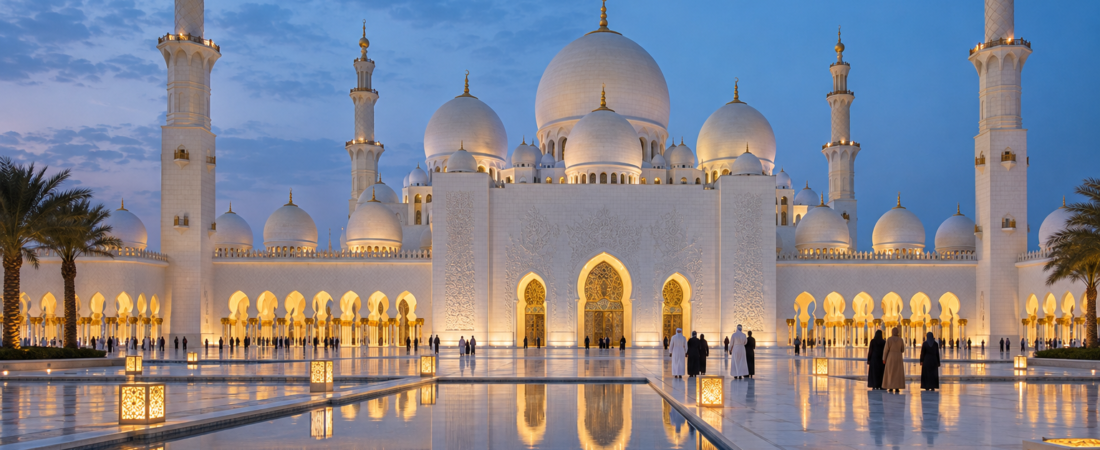
Abu Dhabi blends monumental architecture, museums, beaches, mangrove forests and traditional Emirati heritage. The capital of the United Arab Emirates feels calmer and more spacious than neighbouring Dubai, yet it offers enough major attractions to fill several days.
This Abu Dhabi travel guide covers the best things to do, where to stay, how to get around, when to visit and the practical details you need for a first trip.
Price note: All prices in this article are approximate and were checked at the time of publication. Prices may change.
Why visit Abu Dhabi?
Abu Dhabi is an excellent destination for travellers interested in culture, architecture and relaxed coastal experiences. Its headline attractions include Sheikh Zayed Grand Mosque, Louvre Abu Dhabi, Qasr Al Watan and the entertainment parks of Yas Island.
The city also provides experiences that are easy to overlook, from kayaking through mangroves to walking along the Corniche and exploring the restored buildings of Qasr Al Hosn.
Compared with Dubai, Abu Dhabi generally has a slower pace and attractions are spread across a wider area. The two cities work well together, and our Dubai travel guide can help if you plan to visit both during the same UAE trip.
Top Tours & Experiences in Abu Dhabi
Discover popular Abu Dhabi tours and experiences. Check current availability, ratings and prices before you book.
Affiliate disclosure: If you book through these links, we may earn a commission from Viator. This does not increase the price you pay.
Best things to do in Abu Dhabi
Visit Sheikh Zayed Grand Mosque
Sheikh Zayed Grand Mosque is Abu Dhabi’s most recognisable landmark and one of the largest mosques in the world. Its white marble courtyards, reflective pools, domes, minarets and intricate floral decoration make it impressive from every angle.
Non-Muslim visitors are welcome outside prayer times, and general admission is free. Visitor registration and security screening are required. Opening arrangements change during Ramadan, religious holidays and Friday prayers, so check the mosque’s current visitor schedule before going.
Dress modestly. Clothing should be loose and cover the arms and legs, while women must also cover their hair. Avoid transparent or tight clothing. Visitors are expected to behave respectfully and follow instructions concerning photography and access to prayer areas.
Late afternoon is an attractive time to visit because you can see the mosque in daylight and watch its appearance change as the evening lights come on.
Explore Louvre Abu Dhabi
Louvre Abu Dhabi stands beneath an enormous geometric dome on Saadiyat Island. Its galleries connect artworks and objects from different cultures and periods, presenting human history through shared themes rather than separating everything strictly by geography.
The building is an attraction in its own right. Sunlight filters through the layered dome to create the museum’s famous “rain of light,” while outdoor walkways provide views across the water.
Standard adult admission is approximately AED 70, with free or reduced entry available to certain age groups and eligible visitors. Allow at least two to three hours for the museum.
Even if you are not usually drawn to art museums, the architecture and broad historical approach make Louvre Abu Dhabi worth considering.
Tour Qasr Al Watan
Qasr Al Watan, the Presidential Palace, gives visitors a closer look at the UAE’s governmental traditions, craftsmanship and cultural heritage.
Inside, you can explore the Great Hall, exhibitions about diplomacy and governance, a collection of gifts presented to the UAE and a library containing books on the country’s history and development.
General admission is approximately AED 65 for adults, with lower prices for children. Tickets and access arrangements can vary when official events are taking place.
Check whether the evening Palace in Motion light show is scheduled during your visit. It adds another dimension to the palace’s façade and surrounding grounds.
Walk along the Abu Dhabi Corniche
The Abu Dhabi Corniche runs beside the city’s waterfront, with walking paths, cycling areas, landscaped gardens and views of the modern skyline.
Parts of Corniche Beach are free, while some managed sections charge a modest entrance fee. Facilities vary between sections, so choose your access point according to whether you want open public space or a more organised family beach.
Early morning and the period before sunset are the most comfortable times for walking outside. Midday heat can be intense for much of the year.
Discover Qasr Al Hosn
Qasr Al Hosn is Abu Dhabi’s oldest surviving stone building and an important place for understanding the city’s transformation from a coastal settlement into a modern capital.
The complex includes the Inner Fort and Outer Palace, with exhibitions covering the ruling family, pearling, trade and everyday life in the emirate. The neighbouring House of Artisans highlights traditional Emirati crafts and skills.
Adult admission is generally around AED 30. Allow approximately 90 minutes, or longer if you want to attend a demonstration or cultural programme.
Experience Yas Island
Yas Island is Abu Dhabi’s main entertainment district. It is home to Ferrari World, Warner Bros. World Abu Dhabi, Yas Waterworld and SeaWorld Yas Island, as well as Yas Marina Circuit, Yas Mall and hotels.
The theme parks are significant expenses, and advance online prices can differ from tickets purchased on the day. Combination passes may offer better value if you plan to visit more than one park.
Motor-racing fans can check whether tours, cycling sessions or other public experiences are available at Yas Marina Circuit. Access depends on the circuit’s event calendar.
You do not need a theme-park ticket to explore Yas Mall, Yas Bay Waterfront or the public areas around Yas Marina.
Relax on Saadiyat Island
Saadiyat Island combines cultural attractions with some of Abu Dhabi’s most attractive beaches. The water is often clear, and the pale sand gives the area a more natural coastal feel than many heavily developed waterfronts.
Saadiyat Beach Club and several resort beaches charge for access. Kai Beach is another popular paid option, but prices and operating arrangements can change seasonally.
The island is also developing into a major cultural district. Check which institutions and exhibitions are open during your travel dates rather than relying on older construction schedules.
Kayak through the mangroves
Abu Dhabi’s mangrove forests provide a striking contrast to the city’s towers and desert surroundings. Guided kayaking trips take visitors through shallow waterways where birds, fish and other wildlife may be visible.
Tours commonly cost around AED 150–250 per person, depending on duration, operator and whether the trip is private or shared.
Mangrove National Park and Jubail Mangrove Park are among the best-known areas. Boardwalk admission and activity prices at Jubail can vary, while guided experiences should be reserved with a reputable operator.
Choose an early-morning or late-afternoon session for cooler conditions, and follow instructions to avoid damaging the mangrove ecosystem.
Take a desert trip
A desert excursion usually includes dune driving, sunset stops and a camp experience. Some packages add camel rides, sandboarding, dinner and entertainment.
Shared evening tours often begin at approximately AED 200–350 per person, while private trips and premium camps cost considerably more.
Compare what is included before booking. Very cheap tours may involve large groups, lengthy collection routes or extra charges for activities presented as optional upgrades.
Travellers with back, neck or certain medical conditions should avoid aggressive dune driving or discuss a gentler alternative with the operator.
How many days do you need in Abu Dhabi?
Three days is a comfortable amount of time for a first visit.
On the first day, see Sheikh Zayed Grand Mosque, Qasr Al Watan and the Corniche. Use the second day for Louvre Abu Dhabi, Saadiyat Island and Qasr Al Hosn. Spend the third day at Yas Island, in the mangroves or on a desert excursion.
With only one day, focus on the mosque, the Corniche and either Louvre Abu Dhabi or Qasr Al Watan. Avoid trying to include every island because travel time between widely separated attractions can add up.
Four or five days allows time for beaches, theme parks and slower evenings without rushing.
Where to stay in Abu Dhabi
Corniche and central Abu Dhabi
The Corniche area is a practical base for first-time visitors who want waterfront walks, city restaurants and relatively convenient access to central attractions.
Hotels range from established international properties to more affordable business hotels a few streets inland. The area works particularly well for travellers who prefer a city atmosphere.
Saadiyat Island
Saadiyat Island is best for beaches, resort facilities and easy access to Louvre Abu Dhabi. Accommodation is generally more expensive than in central districts, and taxis are usually needed for sightseeing elsewhere.
Choose Saadiyat if relaxation and resort time are major parts of your trip.
Yas Island
Yas Island is the most convenient base for theme parks, Yas Marina Circuit and families planning several entertainment days. It is also comparatively close to Zayed International Airport.
It is less convenient for repeated visits to the Corniche and central cultural attractions, so consider splitting your stay if your plans cover both sides of the city.
Al Maryah Island
Al Maryah Island offers modern upscale hotels, restaurants and shopping around The Galleria. It is a polished business and lifestyle district with good road connections to central Abu Dhabi and Saadiyat Island.
Near the airport
An airport-area hotel can be useful for an overnight stop, a late arrival or an early departure. However, it is not the best location for a full sightseeing stay because most major attractions require additional travel.
Getting around Abu Dhabi
Public buses
Abu Dhabi has an air-conditioned public-bus network covering the city, airport and several visitor areas. Fares generally start at around AED 2 and are paid using a Hafilat smart card rather than cash onboard.
Routes can involve longer travel times than taxis because attractions are distributed across different islands. Check the latest route information before leaving, especially when travelling to less central locations.
Taxis
Metered taxis are plentiful and usually the easiest option for visitors. Short urban journeys may cost approximately AED 15–35, while longer trips between central Abu Dhabi, Saadiyat Island, Yas Island and the airport cost more.
Official taxis can be found at hotels, malls and attractions or booked through approved local services. Ride-hailing apps are also available, although their prices may be higher at busy times.
Renting a car
A rental car can be useful if you want to visit several distant attractions, travel beyond the city or continue to Dubai or Al Ain.
Roads are generally modern, but traffic, parking rules, tolls and unfamiliar junctions require attention. Do not rent a car solely for the central Corniche area unless it suits your wider itinerary.
Walking
Individual areas such as the Corniche, Yas Bay and parts of central Abu Dhabi are walkable. However, Abu Dhabi is not a city where most visitors can comfortably walk between all major attractions.
Heat, wide roads and long distances make taxis or buses necessary for many journeys.
Best time to visit Abu Dhabi
The most comfortable period is generally from November to March. Daytime conditions are better for beaches, outdoor sightseeing and desert trips, although this is also the busiest season.
April, May and October can still work, but afternoons may be hot. Plan outdoor attractions for mornings and evenings.
From June to September, extreme heat and humidity make extended outdoor exploration uncomfortable. Hotels may offer attractive rates during this period, and indoor museums, malls and theme parks remain accessible.
Ramadan dates change each year. Visitors can still enjoy Abu Dhabi during Ramadan, but attraction hours, restaurant routines and entertainment schedules may be different.
What to wear in Abu Dhabi
Light, breathable clothing is useful for the climate, but carry an additional layer because indoor air conditioning can feel cold.
Modest dress is expected at mosques and appreciated at heritage sites. Swimwear belongs at beaches and pools rather than in malls, restaurants or public streets.
Comfortable footwear is important for large attractions such as Sheikh Zayed Grand Mosque, Louvre Abu Dhabi and the palace grounds.
Food to try
Look for Emirati dishes such as machboos, a spiced rice dish commonly served with meat or fish, and harees, made from wheat and meat cooked to a soft consistency.
Arabic mezze, grilled meats, shawarma and fresh seafood are widely available. Abu Dhabi’s international population also means you will find excellent Indian, Lebanese, Filipino and other cuisines at different price levels.
A simple cafeteria meal may cost around AED 20–40 per person, while a meal at a mid-range restaurant commonly costs approximately AED 60–150 per person before any additional charges.
Abu Dhabi travel costs
Budget travellers using buses and inexpensive restaurants might spend approximately AED 250–400 per person per day, excluding accommodation and major theme-park tickets.
A mid-range trip using taxis, paid cultural attractions and comfortable restaurants may cost roughly AED 500–900 per person per day before accommodation.
Theme parks, private tours, beach clubs and luxury dining can increase the daily total significantly. Booking accommodation and headline attractions in advance can make costs more predictable.
Can you visit Abu Dhabi from Dubai?
Yes. Abu Dhabi and Dubai are connected by intercity buses, taxis, private transfers and major highways. The journey usually takes around 90 minutes to two hours, depending on your starting point and traffic.
A day trip is possible, but staying overnight gives you more time and avoids spending a large part of the day travelling. If you visit independently, group nearby Abu Dhabi attractions together rather than crossing the city repeatedly.
Practical Abu Dhabi travel tips
The UAE dirham is written as AED or Dhs. Cards are widely accepted, but it is useful to carry a small amount of cash for minor purchases.
English is commonly spoken in hotels, restaurants and attractions. Arabic is the official language, and using simple greetings is always appreciated.
Public behaviour should be respectful. Avoid photographing people without permission, particularly families, and never photograph government, military or other restricted facilities.
Alcohol is available only at licensed venues. Public drunkenness and drinking in unauthorised places can result in serious consequences.
Always carry sun protection and water. Even during the cooler season, daytime sun can be strong.
Confirm opening hours shortly before visiting religious sites and government buildings. Schedules may change for prayers, official events, public holidays or maintenance.
Abu Dhabi works best when you balance its major indoor attractions with its waterfront, desert and natural landscapes. Leave enough time between sights, and the city becomes a relaxed and rewarding introduction to the UAE.
Book Your Abu Dhabi Experiences
Ready to start planning? Compare popular Abu Dhabi tours and activities, check current prices and availability, and book the experiences that suit your trip.
Affiliate disclosure: If you book through these links, we may earn a commission from Viator. This does not increase the price you pay.
Explore more places through our destinations page or browse our complete collection of itineraries.