
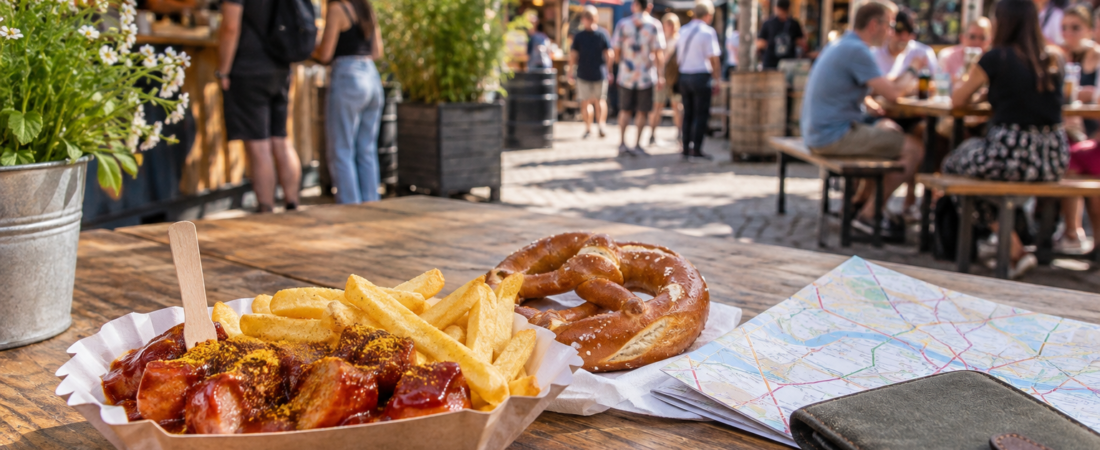
A realistic Berlin travel budget ranges from about €70 to €110 per person per day for a budget trip, while a mid-range visit commonly costs around €150 to €250 per person per day. Travelers choosing upscale hotels, frequent taxis and fine dining can spend considerably more.
Berlin is not Europe’s cheapest capital, but it offers many ways to control costs. Several important historical attractions are free, public transport reaches almost every part of the city, and affordable bakeries, food markets and casual restaurants provide alternatives to expensive tourist-area dining.
Your final cost will depend mainly on accommodation, travel dates and how many paid attractions you choose. This guide covers expected expenses for hotels, food, transport, sightseeing and a 3-day visit.
Before setting your budget, read our Berlin travel guide, choose an area using our guide to where to stay in Berlin, and plan your sightseeing with our 3 days in Berlin itinerary. Our guide to the best time to visit Berlin can also help you avoid particularly busy dates.
Price note: All prices in this article are approximate and were checked at the time of publication. Prices may change.
Average Berlin daily travel budget
The following estimates are per person and exclude flights or long-distance travel to Berlin.
Budget traveler: €70–€110 per day
This budget generally covers a hostel bed or simple room, bakery breakfasts, inexpensive meals, public transport and mostly free attractions.
Mid-range traveler: €150–€250 per day
This allows for a comfortable hotel shared by two people, restaurant meals, public transport and one or two paid attractions.
Comfort or luxury traveler: €250 or more per day
A central upscale hotel, taxis, premium restaurants, tours and multiple ticketed attractions can quickly take the daily cost beyond €250.
Solo travelers may pay more per person for accommodation because they cannot divide a double-room rate. Couples sharing one room can often keep their individual costs lower.
Accommodation costs in Berlin
Accommodation is normally the largest part of a Berlin travel budget. Rates change substantially according to season, neighborhood, events and how early you reserve.
A hostel dormitory bed may cost approximately €30–€60 per night, although popular weekends and summer dates can be more expensive. Basic private rooms and budget hotels often begin around €70–€120 per night.
A comfortable mid-range double room commonly falls somewhere around €120–€220 per night. Well-located properties in Mitte or hotels booked during a festival, trade fair or major event may cost more.
Upscale hotels generally begin above this range and can rise sharply according to the property and date.
Mitte is convenient for first-time visitors but is not always the most economical choice. Prenzlauer Berg, Friedrichshain, Kreuzberg, Schöneberg and parts of Charlottenburg may provide alternatives. However, prices vary within every district, so compare the exact hotel rather than assuming an entire neighborhood is inexpensive.
Before booking, check the total price rather than only the advertised room rate. Breakfast, local taxes, cancellation conditions and payment policies can affect the final cost.
Food costs in Berlin
Berlin offers dining choices for many budgets. Bakeries, street-food stalls and casual international restaurants make it possible to eat affordably without preparing every meal yourself.
A simple bakery breakfast with a pastry or sandwich and a drink may cost around €4–€8. A larger café breakfast will normally cost more.
Currywurst, döner, falafel and other casual meals commonly cost approximately €6–€12, depending on the portion and location. A main course in an informal sit-down restaurant may cost around €12–€20.
For a mid-range dinner with a drink, allow approximately €25–€45 per person. Upscale restaurants, cocktails and multiple courses can take the price well beyond this range.
A practical daily food budget is:
Budget: €20–€35 per person.
Mid-range: €40–€70 per person.
Comfort: €80 or more per person.
Accommodation with breakfast can be useful, but it is not automatically good value. Compare the additional room cost with nearby bakeries and cafés before deciding.
Buying water, snacks and breakfast items from a supermarket can reduce daily spending. Carry a reusable water bottle, but confirm that any public filling source is intended for drinking.
Public transport costs
Berlin’s U-Bahn, S-Bahn, trams and buses make a rental car unnecessary for most city visits. Transport is divided into fare zones:
Zone A covers central Berlin within the S-Bahn ring.
Zone B extends from the ring to the city boundary.
Zone C covers surrounding areas, including Berlin Brandenburg Airport and Potsdam.
As of September 2026, BVG lists the following standard adult fares:
Single ticket AB: €4.00.
Single ticket ABC: €5.00.
24-hour ticket AB: €11.20.
24-hour ticket ABC: €12.90.
A single ticket is valid for travel in one direction within its validity period; it should not be treated as an unlimited return ticket. Always read the current ticket conditions before traveling.
If you will make several journeys during one day, a 24-hour ticket may cost less than purchasing individual tickets. If your sightseeing area is compact, walking between nearby attractions can reduce the number of journeys required.
Travel between Berlin Brandenburg Airport and central Berlin requires an ABC ticket. Do not use an AB-only ticket for the airport journey.
Fares can change, so verify current prices in the official BVG app or website immediately before purchasing.
Is the Berlin WelcomeCard worth it?
The Berlin WelcomeCard combines public transport with discounts at participating attractions. The classic card starts from approximately €28.50, with different prices according to duration and fare zone.
A WelcomeCard is not automatically cheaper for every visitor. Its value depends on the attractions you intend to visit and whether those attractions offer a useful discount.
Before buying, compare:
- The cost of the WelcomeCard for your required zone and duration.
- The price of ordinary public-transport tickets.
- The regular admission prices of your selected attractions.
- The actual discounts available at those attractions.
If your itinerary focuses mainly on free memorials, neighborhood walks and parks, an ordinary transport ticket may offer better value. If you plan several participating paid attractions, the card may reduce your total cost.
Berlin attraction costs
Berlin contains both expensive ticketed attractions and excellent free places. Choosing a balanced combination can prevent sightseeing costs from becoming excessive.
Museum admission varies by institution and exhibition. Many major museums charge approximately €12–€20, while special exhibitions or combination tickets may cost more. Always check the museum’s official website because prices and availability can change.
Observation decks, guided tours, boat trips and entertainment attractions can cost approximately €20–€40 or more per person.
Several major Berlin experiences are free:
Reichstag dome and roof terrace
Visiting the Reichstag dome is free, but advance registration is required. Availability, security arrangements and temporary closures can affect visits, so reserve through the German Bundestag’s official website.
Topography of Terror
Admission to the Topography of Terror documentation center is free. Its exhibitions examine the institutions responsible for Nazi persecution and provide substantial historical context.
Berlin Wall Memorial
The outdoor memorial along Bernauer Strasse can be explored without an admission charge. Allow time to read the information panels rather than treating it as a brief photo stop.
East Side Gallery
Walking beside the murals of the East Side Gallery is free. You can continue across Oberbaum Bridge and explore Friedrichshain or Kreuzberg without buying an attraction ticket.
Brandenburg Gate and Tiergarten
Brandenburg Gate, the surrounding public areas and Tiergarten can all be experienced without an admission fee.
A daily sightseeing allowance of €15–€35 is sufficient for travelers mixing one paid attraction with free sights. Museum enthusiasts or visitors booking tours should allow €40–€70 or more on activity-heavy days.
3-day Berlin budget example
The following examples assume 3 full days and 3 nights in Berlin. They exclude flights, airport transfers, shopping and nightlife.
Budget 3-day trip: approximately €280 per person
Hostel accommodation: €135.
Food: €84.
Public transport: approximately €34.
Paid attractions: €25.
Estimated total: approximately €278, rounded to €280.
This plan relies on hostel accommodation, inexpensive meals, public transport and free historical attractions.
Mid-range 3-day trip: approximately €530 per person
Share of a double hotel room: €255.
Food: €165.
Public transport: approximately €34.
Paid attractions: €75.
Estimated total: approximately €529, rounded to €530.
This budget allows for a comfortable hotel shared by two people, sit-down meals and several paid attractions.
These are planning examples rather than fixed package prices. A major event or late hotel booking can increase the total substantially.
How to save money in Berlin
Book accommodation early
Hotel prices can rise during summer, festivals, trade fairs, public holidays and major sporting events. Compare flexible dates if your travel schedule allows it.
Stay near useful public transport
A cheaper hotel far from a station may cost you time and additional connections. A well-connected property outside Mitte can offer a better balance of price and convenience.
Group nearby attractions
Visit Brandenburg Gate, the Reichstag and Tiergarten together. Combine the East Side Gallery with Oberbaum Bridge and nearby neighborhoods. Efficient planning saves both time and transport costs.
Use Berlin’s free historical attractions
The Reichstag dome, Topography of Terror, Berlin Wall Memorial and East Side Gallery can fill a significant part of an itinerary without admission charges.
Eat away from the largest tourist sights
Restaurants immediately beside major attractions may charge more. Walk a few streets away and check current menus before sitting down.
Use bakeries and markets
A bakery breakfast, supermarket picnic or casual market meal can reduce food spending while still giving you a taste of everyday Berlin.
Compare transport tickets
Do not automatically purchase a tourist pass. Count your expected journeys and attraction discounts, then compare the total with ordinary tickets.
Carry some cash
Cards are widely used, but some smaller businesses may prefer or require cash. Having a modest amount available can prevent inconvenience, though you should avoid carrying more than necessary.
Costs that travelers sometimes forget
Airport transport should be included separately because Berlin Brandenburg Airport requires an ABC ticket.
Accommodation totals may include city taxes or additional charges not obvious in the initial search result. Review the final booking page carefully.
Restaurant bills may not include a service charge in the same way travelers expect at home. Tipping practices vary, so check current local guidance and decide based on the service.
Luggage storage, hotel breakfast, late checkout, club entrance fees and paid public toilets can also add small amounts throughout a trip.
Travel insurance, mobile data and foreign-card charges should be considered before departure. Using a card with high international fees can increase costs without improving the trip.
Is Berlin expensive to visit?
Berlin can feel expensive when accommodation is booked late or when every day includes premium attractions and restaurant meals. However, it is possible to build a rewarding trip around public transport, affordable food and free historical sites.
A backpacker can reasonably aim for around €70–€110 per day, while €150–€250 per day gives most mid-range visitors more flexibility. Travelers who reserve accommodation early and combine paid attractions with free experiences can keep costs under control without missing Berlin’s essential character.
Create your budget using current prices for your exact travel dates, then add a contingency of approximately 10–15% for unexpected expenses. That small buffer makes the trip more comfortable without encouraging unnecessary spending.
Explore more places through our destinations page or browse our complete collection of itineraries.