
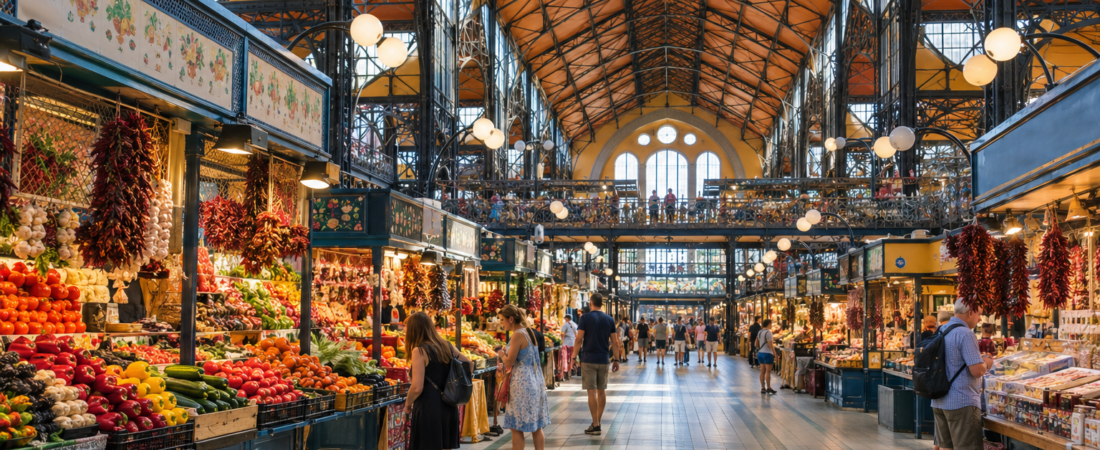
Budapest can accommodate a wide range of travel budgets. Walking along the Danube and exploring historic neighbourhoods cost little or nothing, while accommodation, thermal baths, guided tours and restaurant choices determine how quickly spending rises.
For an initial Budapest travel budget, allow roughly 20,000–35,000 Hungarian forints (HUF) per person per day for a careful budget trip, 40,000–70,000 HUF for a comfortable mid-range trip, or 80,000 HUF and upwards for an upscale visit.
These are planning allowances, not advertised prices or guaranteed costs. They assume two people share a room in the accommodation examples, exclude flights and shopping, and should be adjusted for your dates and travel style. Solo travellers paying for an entire room will generally need more.
Budapest Daily Budget at a Glance
| Spending style | Illustrative daily allowance per person | Typical approach |
|---|---|---|
| Budget | 20,000–35,000 HUF | Hostel or shared accommodation, simple meals, public transport and mostly free sights |
| Mid-range | 40,000–70,000 HUF | Shared private room, a mix of restaurants and cafés, public transport and selected paid attractions |
| Upscale | 80,000 HUF or more | Higher-end hotel, frequent restaurant meals, taxis and multiple paid experiences |
A day with a thermal-bath visit and Parliament tour will cost considerably more than one spent walking around Castle Hill and the Danube. Treat the daily figures as a way to build your own plan, not as a promise that a particular hotel or meal will fit a fixed price.
Price note: All prices in this article are approximate and were checked at the time of publication. Prices may change.
What Currency Does Budapest Use?
Hungary uses the Hungarian forint, abbreviated HUF. Prices may occasionally be displayed in euros, but paying in forints makes it easier to compare costs.
Cards are accepted at many hotels, restaurants and shops. Keep a small amount of cash for places that do not accept cards or for smaller purchases.
If a card terminal or cash machine offers to charge you in your home currency, check the conversion terms before accepting. Likewise, compare the exchange rate and any commission before changing cash.
Accommodation Costs in Budapest
Accommodation is usually the largest part of a Budapest travel budget.
Prices depend on the season, day of the week, booking lead time, room type and location. A private room shared by two travellers often costs less per person than the same room booked by someone travelling alone.
Central Pest is convenient for short visits, but a room a few stops away on a metro or tram line may offer better value. Compare the total booking price, including taxes and any fees shown at checkout, rather than judging a property by its nightly headline rate.
Choosing an Area That Fits Your Budget
District V puts you close to Parliament, the Danube and central landmarks, but its convenience can come at a premium.
District VI offers useful transport connections and access to Andrássy Avenue. Parts of District VII provide many accommodation choices and restaurants, although streets near nightlife venues can be noisy.
Inner District IX is another area worth comparing. In every district, check the exact address and the walking route to a useful transport stop before booking.
Our where to stay in Budapest guide explains the neighbourhood choices in more detail.
Ways to Spend Less on Accommodation
- Compare the full price across your entire stay.
- Check weekday and weekend rates separately.
- Look near metro and major tram stops, not just the central squares.
- Read recent reviews for noise, cleanliness and unexpected charges.
- Consider a refundable rate if your plans are uncertain.
- Book earlier for festivals, holidays and popular weekends.
The cheapest room is not necessarily the least expensive choice if reaching the centre requires frequent taxis.
How Much to Budget for Food
Food spending varies with your appetite and where you choose to eat.
A traveller buying groceries or bakery items for breakfast and eating simple lunches can spend much less than someone having three sit-down meals daily. Restaurants close to heavily visited landmarks may charge more than comparable places a few streets away.
For planning purposes, consider setting aside approximately 7,000–11,000 HUF per day for a careful food budget, or 12,000–20,000 HUF for more frequent restaurant meals. These are flexible allowances, not fixed menu prices; inspect current menus when planning your trip.
Affordable Food Strategies
- Choose accommodation that includes breakfast if the total price represents good value.
- Compare weekday lunch menus.
- Buy snacks or picnic supplies at supermarkets and markets.
- Walk beyond the busiest squares before choosing a restaurant.
- Check the price of drinks as well as food.
- Review the bill for a service charge before adding a tip.
Try local dishes such as gulyás, chicken paprikash, pörkölt or lángos, but compare prices between establishments rather than assuming traditional food is always inexpensive.
The Great Market Hall is enjoyable to browse, though individual stalls and prepared-food counters have different prices. Compare before buying.
Public Transport Costs
Budapest’s metro, tram and bus network can keep daily travel costs manageable.
When checked for this guide, BKK listed these adult fares:
| Transport product | Listed price |
|---|---|
| Single ticket bought in advance | 500 HUF |
| Block of 10 single tickets | 4,500 HUF |
| 24-hour Budapest travelcard | 2,750 HUF |
| 72-hour Budapest travelcard | 5,750 HUF |
| 100E airport shuttle single ticket | 2,500 HUF |
Check BKK’s current fare list before publication or travel: transport prices and conditions can change.
The 72-hour travelcard can be convenient for an active 3-day visit, but it is not automatically the cheapest choice. If you expect to walk extensively and make only a few journeys, add up the individual tickets you would use first.
A travelcard and the Budapest Card are different products. The tourist-oriented Budapest Card includes selected benefits beyond ordinary transport; compare the attractions you will actually visit before buying one.
Ticket Validation Matters
A purchased single ticket may still need to be validated when you start your journey. Digital tickets have their own validation procedures.
Follow the rules for the exact ticket or pass you buy. A penalty fare can erase the savings from a carefully planned transport budget.
Getting From the Airport Without Overspending
The 100E Airport Express connects Budapest Airport with central Budapest and requires its own airport fare. An ordinary single ticket or standard 72-hour travelcard does not, by itself, cover the 100E.
Depending on your destination and current ticket eligibility, the 200E bus combined with Metro Line M3 can be another public-transport option. Compare the complete journey, number of transfers and operating times—not just the initial ticket price.
An eligible pass holder may have access to a separate discounted 100E add-on ticket, subject to BKK’s current conditions. Check those conditions before purchasing.
A taxi may be convenient for a group or for an awkward arrival time, but include the full fare in your budget rather than treating it as a minor transport expense.
Attraction and Thermal-Bath Costs
Budapest’s most memorable views do not all require admission. Walking along the Danube, crossing the Chain Bridge, visiting Heroes’ Square and exploring many outdoor parts of the Castle District can fill substantial time without an entry ticket.
Indoor attractions and thermal baths are different. Set aside a separate sightseeing allowance before booking.
Széchenyi Thermal Bath
As a published-price example, Széchenyi Thermal Bath listed a standard daily ticket with locker at 13,200 HUF on Monday–Thursday, 14,800 HUF on Fridays and weekends, and 15,800 HUF on holidays and peak-season dateswhen this article was prepared.
Different ticket types and extras cost different amounts. Its early-entry offer has separate conditions, and bringing your own suitable swimwear and towel can avoid purchasing these items on site.
Check the bath’s current official price list, entry rules and pool availability before visiting. A bath day can be a highlight of the trip, but it may be your largest sightseeing expense.
Hungarian Parliament Tour
Parliament can be admired from outside without buying a tour. If you want to see the interior, allow for a ticket and book through the authorised visitor service.
The official ticket list showed different prices for EEA and non-EEA visitors when checked, so do not rely on someone else’s quoted admission price without checking which category applies to you.
Tour availability can change around official events. Reserve early if an interior visit is important to your plans.
Other Paid Experiences
Possible additions include:
- Matthias Church admission
- St Stephen’s Basilica visitor areas
- Museums in Buda Castle and City Park
- An evening Danube cruise
- Guided food or walking tours
- Opera performances
- Funicular travel
Choose the experiences you value most. Booking every optional attraction can make a supposedly inexpensive city break costly.
Free and Low-Cost Things to Do
Balancing paid attractions with outdoor sightseeing is the easiest way to control spending.
Consider:
- Walking the Danube promenade
- Viewing Parliament from the Buda riverbank
- Crossing the Chain Bridge
- Exploring accessible Castle District streets and courtyards
- Visiting Heroes’ Square
- Walking through City Park
- Relaxing on Margaret Island
- Admiring St Stephen’s Basilica from outside
- Browsing the Great Market Hall without making a purchase
- Discovering neighbourhood architecture along Andrássy Avenue
Some viewpoints or upper terraces may charge admission during particular hours. Check signs on arrival instead of assuming every part of a landmark is free.
Sample 3-Day Budapest Budget
Here is a planning example for one mid-range traveller sharing a private room with another person. These allocations are illustrative, not quotes from hotels or restaurants:
| Expense | 3-day allowance per person |
|---|---|
| Accommodation | 75,000 HUF |
| Food and drinks | 48,000 HUF |
| Local transport | 5,750 HUF |
| Return 100E airport journeys | 5,000 HUF |
| Széchenyi Bath allowance | 15,000 HUF |
| Other admissions and activities | 18,000 HUF |
| Illustrative total | 166,750 HUF |
This example assumes 3 nights of accommodation and uses the listed 72-hour transport fare and two standard 100E journeys. It leaves out flights, insurance, shopping and unusual expenses. The bath allowance is rounded for planning; the actual ticket depends on the day and ticket type.
You could reduce the total by choosing less expensive accommodation, skipping paid experiences or preparing some meals yourself. A solo private-room stay, premium hotel or several tours could raise it substantially.
To organise sightseeing without repeatedly crossing the city, use our 3 days in Budapest itinerary.
When Is Budapest Cheaper to Visit?
Accommodation prices fluctuate with demand, so there is no single month guaranteed to be cheapest every year.
Major holidays, festivals and popular summer weekends can increase the price of available rooms. Quieter dates may offer better choices, though winter brings colder weather and shorter sightseeing days.
Compare actual accommodation prices for several date combinations before deciding. Moving a trip by a day or two can sometimes have more impact than choosing a different neighbourhood.
Our best time to visit Budapest guide helps you weigh weather, crowds and seasonal trade-offs.
Common Budget Mistakes
Avoid these easily overlooked costs:
- Booking accommodation before checking its location
- Forgetting that the 100E has a separate fare
- Failing to validate a transport ticket
- Assuming every bath ticket costs the same
- Buying towels or swimwear unexpectedly at a bath
- Paying for several tours without leaving time to enjoy them
- Ignoring restaurant service charges
- Accepting an unfavourable currency conversion
- Treating flights, insurance and airport transfers as part of a daily budget when they were not included
A small contingency allowance also helps with weather-related changes, additional transport or a meal that costs more than expected.
Is Budapest Expensive?
Budapest does not have one fixed price level for every visitor. A trip built around walks, simple meals and public transport can be relatively economical; a trip focused on central hotels, baths, cruises and fine dining will cost much more.
The best approach is to price your accommodation for your actual dates, add the attractions you genuinely want to enter, and then set daily allowances for meals and local transport.
For more planning ideas and an overview of the city, see our Budapest travel guide.
Final Thoughts
A realistic Budapest travel budget starts with accommodation and then accounts separately for food, local transport, airport transfers and paid experiences.
Save money where it matters least to you and keep room for the experiences you would most enjoy. Free Danube views and historic walks pair well with one carefully chosen bath, museum or guided visit.
Explore more places through our destinations page or browse our complete collection of itineraries.