
The best free things to do in Tokyo include visiting ancient temples, enjoying panoramic observation decks, exploring distinctive neighborhoods and relaxing in spacious public parks. Although Japan’s capital can be expensive, many of its most memorable experiences do not charge admission.
Every attraction and experience listed below is genuinely free to enter or enjoy. Transportation, food, shopping, donations and separately operated exhibitions may still cost extra. Any optional paid activity is clearly identified so you can plan without unexpected expenses.
For essential information about transportation, neighborhoods and local customs, start with our complete Tokyo travel guide.
1. Visit Sensoji Temple
Sensoji is Tokyo’s oldest and most famous Buddhist temple. Enter through the enormous Kaminarimon Gate, walk along Nakamise shopping street and continue through the Hozomon Gate toward the main hall.
The temple grounds and main worship area are free. Arrive early in the morning for a quieter atmosphere or return after sunset to see the illuminated buildings.
Optional paid activity: Buying charms, fortunes, souvenirs or food from Nakamise.
2. Walk Through Meiji Jingu
Meiji Jingu feels remarkably peaceful despite being beside busy Harajuku. A broad forested path leads beneath large torii gates toward the central shrine complex.
Entry to the shrine grounds is free, and the site opens at sunrise and closes at sunset. Visitors should walk respectfully, keep to the sides of the main path and avoid disturbing worshippers.
Optional paid activity: The Inner Garden and Meiji Jingu Museum charge separate admission.
3. See Tokyo from the Metropolitan Government Building
The Tokyo Metropolitan Government Building in Shinjuku offers one of the city’s best free views. Elevators take visitors to an observation level approximately 202 metres above the ground.
On clear days, the panorama may include Mount Fuji, Tokyo Skytree and the surrounding skyline. Entry remains free, although operating hours and closures can change. Check the official schedule before visiting and expect security screening.
4. Experience Shibuya Crossing
Watching crowds move across Shibuya Crossing is an essential Tokyo experience. Pedestrians flow from several directions whenever the traffic stops, creating one of the world’s most recognizable urban scenes.
Crossing at street level costs nothing. You can also watch from certain nearby public areas without purchasing an observation-deck ticket.
Optional paid activity: Shibuya Sky and some cafés overlooking the crossing require payment or a purchase.
5. Explore Harajuku and Takeshita Street
Takeshita Street is a lively pedestrian lane filled with colorful fashion, snacks, accessories and youth culture. Exploring the street and nearby lanes is completely free.
Continue toward Cat Street for a calmer mix of boutiques, architecture and street style. Weekday mornings are best if you want to avoid the densest crowds.
Shopping and food are optional, so Harajuku can still be enjoyed without spending anything.
6. Walk Around the Imperial Palace Plaza
The broad plaza outside the Imperial Palace provides views of stone walls, moats, pine trees and the famous Nijubashi Bridge.
Walking through the public plaza is free. The inner palace grounds are generally inaccessible except during special openings or organized tours, but the surrounding scenery provides a peaceful contrast to nearby Marunouchi.
7. Visit the Imperial Palace East Gardens
The Imperial Palace East Gardens occupy part of the former Edo Castle grounds. Visitors can see defensive walls, gates, lawns and the foundations of the old castle tower.
Admission is free, but the gardens close on certain days and may close temporarily for official reasons. Check the current calendar before travelling across the city specifically to visit.
8. Walk Through Ueno Park
Ueno Park is one of Tokyo’s most important cultural and recreational spaces. Its paths lead past museums, shrines, statues and Shinobazu Pond.
Entry to the general park is free. It becomes particularly popular during cherry-blossom season, when thousands of people gather beneath the trees.
Optional paid activity: Most major museums, the zoo and special exhibitions charge admission.
9. Explore Ameyoko Market
Ameyoko stretches beneath and beside the railway tracks between Ueno and Okachimachi. The busy lanes contain produce stands, clothing shops, cosmetics, seafood vendors and casual restaurants.
Browsing is free and offers an excellent glimpse of Tokyo’s commercial energy. Avoid blocking narrow passages when stopping for photographs.
10. Discover Yanaka Ginza
Yanaka escaped much of the redevelopment that transformed other central neighborhoods. Its small shops, temples, traditional houses and quiet residential streets preserve a more intimate side of Tokyo.
Begin near Nippori Station and walk toward the Yanaka Ginza shopping street. Exploring is free, while snacks and purchases are entirely optional.
11. Visit Nezu Shrine
Nezu Shrine is known for vermilion gates, traditional buildings and landscaped grounds. Its atmosphere is calmer than that of Tokyo’s most famous shrines.
General admission to the shrine grounds is free. During the annual azalea festival, access arrangements for the flower garden may differ.
12. Walk Around Tsukiji Outer Market
The wholesale fish market moved to Toyosu, but Tsukiji Outer Market remains a fascinating collection of food shops, kitchenware businesses and restaurants.
It costs nothing to wander through the public lanes and observe the morning activity. Visit early because many businesses close by the afternoon.
Food samples should never be assumed to be free, and visitors should avoid eating while walking through congested areas.
13. Observe Toyosu Market
Toyosu Market contains public observation areas where visitors can look into sections of the wholesale market. The experience is most interesting early in the morning when market activity is underway.
General access to designated public areas is free. Special events, restaurants and other experiences may cost extra, while closures and operating arrangements should be checked before visiting.
14. Enjoy Odaiba’s Waterfront
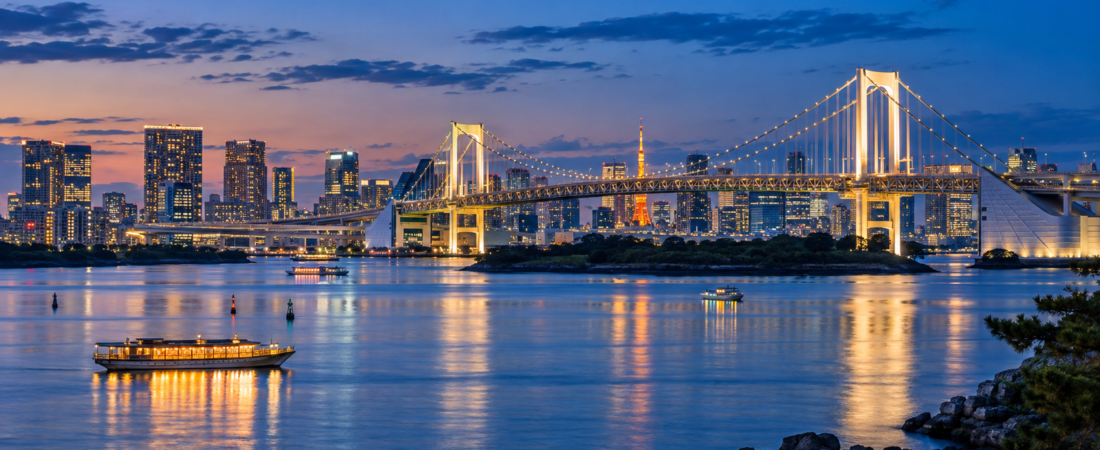
Odaiba combines modern architecture, shopping complexes and broad views across Tokyo Bay. Walk along the waterfront to see the Rainbow Bridge, city skyline and smaller Statue of Liberty replica.
The promenade, beaches and exterior displays are free. Sunset and early evening are especially attractive as the bridge and surrounding buildings illuminate.
Optional paid activity: Museums, observation areas and indoor entertainment venues charge admission.
15. Cross Rainbow Bridge on Foot
Rainbow Bridge has a pedestrian walkway connecting the Tokyo waterfront with Odaiba. The route provides unusual views of Tokyo Bay, passing boats and the skyline.
Walking across is free, but access hours vary seasonally and the walkway can close during bad weather. Bicycles cannot simply be ridden across; observe the posted rules.
16. Watch the Trains at Tokyo Station
Tokyo Station is both a transportation hub and an architectural landmark. The restored red-brick Marunouchi façade looks particularly impressive from the plaza outside.
Walk through the surrounding Marunouchi district to see contemporary towers, public art and tree-lined streets. Exploring the public exterior spaces is free.
Entering railway platforms requires a valid ticket, even if you do not board a train.
17. Browse Ginza
Ginza is associated with luxury shopping, but enjoying its architecture and atmosphere costs nothing. International brands, historic department stores and innovative buildings line the district’s broad avenues.
On selected weekends and holidays, part of the main street may become pedestrian-only, subject to current arrangements and weather. Window-shopping and architectural photography make this an easy free activity.
18. Visit Hie Shrine
Hie Shrine sits on a wooded hill near Akasaka. Its most photographed feature is a staircase lined with red torii gates, providing a quieter alternative to better-known shrine locations.
General entry is free. The shrine is active rather than merely decorative, so speak quietly and allow worshippers to use the paths and prayer areas without interruption.
19. Explore Kagurazaka
Kagurazaka’s sloping streets, narrow alleys and traditional restaurants reveal another side of central Tokyo. The neighborhood combines traces of its geisha heritage with French cafés and modern residential life.
Walking is free. Explore respectfully because many side streets contain homes and working businesses rather than staged tourist attractions.
20. Relax in Yoyogi Park
Yoyogi Park provides open lawns, tree-lined paths and space to rest near Harajuku and Shibuya. Entry to the main public park is free.
Weekends may bring musicians, dance groups and informal gatherings, although performances are not guaranteed. The park can also provide a useful picnic stop during a day of sightseeing.
Meiji Jingu is adjacent, making the two free attractions easy to combine.
21. Walk Around Hibiya Park
Hibiya Park is a convenient green space near the Imperial Palace, Ginza and government district. It contains gardens, fountains, paths and seasonal plantings.
Entry is free. Events occasionally take place inside the park, and individual activities or food stalls may charge separately.
22. Visit the Sumo Museum
The Sumo Museum at Ryogoku Kokugikan preserves materials connected with Japan’s national sport, including prints, ceremonial items and historical records.
Admission to the museum is normally free, but access may be restricted when paid sumo tournaments or other events occupy the arena. Exhibits rotate, and opening days can change, so verify the schedule before visiting.
Optional paid activity: Attending a professional sumo tournament requires a ticket.
23. Explore a Free Tokyo Museum
Tokyo has several smaller museums with free general admission. Possibilities include the Tokyo Fire Museum, the Sumo Museum, the Meiji University Museum, the Currency Museum and the Advertising Museum Tokyo.
Collections and operating arrangements vary, while temporary exhibitions may follow different rules. Confirm the official website before travelling and keep a second nearby activity available in case of closure.
Free museums are particularly useful during rainy or extremely hot weather.
24. Visit the Advertising Museum Tokyo
The Advertising Museum Tokyo explores the history and creativity of Japanese advertising. Displays provide an interesting look at changing design, media and consumer culture.
Admission is free, but advance reservations or designated entry procedures may apply. It is located in the Shiodome area, making it easy to combine with Ginza, Hamarikyu’s exterior surroundings or a waterfront walk.
25. Watch Tokyo Night & Light
Tokyo Night & Light is a projection-mapping display shown on the Tokyo Metropolitan Government Building in Shinjuku. The performance transforms the building’s exterior with large-scale light, color and animation.
Viewing from the designated public space is free. Performance times and cancellations can change because of weather, maintenance or special events, so confirm the current schedule on the day of your visit.
Combine it with the free government-building observatory for an inexpensive Shinjuku evening.
Book Your Tokyo Experiences
Ready to start planning? Compare popular Tokyo tours and activities, check current prices and availability, and book the experiences that suit your trip.
Affiliate disclosure: If you book through these links, we may earn a commission from Viator. This does not increase the price you pay.
More Free Tokyo Experiences
If you have additional time, several everyday activities can enrich your trip without admission fees:
- Photograph Tokyo Skytree from the Sumida River
- Walk beside the Meguro River
- Explore the electronics and anime streets of Akihabara
- See the Godzilla head from the streets of Kabukicho
- Visit the public areas of Yebisu Garden Place
- Browse second-hand shops in Shimokitazawa
- Watch sunset from Odaiba
- Explore seasonal illuminations during winter
- Walk around Inokashira Park
- Visit Kasai Rinkai Park
Shopping, cafés, boat rides, aquariums and special exhibitions in these areas are optional paid activities.
How to Organize Free Attractions
Tokyo’s size means that free sightseeing still involves transportation expenses. Group neighboring places together rather than crossing the city repeatedly.
A practical arrangement could include:
- Asakusa and Ueno: Sensoji, Ameyoko and Ueno Park
- Harajuku and Shibuya: Meiji Jingu, Yoyogi Park, Takeshita Street and Shibuya Crossing
- Shinjuku: Metropolitan Government observatory, Tokyo Night & Light and the surrounding skyscraper district
- Imperial Palace and Ginza: Palace plaza, East Gardens, Tokyo Station, Hibiya Park and Ginza
- Tokyo Bay: Toyosu Market, Rainbow Bridge and Odaiba
Our 3 days in Tokyo itinerary can help you arrange major districts without unnecessary journeys.
Tips for Enjoying Tokyo for Free
Check opening calendars before visiting government buildings, museums and gardens. A place may be free but still close on particular weekdays, holidays or maintenance days.
Visit popular temples and neighborhoods early in the morning. Sensoji, Meiji Jingu and Shibuya become considerably busier later in the day.
Carry a refillable bottle, but confirm that water is drinkable before using any public fountain. Public seating can be limited, so parks are useful places for scheduled breaks.
Remember that temples and shrines are places of worship. Photography may be prohibited inside certain buildings even when admission is free.
Finally, allow a small allowance for transportation. Review our Tokyo travel budget for estimated daily costs and practical ways to save money. Seasonal conditions can also affect outdoor plans, so consult our guide to the best time to visit Tokyo.
Final Thoughts
Tokyo proves that a rewarding visit does not need to revolve around expensive tickets. Ancient religious sites, panoramic viewpoints, traditional neighborhoods, markets and waterfront walks reveal many sides of the city without admission charges.
Choose several free attractions in the same district, confirm current opening arrangements and leave space for spontaneous discoveries. Tokyo’s streets and neighborhoods are often just as memorable as its headline attractions.
Explore more places through our destinations page or browse our complete collection of itineraries.