
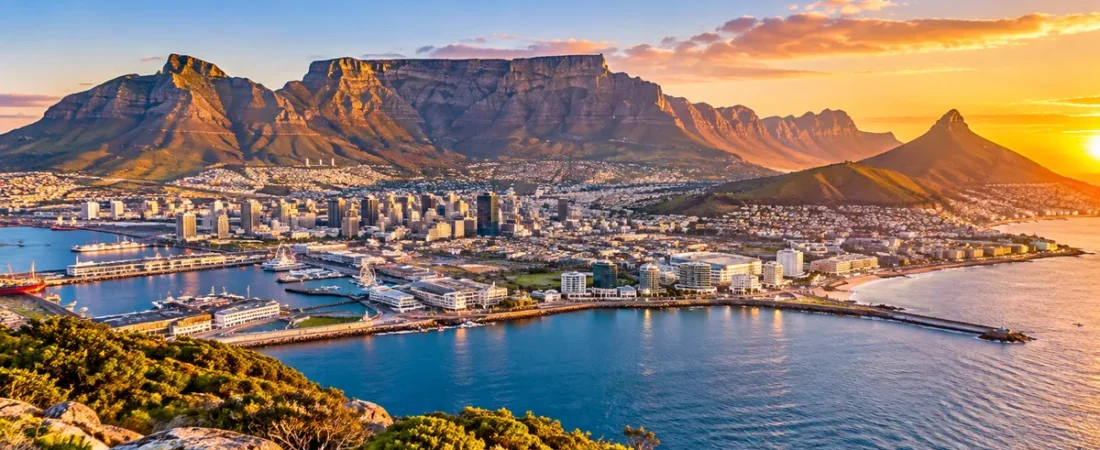
Cape Town is one of the world’s most spectacular city destinations, combining mountains, beaches, historic neighbourhoods and an impressive food scene within a remarkably scenic setting. This Cape Town travel guide covers the essential sights, best areas to explore, transportation, approximate costs and practical information you need to plan your first visit.
Whether you want to ride the cableway to Table Mountain, see African penguins at Boulders Beach or simply watch the sunset beside the Atlantic Ocean, Cape Town offers enough variety to fill several memorable days.
Why Visit Cape Town?
Few cities have a natural setting quite like Cape Town. Table Mountain rises directly behind the city while the Atlantic coastline stretches around the Cape Peninsula.
The city works particularly well for travellers who enjoy mixing sightseeing with outdoor experiences. One morning can be spent exploring museums and colourful streets, while the afternoon might involve a mountain viewpoint or beach.
Cape Town is also a useful base for exploring the wider Western Cape, including the Cape Peninsula and nearby wine regions.
Best Things to Do in Cape Town
1. Visit Table Mountain
Table Mountain is Cape Town’s defining landmark and should be high on any first-time itinerary.
The easiest way to reach the top is via the Table Mountain Aerial Cableway. Once there, walking paths lead to viewpoints overlooking Cape Town, Table Bay, Lion’s Head and the surrounding coastline.
Weather conditions can change quickly and strong winds sometimes affect cableway operations, so check conditions before leaving your accommodation.
Travellers who prefer hiking can reach the mountain via established trails, but hiking should be approached carefully. Carry sufficient water, stay on marked routes and avoid hiking alone.
2. Explore the V&A Waterfront
The V&A Waterfront is one of Cape Town’s easiest areas to explore on foot. Its harbour setting contains restaurants, shops, attractions and views towards Table Mountain.
It is also the departure point for ferries to Robben Island.
The waterfront can become busy, but its central location makes it convenient for first-time visitors and a pleasant place for an evening meal or harbour walk.
3. Take a Trip to Robben Island
Robben Island provides important insight into South Africa’s history and its struggle against apartheid. Nelson Mandela was imprisoned on the island for 18 years.
Tours depart by ferry from the Nelson Mandela Gateway at the V&A Waterfront and include transportation to and from the island.
Allow roughly four hours for the standard experience, including ferry travel. Tours can be affected by weather, so avoid leaving this experience until the final few hours of your trip.
4. Discover Bo-Kaap
Bo-Kaap is instantly recognisable for its colourful houses and cobbled streets, but the neighbourhood is also an important centre of Cape Muslim history and culture.
Explore respectfully because this is a living residential community rather than simply a photography location.
The Bo-Kaap Museum is worth considering if you would like to understand more about the area’s history and heritage.
5. Relax at Camps Bay
Camps Bay combines a broad sandy beach with impressive views of the Twelve Apostles mountain range.
The beachfront is lined with restaurants and cafés, making it particularly popular in the late afternoon.
Atlantic water temperatures can be surprisingly cold even when the weather is hot, but the scenery alone makes Camps Bay worth visiting.
6. See the Penguins at Boulders Beach
Boulders Beach near Simon’s Town is famous for its colony of African penguins.
Boardwalks allow visitors to observe the birds while helping protect their nesting environment. Because Boulders lies well outside central Cape Town, it works particularly well as part of a full-day Cape Peninsula trip.
Never touch, chase or feed the penguins.
7. Explore Cape Point and the Cape Peninsula
A Cape Peninsula road trip is one of the best day trips from Cape Town.
Popular stops include coastal viewpoints, Simon’s Town, Boulders Beach and the Cape of Good Hope section of Table Mountain National Park.
Set aside most of the day rather than trying to rush the peninsula in a few hours.
8. Walk Around the City Centre
Cape Town’s central area contains several worthwhile stops including Company’s Garden, historic buildings, cafés and museums.
Long Street is one of the city’s best-known streets, while Bree Street has become popular for restaurants and cafés.
Company’s Garden provides a quieter break between sightseeing stops.
Where to Stay in Cape Town
Choosing the right neighbourhood can make getting around considerably easier.
The V&A Waterfront is particularly convenient for first-time visitors who prioritise attractions, restaurants and a polished tourist environment.
City Bowl puts you close to central Cape Town, restaurants and many urban attractions.
Camps Bay is a good choice if beaches and ocean views are more important than being within walking distance of central sights.
Sea Point offers a useful compromise, with its seaside promenade, restaurants and relatively easy access to both central Cape Town and Atlantic beaches.
We will cover Cape Town’s neighbourhoods and accommodation choices in detail in our dedicated Where to Stay in Cape Town guide.
Getting Around Cape Town
Cape Town’s attractions are spread over a fairly large area, so you should expect to use several forms of transportation.
MyCiTi Bus
MyCiTi serves the city centre and a number of popular surrounding areas. Travellers using the regular system can purchase a myconnect card and load value for journeys.
Ride-Hailing
Ride-hailing services are widely used and are often one of the easiest options for visitors, particularly when travelling between areas not conveniently connected by public transport.
Rental Car
Hiring a car can be worthwhile if you intend to explore Cape Point, the Cape Peninsula or destinations outside Cape Town.
Remember that vehicles in South Africa drive on the left.
Avoid leaving luggage, cameras or other valuables visible inside parked vehicles.
Walking
Central areas can be explored partly on foot during the day, but distances between Cape Town’s major attractions are often greater than they initially appear.
At night, use suitable transportation rather than walking through unfamiliar or deserted areas.
Best Time to Visit Cape Town
Cape Town has a Mediterranean-style climate.
December through February brings warm summer weather and long days, making this an excellent period for beaches and outdoor activities. It is also one of the busiest periods, so accommodation can be more expensive.
March and April can provide a particularly attractive balance of pleasant weather and somewhat lighter crowds.
Winter falls roughly between June and August and generally brings cooler temperatures and more rainfall, although clear days still occur.
Spring begins bringing warmer conditions and is another appealing period for sightseeing.
How Many Days Do You Need in Cape Town?
3 days gives you enough time to see several major attractions, but four to five days provides a much more comfortable first visit.
With five days, you can combine central Cape Town, Table Mountain, beaches and the Cape Peninsula without rushing every day.
Cape Town Tourism recommends around five to seven days for visitors wanting a fuller experience.
Cape Town Travel Costs
Cape Town can accommodate a wide range of budgets.
Budget travellers can save by using public transport, choosing hostels or guesthouses and mixing paid attractions with beaches, viewpoints and free walks.
Mid-range travellers will find plenty of hotels, restaurants and private transport options, while Cape Town also has a substantial luxury hotel and dining market.
As of October 2026, an adult online return ticket for the Table Mountain Cableway costs approximately R475. International visitors currently pay around R245 to enter Boulders and R515 for Cape Point, although SANParks rates are scheduled for periodic revision.
MyCiTi’s myconnect card costs R40, while individual fares depend on distance and whether you travel during peak or saver periods.
All prices in this article are approximate and were checked at the time of publication. Prices may change.
Is Cape Town Safe?
Millions of travellers visit Cape Town, but sensible precautions are important.
Keep phones, cameras and expensive items discreet when walking around the city. Avoid deserted or poorly lit areas after dark and use reputable transportation when you are unfamiliar with an area.
Do not leave valuables visible inside vehicles.
Extra caution is also important when hiking. Weather on Table Mountain can change quickly, so use established routes, carry water and suitable clothing and preferably hike with other people.
Cape Town Tourism recommends remaining aware of your surroundings and seeking local advice about areas you intend to visit.
Practical Cape Town Travel Tips
South Africa uses the South African rand (ZAR).
English is widely spoken in Cape Town, alongside Afrikaans, isiXhosa and other languages.
Cape Town’s tap water is generally considered safe to drink, so carrying a reusable bottle can reduce unnecessary plastic waste.
Pack sun protection even outside the hottest months. Cape Town’s combination of strong sunshine, wind and changing mountain weather means layers are useful throughout much of the year.
For electrical devices, South Africa commonly uses Type M sockets and increasingly Type N, so international travellers should bring an appropriate adaptor.
Final Thoughts
Cape Town succeeds because it offers far more than conventional city sightseeing. Table Mountain, the Atlantic coastline, historic neighbourhoods and the Cape Peninsula create a destination where urban exploration and nature fit naturally into the same trip.
Give yourself enough time to experience more than the headline attractions. Walk along the waterfront, spend an afternoon beside the ocean, explore the city’s history and reserve a full day for the peninsula.
For a first visit to South Africa, Cape Town is an outstanding place to begin.
Ready to explore more? Browse our Destinations and continue planning your next TravelersCity adventure.