
The best time to visit Dublin depends on whether you prioritise long daylight hours, milder weather, smaller crowds, seasonal events or lower accommodation prices. For many first-time visitors, late spring and early autumn provide an excellent balance, while summer offers the longest days and liveliest atmosphere.
Dublin has a mild maritime climate, so extreme temperatures are relatively uncommon. However, Irish weather is famously changeable. Sunshine, cloud, wind and showers can all occur during the same day, making flexible plans and a light waterproof layer useful throughout the year.
If you’re planning your first trip, our Dublin travel guide covers the city’s main attractions and practical essentials. You can also use our 3 Days in Dublin Itinerary to organise your sightseeing.
When Is the Best Time to Visit Dublin?
For a combination of comfortable sightseeing conditions and long days, May, June and September are particularly appealing.
May and June benefit from long daylight hours and are among Ireland’s sunniest months on average. September retains reasonable daylight while moving beyond the busiest part of the summer holiday period.
July and August are excellent if long days and a lively city atmosphere matter most, but expect stronger visitor demand and potentially higher accommodation prices.
March is special because of St Patrick’s Day celebrations, although it can also be one of the busiest periods for central Dublin.
Winter suits travellers who prioritise indoor attractions, pubs and seasonal atmosphere rather than long outdoor sightseeing days.
Dublin in Spring: March to May
Spring brings increasing daylight, emerging greenery and gradually milder conditions.
March
March marks the beginning of spring, but conditions can still feel chilly.
The major event is St Patrick’s Day on 17 March.
Dublin becomes the centre of Ireland’s national celebrations, with a large parade and associated cultural events.
This is an exciting time to visit if the festival itself is part of your travel plans, but accommodation demand can be exceptionally strong.
Book well ahead if you’re travelling around St Patrick’s Day.
Outside the festival period, March can be considerably calmer.
Pack layers, a waterproof jacket and suitable shoes.
April
April brings noticeably longer days and can be a good month for exploring Dublin on foot.
Parks begin looking greener and outdoor sightseeing becomes increasingly comfortable.
Visitor numbers can rise around Easter and public-holiday weekends, but much of the month can still feel less crowded than summer.
Weather remains unpredictable, so don’t build an itinerary that depends entirely on sunshine.
May
May is one of the strongest months for a Dublin city break.
Daylight is long, gardens and parks are attractive, and Irish climate data shows May among the country’s sunniest months on average.
It’s an excellent period for combining central sightseeing with outdoor places such as Phoenix Park or a trip to Howth.
Visitor numbers generally increase as summer approaches, so book popular attractions and accommodation ahead once your dates are fixed.
Dublin in Summer: June to August
Summer provides the longest daylight hours and typically the mildest conditions.
It is also one of the busiest periods for tourism.
June
June is arguably one of the best months for first-time visitors.
Very long evenings give you much more time to walk around the city after museums and attractions close.
Along with May, June is among Ireland’s sunniest months on average.
Don’t interpret that as a guarantee of dry weather. Rain and cloudy periods remain possible.
Pack a lightweight waterproof layer even when the forecast looks promising.
July
July is firmly within Dublin’s busy summer season.
Long days make sightseeing easy, and the city has a lively atmosphere.
Outdoor walks along the River Liffey, through Georgian Dublin and around parks can be particularly enjoyable.
The downside is demand.
Accommodation can be expensive, especially around weekends, concerts and other major events.
Reserve your hotel well ahead if travelling during July.
August
August continues the summer travel season.
Conditions are generally suitable for combining museums and historic attractions with outdoor sightseeing.
It’s also a useful month for coastal excursions.
Consider taking the DART to Howth if you have an extra half-day and weather conditions are suitable.
As with July, accommodation prices can be high when demand is strong.
Dublin in Autumn: September to November
Autumn is an excellent alternative to summer.
The season begins relatively mild before temperatures, daylight and foliage gradually change.
September
September is one of my strongest recommendations for a first visit.
Summer’s peak travel period begins to ease while there is still enough daylight for full sightseeing days.
You can comfortably combine attractions such as Trinity College and Dublin Castle with neighbourhood walks and parks.
Accommodation can still be expensive, so don’t assume September automatically means low-season prices.
October
October brings a much more obvious autumn atmosphere.
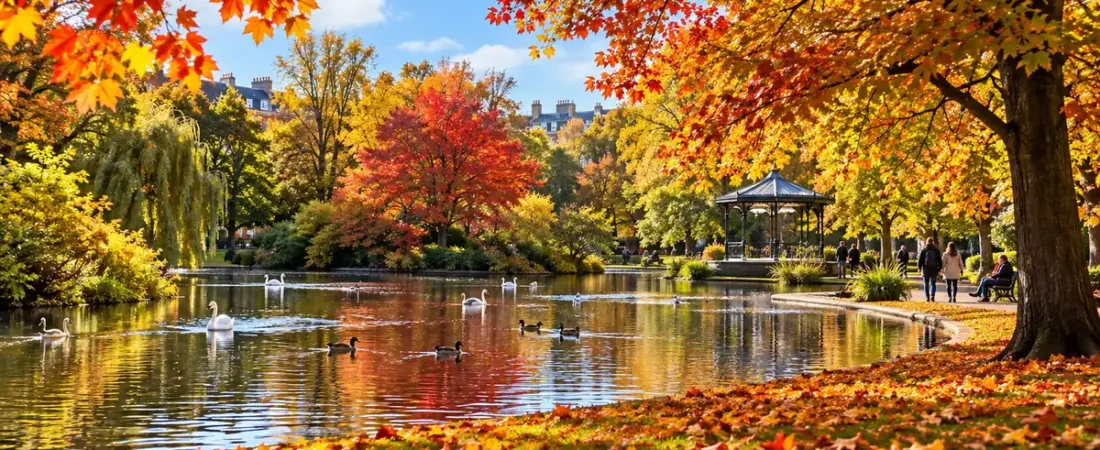
Parks such as St Stephen’s Green can be particularly attractive as leaves change colour.
Days become shorter, and cooler or wetter conditions are increasingly possible.
Ireland’s October public holiday falls on the last Monday of the month, so check accommodation availability if your visit overlaps that weekend.
October works particularly well if you enjoy autumn scenery and don’t mind carrying a waterproof jacket.
November
November is quieter and noticeably darker.
Short daylight hours make careful planning more important.
Use the middle of the day for outdoor walks and save indoor attractions, pubs and restaurants for later.
The advantage is that you can experience Dublin outside its main summer tourism period.
Dublin in Winter: December to February
Winter brings the shortest days and coolest conditions, but Dublin remains an active city.
Many of its major attractions are indoors, which makes a winter city break entirely practical.
December
December brings festive decorations, shopping and a lively pre-Christmas atmosphere.
Central Dublin can become busy with shoppers and seasonal social events, particularly around Grafton Street.
Daylight is limited, so begin sightseeing early.
Plan museums and indoor attractions for periods of poor weather and enjoy Dublin’s pubs and restaurants after dark.
Christmas and New Year opening hours can differ from normal schedules, so verify individual attractions before visiting.
January
January is one of the quietest times for tourism after the New Year period.
Days remain short and weather can be cold, wet and windy.
However, travellers who don’t mind winter conditions may appreciate a less hectic city.
It’s a particularly suitable time for museums, historic interiors, cafés and traditional pubs.
February
February remains wintery, but daylight gradually increases.
It can work well for a short cultural city break, especially if outdoor activities aren’t your main priority.
As always in Dublin, build flexibility into your plans because conditions can change quickly.
Dublin Weather: What Should You Expect?
Dublin’s weather is generally moderate rather than extreme.
Ireland’s climate is heavily influenced by the Atlantic, which helps limit severe temperature extremes but also contributes to changeable weather.
Summer days are usually mild rather than intensely hot, while winters are cool rather than consistently freezing.
Rain can occur in any month.
Rather than trying to find a completely dry season, plan around the possibility of showers.
A waterproof outer layer is usually more useful than carrying a heavy umbrella on windy days.
When Is Dublin Least Crowded?
For generally lower visitor pressure, consider periods such as November, January and February, excluding major holidays and events.
Early spring and parts of late autumn can also be quieter than summer.
However, Dublin’s visitor numbers aren’t determined only by the season.
Concerts, rugby matches, football events, conferences and festivals can dramatically increase accommodation demand on individual weekends.
Always check your exact dates before assuming a traditionally quieter month will also be inexpensive.
When Is Dublin Most Crowded?
Summer is a major tourism period, particularly from June through August.
St Patrick’s Day is another exceptional period.
For context, Dublin’s 2026 St Patrick’s Festival ran from 14–17 March, culminating in the parade on 17 March. Festival dates and programmes vary from year to year, so check the official schedule for the year you plan to travel.
Major concerts and sporting events can also create short bursts of extremely high demand.
Best Time to Visit Dublin for Lower Accommodation Prices
There is no single month when Dublin hotels are guaranteed to be cheap.
Prices respond strongly to demand.
Winter outside Christmas and New Year can offer better opportunities, as can some weekdays in spring and autumn.
The most effective strategy is to compare several dates rather than relying solely on the season.
Staying slightly outside the most central neighbourhoods can also help. Our guide to where to stay in Dublin compares central and quieter alternatives.
Best Time for Dublin Parks and Outdoor Walks
Late spring through early autumn provides the easiest conditions for spending extended time outdoors.
May and June are particularly attractive because of their long daylight hours.
September can also be excellent.
For autumn colours, consider October.
St Stephen’s Green, Phoenix Park and Dublin’s Georgian squares all provide opportunities to experience seasonal changes without leaving the city.
Best Time for a Trip to Howth
Howth can be visited throughout the year, but late spring and summer provide longer daylight hours for harbour and coastal walks.
Early autumn can also be attractive.
Always check weather conditions before attempting exposed coastal routes.
Strong winds, rain and poor visibility can make a walk that is pleasant on one day uncomfortable or unsuitable on another.
Best Time for Dublin’s Pubs and Indoor Attractions
There really isn’t a bad season.
Trinity College’s visitor attractions, Dublin Castle, Guinness Storehouse, museums and Dublin’s pub scene give you plenty to do when the weather isn’t cooperating.
This is why Dublin works better as a winter destination than many places whose appeal depends heavily on beaches or outdoor scenery.
A rainy afternoon doesn’t necessarily ruin a Dublin itinerary — it simply changes the order of your activities.
What to Pack for Dublin
Regardless of season, bring layers.
A lightweight waterproof jacket is useful throughout the year.
Comfortable walking shoes are essential because central Dublin is best explored on foot.
In summer, pack lighter clothing but retain a warm layer for cooler evenings.
During autumn and winter, bring warmer layers and something that handles rain and wind well.
Most importantly, don’t assume the morning weather will last all day.
So, What Is the Best Month to Visit Dublin?
If you’re choosing purely for a first-time sightseeing trip, May, June and September are excellent options.
Choose May for spring greenery and long days.
Choose June for some of the longest daylight hours of the year and a lively summer atmosphere.
Choose September for a balance of sightseeing conditions and a move away from peak summer.
Choose March if experiencing St Patrick’s celebrations is a major goal.
Choose winter if indoor attractions, pubs and a quieter city matter more to you than long daylight hours.
Ultimately, the best time to visit Dublin is the period that best matches your priorities. The city’s combination of museums, historic buildings, parks, neighbourhoods and indoor attractions means you can build a rewarding trip in every season.
Explore more places through our destinations page or browse our complete collection of itineraries.