
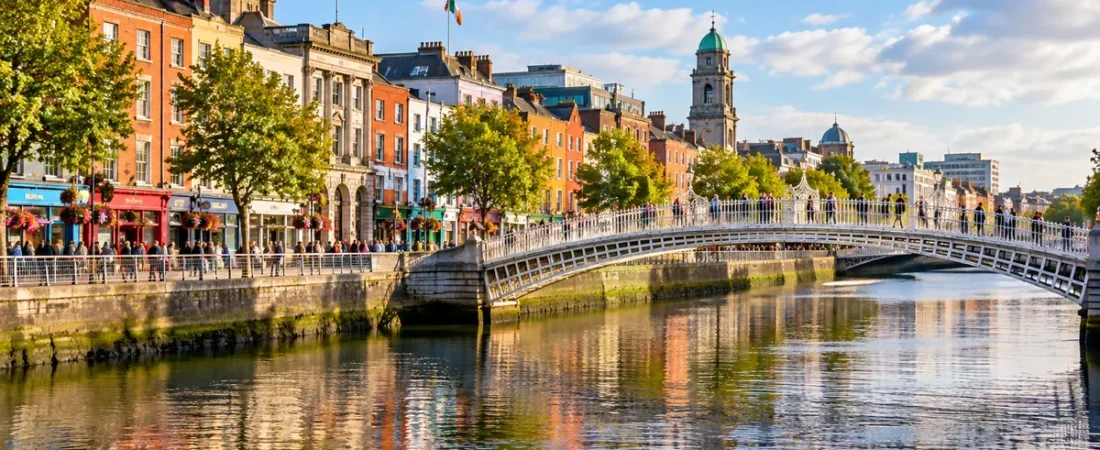
Dublin combines centuries of Irish history with lively streets, traditional pubs, Georgian architecture, green parks and a compact city centre that is easy to explore. This Dublin travel guide covers the essential sights, neighbourhoods, transport and practical information you need to plan a first visit to Ireland’s capital.
Whether you come for Trinity College and the Book of Kells, Dublin Castle, literary history, live music or simply the atmosphere beside the River Liffey, Dublin works particularly well for a short city break. Most central attractions are close enough to combine on foot, while buses, Luas trams and trains make longer journeys straightforward.
Price note: All prices in this article are approximate and were checked at the time of publication. Prices may change.
Why Visit Dublin?
Dublin is relatively small compared with many European capitals, but it packs a great deal into its centre.
Historic buildings sit alongside modern shopping streets, and major attractions are often only a short walk apart. Trinity College, Temple Bar, Dublin Castle, St Stephen’s Green and the River Liffey can all be incorporated into a day of sightseeing without spending hours travelling between them.
The city’s personality is another reason to visit. Traditional pubs, live music, cafés and conversations are as much a part of the Dublin experience as museums and monuments.
Dublin also provides a useful base for exploring more of Ireland, with day trips possible to coastal towns, historic sites and countryside beyond the city.
Best Things to Do in Dublin
Explore Trinity College and See the Book of Kells
Trinity College Dublin is one of the city’s most recognisable institutions.
Founded in 1592, its historic campus occupies a central location close to Grafton Street. Walking through the grounds provides a striking contrast between Dublin’s busy shopping streets and the university’s elegant squares and buildings.
The Book of Kells Experience is the major visitor attraction here. It includes the famous medieval manuscript and access to the Old Library experience.
Current self-guided Book of Kells Experience tickets start at approximately €26 per person, while a more limited Book of Kells and Old Library option can start from around €19 when available.
Timed booking is strongly recommended.
Visit Dublin Castle
Dublin Castle has played an important role in Irish history for centuries.
Today visitors can explore the State Apartments and learn more about the site’s political and architectural history.
A self-guided adult ticket currently costs approximately €8, while a guided adult tour costs around €12.
The castle is generally open daily from 9:45 a.m. to 5:45 p.m., with last admission at 5:15 p.m., although access can change because Dublin Castle remains a working government complex.
Even if you don’t take the full tour, walking through the surrounding area is worthwhile.
Experience the Guinness Storehouse
The Guinness Storehouse at St James’s Gate is one of Dublin’s most popular paid attractions.
Its multi-level exhibition explores the history, production and advertising associated with Guinness before finishing at the Gravity Bar, which provides panoramic views over Dublin.
Standard experiences currently start from approximately €24, although actual prices vary by date and time.
Allow around 90 minutes or longer, particularly during busy periods.
Booking ahead is sensible because popular time slots can sell out.
Walk Through Temple Bar
Temple Bar is Dublin’s best-known entertainment district.
Its cobbled streets, colourful façades, pubs and live music attract large numbers of visitors, particularly during evenings and weekends.
You don’t need to spend your entire night here to enjoy it. Walking through during the morning gives you a quieter look at the area’s architecture, while early evening provides more of its famous atmosphere.
Prices in the most tourist-focused venues can be higher than elsewhere in Dublin, so explore beyond Temple Bar as well.
Cross the Ha’penny Bridge
The Ha’penny Bridge is one of Dublin’s classic landmarks.
The elegant pedestrian bridge crosses the River Liffey between the north and south sides of the city centre.
Crossing is free, and the surrounding riverfront makes an excellent walking route.
For attractive photographs, try visiting early in the morning or around sunset when the changing light reflects from the Liffey.
Walk Along Grafton Street
Grafton Street is one of Dublin’s principal pedestrian shopping streets.
It connects the Trinity College area with St Stephen’s Green and is known for shops, cafés and street performers.
Rather than treating it simply as a shopping destination, use it as part of a walking route through central Dublin.
From Trinity College, walk along Grafton Street toward St Stephen’s Green before continuing into the Georgian streets nearby.
Relax in St Stephen’s Green
St Stephen’s Green provides a welcome patch of greenery in the heart of Dublin.
The public park contains lawns, mature trees, flowerbeds, ponds and walking paths.
Admission is free, making it a useful place for a break during a day of sightseeing.
Its location at the southern end of Grafton Street means you can easily combine the park with Trinity College and the surrounding Georgian neighbourhoods.
Discover Dublin’s Georgian Architecture
One of Dublin’s most distinctive visual features is its Georgian architecture.
The streets around Merrion Square and Fitzwilliam Square contain elegant brick townhouses, famous colourful doors and formal squares.
This part of Dublin is ideal for walking and photography.
Merrion Square is also associated with Oscar Wilde, whose childhood home stands nearby.
Exploring the Georgian quarter costs nothing and offers a completely different atmosphere from Temple Bar.
See St Patrick’s Cathedral
St Patrick’s Cathedral is one of Ireland’s best-known religious landmarks.
The site has connections stretching back centuries, while the present cathedral developed largely during the medieval period.
Jonathan Swift, author of Gulliver’s Travels and a former Dean of St Patrick’s, is buried here.
There is an admission charge for sightseeing, while worship remains separate from tourist visits.
Check current visiting arrangements before going because opening times can vary around services and special events.
Visit Christ Church Cathedral
Christ Church Cathedral is another major historic church in central Dublin.
Its history stretches back almost a thousand years, and the cathedral is particularly known for its medieval architecture and crypt.
It sits within easy walking distance of Dublin Castle and Temple Bar, making these attractions convenient to combine.
Sightseeing admission is paid, and opening arrangements may change for worship or events.
Explore Dublin’s Literary Side
Dublin has an extraordinary literary heritage.
James Joyce, Oscar Wilde, Samuel Beckett, W.B. Yeats and other major writers are closely connected with the city.
You can experience some of that heritage simply by walking.
Look for literary statues and plaques, explore Georgian Dublin and walk streets associated with writers and their works.
For visitors with a deeper interest, Dublin also has museums and guided literary experiences, but you don’t need a paid tour to begin discovering this side of the city.
Getting Around Dublin
Central Dublin is highly walkable.
For longer journeys, the city’s public transport network includes Dublin Bus services, Luas trams, DART suburban trains and commuter rail.
The TFI 90 Minute fare currently costs €2 for an adult using a Leap Card within Dublin’s Zone 1. It allows eligible transfers between participating Dublin Bus, Luas, DART and commuter rail services within the 90-minute period.
Short Leap Card journeys can cost €1.50.
A Leap Card can therefore be more economical than repeatedly paying cash fares if you expect to use public transport regularly.
Getting From Dublin Airport to the City
Dublin Airport is north of the city centre.
Several bus services connect the airport with central Dublin, including regular public transport and dedicated coach services.
Journey times depend heavily on traffic, so leave extra time when travelling back to the airport.
Dublin Airport currently has no direct rail or Luas station, making buses, coaches, taxis and private transfers the principal options.
Best Areas to Stay in Dublin
For first-time visitors, staying centrally can reduce your reliance on transport.
Areas around St Stephen’s Green and the south city centre provide convenient access to major attractions, restaurants and shopping.
Temple Bar is extremely central but can be noisy, particularly at night.
The Docklands offer a more modern environment, while neighbourhoods slightly farther from the tourist core may provide a quieter experience.
We’ll cover the advantages, disadvantages and accommodation styles of the main neighbourhoods in our dedicated Where to Stay in Dublin guide.
Best Time to Visit Dublin
Dublin can be visited throughout the year.
Late spring and summer bring long daylight hours and generally milder conditions, but they are also popular periods for tourism.
Spring and early autumn can provide a useful balance between daylight, weather and visitor numbers.
Winter is colder and days are much shorter, but the city remains lively and many of its major attractions are indoors.
Rain is possible throughout the year, so a light waterproof layer is useful regardless of season.
We’ll examine monthly weather, crowds and seasonal considerations in detail in our dedicated Best Time to Visit Dublin guide.
How Many Days Do You Need in Dublin?
3 days is an excellent starting point for a first visit.
Day one can focus on Trinity College, Grafton Street, St Stephen’s Green and Georgian Dublin.
Day two can cover Dublin Castle, the cathedral area, Temple Bar and the Guinness Storehouse.
A third day gives you time for additional museums, neighbourhoods or a coastal excursion.
Travellers with only two days can still see the central highlights, while four or five days allow more time for day trips beyond the city.
Dublin Travel Tips
Bring comfortable walking shoes because exploring Dublin on foot is one of the easiest ways to experience the city.
Book high-demand attractions such as the Book of Kells Experience and Guinness Storehouse ahead when your dates are fixed.
Don’t spend all your time around Temple Bar. Dublin becomes more interesting when you explore its Georgian streets, parks, north-side neighbourhoods and quieter pub areas.
Carry a waterproof layer even when the forecast looks reasonable, and leave some flexibility in your itinerary for changing weather.
Finally, remember that Dublin is more than a checklist of attractions. Walk beside the Liffey, listen to live music, explore a Georgian square and allow time to simply experience the city’s atmosphere.
Explore more places through our destinations page or browse our complete collection of itineraries.