
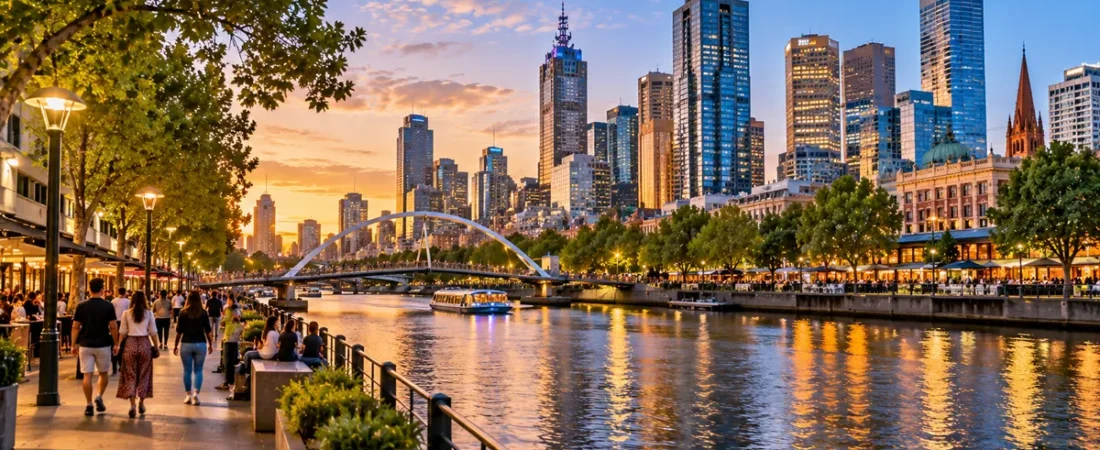
This 3 days in Melbourne itinerary is designed for first-time visitors who want to experience the city’s famous laneways, markets, galleries, neighbourhoods, gardens, food culture and waterfront without spending the entire trip rushing between attractions.
3 days is enough to get a strong introduction to Melbourne if you organise your sightseeing geographically. The city centre is compact, trams make longer journeys easy, and many of Melbourne’s most enjoyable experiences — including laneways, gardens, markets and neighbourhood walks — can be combined naturally.
This itinerary keeps Day 1 focused on central Melbourne, Day 2 on markets, Carlton and the creative inner north, and Day 3 on gardens, the Yarra River and St Kilda.
If you are still deciding where to base yourself, our guide to where to stay in Melbourne compares the CBD, Southbank, Fitzroy, Carlton, St Kilda and other convenient areas.
For a broader introduction to the city, read our complete Melbourne travel guide.
Top Tours & Experiences in Melbourne
Discover popular Melbourne tours and experiences. Check current availability, ratings and prices before you book.
Affiliate disclosure: If you book through these links, we may earn a commission from Viator. This does not increase the price you pay.
Price note: All prices in this article are approximate and were checked at the time of publication. Prices may change.
3 Days in Melbourne at a Glance
Day 1
Flinders Street Station
Federation Square
Hosier Lane
Melbourne laneways
Chinatown
National Gallery of Victoria
Yarra River
Southbank
Day 2
Queen Victoria Market
Carlton Gardens
Royal Exhibition Building
Melbourne Museum area
Lygon Street
Fitzroy
Collingwood
Day 3
Royal Botanic Gardens
Shrine of Remembrance
Melbourne sporting precinct
Yarra River
St Kilda
St Kilda Beach and waterfront
This structure gives you 3 very different Melbourne experiences without unnecessary backtracking.
Day 1: Central Melbourne, Laneways and Southbank
Your first day introduces Melbourne’s central landmarks and the atmosphere that makes the city distinctive.
Wear comfortable shoes because much of today’s itinerary works best on foot.
8:30 AM – Start at Flinders Street Station
Begin at one of Melbourne’s most recognisable landmarks.
Flinders Street Station has served generations of Melbourne commuters and remains one of the city’s most useful meeting points.
Take a few minutes to appreciate the historic façade and famous clocks before crossing towards Federation Square.
This is also a good moment to become familiar with Melbourne’s tram network.
If your accommodation is within the CBD, you may already have used a tram to reach the station.
9:00 AM – Explore Federation Square
Cross the road to Federation Square.
The modern architecture creates a dramatic contrast with historic Flinders Street Station.
Federation Square is home to cultural venues, restaurants and public spaces and regularly hosts events.
You do not need long here first thing in the morning.
Walk through the square, orient yourself and enjoy views towards the surrounding city.
You can return later if an exhibition or event interests you.
9:30 AM – Walk Through Hosier Lane
From Federation Square, walk to Hosier Lane.
This narrow lane is one of Melbourne’s best-known street-art locations.
The walls are covered with constantly changing murals, graffiti and other artwork.
Because the art changes regularly, there is no definitive version of Hosier Lane.
That temporary nature is part of its appeal.
Entry is free.
Morning can be a good time to visit before the lane becomes particularly busy.
10:00 AM – Discover Melbourne’s Laneways
Now begin exploring Melbourne’s central laneway network.
Rather than following one rigid route, wander through a selection of small streets and arcades.
Look for:
Centre Place.
Degraves Street.
Block Arcade.
Royal Arcade.
AC/DC Lane.
Hardware Lane.
Some are primarily known for architecture, others for cafés, street art or restaurants.
This is also the perfect time for your first Melbourne coffee.
11:30 AM – Walk Through Chinatown
Continue towards Chinatown around Little Bourke Street.
Melbourne’s Chinatown dates back to the nineteenth-century gold-rush era and remains an important dining and cultural precinct.
Walk through the historic streets and browse restaurant menus for later in your trip.
If you’re already hungry, this is a good place for an early lunch.
Otherwise, continue exploring before eating.
12:30 PM – Lunch in the CBD
Melbourne’s city centre offers food from around the world.
You could choose:
Chinese dumplings.
Vietnamese noodles.
Japanese ramen.
Greek food.
Italian pasta.
Middle Eastern dishes.
Modern Australian cuisine.
Or a simple café meal.
Budget travellers should look beyond the most prominent tourist-facing restaurants.
Food courts, casual Asian restaurants and smaller cafés can provide excellent value.
Allow approximately an hour for lunch.
1:45 PM – Walk Towards the National Gallery of Victoria
After lunch, make your way towards St Kilda Road.
Crossing the Yarra gives you your first views of Melbourne’s riverfront and Southbank skyline.
Continue to NGV International.
2:00 PM – Visit the National Gallery of Victoria
The National Gallery of Victoria is one of Melbourne’s most important cultural institutions.
NGV International is currently open daily from 10am to 5pm, and general entry to the permanent collection is free.
Special exhibitions may require paid tickets.
You could easily spend several hours here, but on a 3-day first visit, around 90 minutes provides a good introduction.
Choose sections that genuinely interest you rather than trying to see everything.
Art lovers can extend the visit and shorten another part of the afternoon.
3:30 PM – Walk Along the Yarra River
Leave the gallery and return towards the river.
Walk along the Yarra — traditionally known as Birrarung — and enjoy views towards the city skyline.
The riverside provides a completely different perspective from the narrow CBD streets you explored earlier.
Continue towards Southbank.
4:00 PM – Explore Southbank
Southbank Promenade contains restaurants, cafés and entertainment venues beside the river.
You do not need to spend money to enjoy the area.
Walk along the promenade and look back towards Melbourne’s CBD.
If you need a break, stop for coffee or sit beside the river.
5:30 PM – Watch Melbourne Change Into Evening
Stay around the Yarra as daylight begins fading.
Bridges, skyscrapers and waterfront restaurants gradually illuminate, and their reflections appear on the river.
This transition from afternoon to evening is one of the best times to experience central Melbourne.
6:30 PM – Dinner in Southbank or the CBD
Finish Day 1 with dinner.
Southbank is convenient but can be relatively expensive in prime waterfront locations.
For more choice, walk back into the CBD.
Chinatown and the surrounding central streets provide plenty of casual and mid-range options.
After dinner, return to your accommodation or explore Melbourne’s laneway bars if you still have energy.
Day 2: Queen Victoria Market, Carlton, Fitzroy and Collingwood
Day 2 takes you north of Melbourne’s CBD.
Today combines food, historic architecture, gardens and some of the city’s most interesting neighbourhoods.
8:30 AM – Queen Victoria Market
Start at Queen Victoria Market.
The market is one of Melbourne’s classic visitor experiences and remains an important place for fresh produce, food and specialty shopping.
Current regular daytime opening hours are:
Tuesday: 6am–3pm
Thursday: 6am–3pm
Friday: 6am–3pm
Saturday: 6am–4pm
Sunday: 9am–4pm
Specialty shopping generally begins at 9am.
The market is normally closed Monday and Wednesday.
If your Day 2 falls on a closed day, move the market to Day 1 or Day 3 and rearrange the morning accordingly.
9:00 AM – Breakfast at the Market
Queen Victoria Market is a great place for breakfast or an early snack.
Rather than arriving after eating elsewhere, use the market as part of the day’s food experience.
Browse before deciding what you want.
Depending on your preferences, you may find pastries, coffee, deli products and other quick meals.
Allow time simply to observe the market activity.
10:30 AM – Walk Towards Carlton
From Queen Victoria Market, continue towards Carlton.
The neighbourhood provides a transition from Melbourne’s busy central streets to leafy residential areas and cultural attractions.
11:00 AM – Carlton Gardens
Spend some time walking through Carlton Gardens.
The landscaped gardens surround the Royal Exhibition Building and Melbourne Museum.
Walking through the gardens is free.
Mature trees, lawns, fountains and historic architecture make this one of the most pleasant green spaces close to central Melbourne.
11:30 AM – See the Royal Exhibition Building
The Royal Exhibition Building is one of Melbourne’s most important historic structures.
Together with Carlton Gardens, it forms a UNESCO World Heritage site.
Admire the exterior and surrounding gardens.
Access to the interior depends on exhibitions, events and tours, so do not assume you can simply walk inside at any time.
12:00 PM – Melbourne Museum or Extra Carlton Time
You now have two choices.
Option A: Visit Melbourne Museum
Choose this if natural history, science, culture and Victoria’s history interest you.
Allow approximately two hours.
General adult admission is normally ticketed, so check current pricing before your visit.
Option B: Spend More Time Exploring Carlton
If you prefer neighbourhoods to museums, continue walking through Carlton.
This gives you more time for cafés, historic streets and Lygon Street.
Either option works well.
1:30 PM – Lunch on Lygon Street
Lygon Street is strongly associated with Melbourne’s Italian community.
Pizza, pasta, gelato and cafés are easy to find.
Rather than choosing the first restaurant you see, walk for a few minutes and compare menus.
A relaxed Italian lunch fits naturally into today’s neighbourhood-focused itinerary.
3:00 PM – Continue to Fitzroy
After lunch, head towards Fitzroy.
Depending on your starting point and energy level, you can walk or use public transport.
Fitzroy provides a noticeable change from Carlton.
Brunswick Street and Gertrude Street contain cafés, bars, restaurants, vintage shops and independent businesses.
3:30 PM – Explore Fitzroy
Spend the afternoon wandering rather than moving between formal attractions.
Look for:
Street art.
Victorian terrace houses.
Vintage shops.
Independent boutiques.
Small galleries.
Record shops.
Cafés.
Fitzroy rewards slow exploration.
This is exactly the kind of Melbourne neighbourhood where stopping spontaneously can be more rewarding than following a checklist.
5:00 PM – Walk Into Collingwood
Continue towards neighbouring Collingwood.
Smith Street is one of the area’s major corridors.
The neighbourhood mixes older buildings with restaurants, bars and creative businesses.
Fitzroy and Collingwood effectively form one extended afternoon of inner-north Melbourne exploration.
6:30 PM – Dinner in Fitzroy or Collingwood
Stay in the area for dinner.
This gives you the opportunity to experience the neighbourhood after dark rather than immediately returning to the CBD.
You will find everything from casual food to modern restaurants.
After dinner, take public transport back to your accommodation.
Day 3: Gardens, Melbourne Sport and St Kilda
Your final day combines green spaces, Melbourne’s sporting culture and the bay.
8:30 AM – Royal Botanic Gardens Melbourne
Begin at the Royal Botanic Gardens.
Melbourne Gardens is open every day of the year and general entry is free.
The gardens currently open from 7:30am, making them ideal for an early start.
Opening time later in the day varies seasonally, so morning is also the easiest time to fit them into your itinerary.
Walk among landscaped gardens, lawns, lakes and diverse plant collections.
You do not need to cover every path.
Allow around 90 minutes.
10:00 AM – Shrine of Remembrance
Walk from the gardens towards the Shrine of Remembrance.
The monument is one of Melbourne’s most significant commemorative sites.
Its elevated setting provides excellent views towards the CBD skyline.
General access to the Shrine is free.
Take time to explore respectfully and enjoy the city views before continuing.
11:00 AM – Walk Towards Melbourne’s Sporting Precinct
Head back towards the Yarra and Melbourne’s major sporting venues.
Sport plays an enormous role in the city’s identity.
Even if you are not attending an event, seeing the scale of the precinct helps explain Melbourne’s reputation as a sporting city.
11:30 AM – See the Melbourne Cricket Ground
Walk around the exterior of the Melbourne Cricket Ground.
The MCG hosts cricket, Australian rules football and major events.
You can see the stadium from surrounding public spaces without paying.
Stadium tours and the Australian Sports Museum require tickets.
If sport is a major interest, you could substitute part of the afternoon with a stadium tour.
12:00 PM – Walk Through Melbourne Park
Continue through the nearby Melbourne Park precinct.
This is the home of the Australian Open tennis tournament.
Rod Laver Arena and other venues host sporting events and concerts throughout the year.
The precinct is particularly impressive if you are familiar with the Australian Open.
12:45 PM – Lunch
Have lunch before travelling to St Kilda.
You could eat around Richmond, the CBD or Southbank depending on your route.
Keep lunch relatively relaxed because the final afternoon is primarily about walking and enjoying the waterfront.
2:00 PM – Travel to St Kilda
Take public transport to St Kilda.
The tram journey gives you another chance to experience Melbourne beyond the CBD.
Allow sufficient time because St Kilda is not directly beside the city centre.
2:45 PM – Explore St Kilda
Begin by walking around the neighbourhood.
Explore the streets near Acland Street and the Esplanade before heading towards the water.
St Kilda has a noticeably different atmosphere from central Melbourne.
The skyline is lower, the streets feel more relaxed and Port Phillip Bay becomes the focus.
3:30 PM – Walk Along St Kilda Beach
Head to the beach and walk along the waterfront.
St Kilda Beach is not Australia’s most dramatic beach, but it provides a valuable seaside contrast to Melbourne’s urban centre.
The promenade is excellent for walking.
Depending on the weather, you may see cyclists, runners and people relaxing beside the bay.
4:30 PM – St Kilda Pier
Continue towards St Kilda Pier.
The pier provides views back towards the Melbourne skyline and across Port Phillip Bay.
It is a particularly pleasant place late in the afternoon.
Check current access arrangements before your visit because waterfront infrastructure can occasionally be affected by maintenance or works.
5:30 PM – Sunset by Port Phillip Bay
If conditions are good, stay for sunset.
Watching the sun descend across the bay provides an ideal ending to your 3 days in Melbourne.
The experience is free and very different from the Yarra River sunset on Day 1.
6:30 PM – Dinner in St Kilda
Finish your trip with dinner in St Kilda.
The neighbourhood contains casual restaurants, pubs, cafés and more formal dining.
After dinner, take a tram back towards central Melbourne.
Alternative Day 3: Brighton Beach
If colourful coastal photography is more important than spending the afternoon in St Kilda, substitute Brighton Beach.
Brighton is famous for its row of colourful bathing boxes.
Walking along the beach and viewing the boxes is free.
Brighton lies farther from the CBD and requires a little more planning than St Kilda.
For a first 3-day trip, we prefer St Kilda because it combines beach, neighbourhood and waterfront atmosphere.
If you have a fourth day, visit both.
How to Get Around During This Melbourne Itinerary
You do not need a rental car.
Walking and public transportation are the easiest combination.
Free Tram Zone
Tram journeys made entirely inside Melbourne’s Free Tram Zone are free.
You do not need a myki if your entire tram journey remains within the zone.
This is useful on Day 1.
However, Carlton, Fitzroy and St Kilda are outside or extend beyond the central free zone, so normal public transport fare rules apply when travelling there.
Walking
Expect to walk extensively.
Melbourne is relatively flat in many central areas, but 3 full sightseeing days can still involve significant distances.
Comfortable footwear makes a major difference.
Trains and Trams
Use trams for neighbourhoods such as Fitzroy and St Kilda.
Trains can also be useful depending on your accommodation and destination.
Plan routes shortly before travelling because service changes and disruptions can occur.
Where to Stay for This 3-Day Melbourne Itinerary
The CBD is the easiest base.
It places you near Day 1 attractions and provides excellent transport for Days 2 and 3.
Southbank is another excellent choice.
Fitzroy or Carlton can work well if neighbourhood atmosphere matters more than maximum central convenience.
St Kilda is less convenient for this particular itinerary because you would travel into central Melbourne on multiple days.
Our complete guide to where to stay in Melbourne compares each area in detail.
How Much Should You Budget for 3 Days in Melbourne?
Your total will depend heavily on accommodation and food choices.
Accommodation is usually the largest expense.
Food costs can vary enormously because Melbourne ranges from inexpensive market meals to high-end restaurants.
Many experiences in this itinerary are free, including:
Federation Square.
Hosier Lane.
Melbourne’s laneways.
NGV general collection.
Carlton Gardens.
Royal Botanic Gardens.
Shrine of Remembrance.
Walking around the MCG precinct.
St Kilda Beach.
This allows you to control sightseeing costs even if accommodation is expensive.
Our upcoming Melbourne travel-budget article will provide detailed daily spending estimates.
What Should You Book in Advance?
Most of this itinerary does not require advance reservations.
Consider booking ahead for:
Popular restaurants.
Major temporary exhibitions.
Melbourne Museum if recommended for your dates.
MCG tours.
Sporting events.
Concerts.
Special experiences.
If you are visiting during the Australian Open, Formula 1 Australian Grand Prix or another major event, accommodation should be booked much earlier.
What If It Rains?
Melbourne weather can change quickly.
Fortunately, the city has plenty of indoor alternatives.
Spend additional time at NGV.
Visit ACMI at Federation Square.
Visit Melbourne Museum.
Explore covered arcades.
Take a long lunch.
Visit cafés.
Move neighbourhood walks to a clearer part of the day.
Do not abandon the entire itinerary because of a short rain shower.
Carry a compact umbrella or light waterproof layer.
Can You Add the Great Ocean Road to a 3-Day Melbourne Trip?
Technically yes, but we would not recommend it for most first-time visitors.
The Great Ocean Road deserves a full day.
Using one of only 3 days for it leaves just two days for Melbourne itself.
If the Great Ocean Road is a major priority, add at least a fourth day.
Five days is even better because you can explore Melbourne properly and still take a regional day trip.
Can You Visit Phillip Island in 3 Days?
The same principle applies.
Phillip Island can be visited as a day trip, but sacrificing one-third of a 3-day Melbourne stay significantly reduces your city time.
Add an extra day if possible.
Melbourne itself deserves more than a rushed introduction.
What to Pack for 3 Days in Melbourne
Comfortable walking shoes are essential.
Bring layers.
Melbourne’s weather can change noticeably within one day.
A light waterproof jacket or compact umbrella is useful.
Bring sunscreen throughout the year, particularly if spending significant time outdoors.
Carry a reusable water bottle.
During warmer months, add a hat and stronger sun protection.
During winter, pack warmer layers and a suitable outer jacket.
Is 3 Days Enough for Melbourne?
3 days is enough for an excellent first introduction.
You can experience the CBD, laneways, riverfront, markets, gardens, museums, inner neighbourhoods and St Kilda.
However, Melbourne rewards longer stays.
With four or five days, you can slow down, explore additional neighbourhoods and perhaps visit Brighton.
With six or seven days, regional day trips become much easier to include.
Final 3 Days in Melbourne Itinerary
A successful 3 days in Melbourne itinerary should reveal more than the city’s central landmarks.
On Day 1, discover Flinders Street Station, Federation Square, Melbourne’s laneways, NGV and the Yarra River.
On Day 2, experience Queen Victoria Market, Carlton, Fitzroy and Collingwood.
On Day 3, explore the Royal Botanic Gardens and Melbourne’s sporting precinct before finishing beside Port Phillip Bay in St Kilda.
The result is a trip combining Melbourne’s history, art, food, neighbourhoods, gardens, sport and waterfront.
Do not worry about seeing absolutely everything.
Leave time for coffee, spontaneous laneway discoveries and neighbourhood walks.
Those unplanned moments are often what make Melbourne memorable.
Book Your Melbourne Experiences
Ready to start planning? Compare popular Melbourne tours and activities, check current prices and availability, and book the experiences that suit your trip.
Affiliate disclosure: If you book through these links, we may earn a commission from Viator. This does not increase the price you pay.
Explore more places through our destinations page or browse our complete collection of itineraries.