
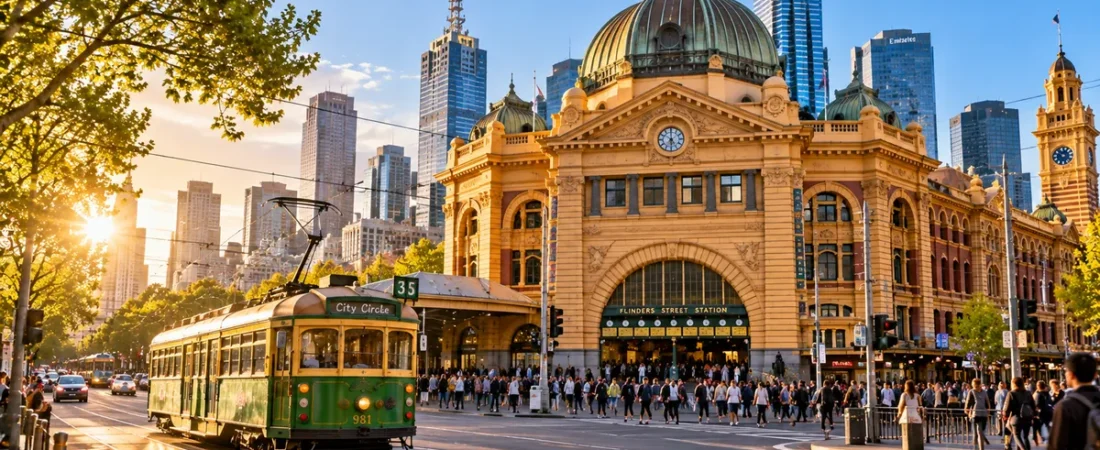
This Melbourne travel guide covers everything first-time visitors need to plan a memorable stay in Australia’s cultural capital, from colourful laneways and world-class museums to markets, gardens, sporting venues, beaches and one of the world’s most extensive tram networks.
Melbourne feels very different from many Australian cities. Rather than being defined by one landmark, its appeal comes from the combination of neighbourhoods, cafés, street art, architecture, food, sport and cultural life.
You can begin the morning with coffee in a hidden laneway, spend the afternoon exploring galleries or gardens, watch a major sporting event in the evening and finish the day in one of the city’s restaurant-filled neighbourhoods.
The compact central area is highly walkable, while trams and trains make it easy to explore places such as Fitzroy, Carlton, St Kilda and Richmond.
Melbourne also makes an excellent base for exploring wider Victoria, including the Great Ocean Road, Phillip Island and the Yarra Valley.
Price note: All prices in this article are approximate and were checked at the time of publication. Prices may change.
Top Tours & Experiences in Melbourne
Discover popular Melbourne tours and experiences. Check current availability, ratings and prices before you book.
Affiliate disclosure: If you book through these links, we may earn a commission from Viator. This does not increase the price you pay.
Why Visit Melbourne?
Melbourne rewards travellers who enjoy exploring rather than simply moving between famous monuments.
The city is especially strong for food, coffee, art, live entertainment and sport.
Its Victorian-era architecture sits alongside contemporary towers, while narrow laneways hide cafés, restaurants, murals and small shops.
Large green spaces provide another side of the city.
The Royal Botanic Gardens and parks surrounding central Melbourne make it easy to escape busy streets without travelling far.
Melbourne’s neighbourhoods also have distinct personalities, making the city worth exploring beyond the central business district.
Start at Flinders Street Station
Flinders Street Station is one of Melbourne’s most recognisable buildings and an excellent starting point for exploring the city.
Its distinctive yellow façade and clocks have made it a long-standing meeting place.
The station sits opposite Federation Square and beside the Yarra River, placing several important Melbourne attractions within easy walking distance.
From here, you can explore Federation Square, Hosier Lane, the riverfront and central shopping streets without needing transport.
Explore Federation Square
Directly opposite Flinders Street Station is Federation Square.
The public space combines distinctive contemporary architecture with cultural institutions, restaurants and event areas.
Entry to the square itself is free.
Federation Square frequently hosts public events, screenings, exhibitions and celebrations.
Even if nothing special is taking place, its central location makes it a useful place to orient yourself during your first day in Melbourne.
Discover Melbourne’s Laneways
Melbourne’s laneways are among the city’s defining experiences.
Instead of concentrating everything on major streets, the city hides restaurants, cafés, bars and artwork in narrow lanes running between larger blocks.
Walk slowly and explore.
Hosier Lane
Hosier Lane is Melbourne’s best-known street-art location.
Its walls are covered with constantly changing murals, graffiti and creative work.
Because the artwork evolves, the lane can look different between visits.
Entry is free.
The lane sits only a short walk from Federation Square, making it easy to include during your first exploration of central Melbourne.
Centre Place
Centre Place provides another classic Melbourne laneway experience.
Cafés and small businesses occupy narrow spaces between tall buildings.
The atmosphere is very different from the city’s broad main streets.
AC/DC Lane
Music fans may also want to visit AC/DC Lane.
The lane celebrates Melbourne’s connections with music culture and contains street art, bars and music-related references.
Exploring these lanes costs nothing unless you stop for food or drinks.
Walk Along the Yarra River
The Yarra River — traditionally known as Birrarung — runs beside Melbourne’s city centre.
Walking along the river provides excellent views of bridges, skyscrapers and cultural buildings.
The Southbank Promenade on the opposite bank contains restaurants and entertainment venues.
Walking beside the river is free and particularly enjoyable around sunset when city lights begin reflecting on the water.
Explore Southbank
Cross the Yarra from the CBD and you reach Southbank.
The waterfront district provides a different perspective on Melbourne’s skyline.
Restaurants and cafés line the promenade, while major arts venues are nearby.
Southbank works well for an evening walk even if you do not plan to eat there.
Continue along the river and you can explore more of Melbourne’s modern waterfront.
Visit the National Gallery of Victoria
Melbourne has an excellent arts scene, and the National Gallery of Victoria is one of its major institutions.
NGV International sits on St Kilda Road near the city centre.
Its permanent collection includes art from Europe, Asia, the Americas and Oceania.
General access to much of the permanent collection is free, although major temporary exhibitions may require paid tickets.
Even travellers who normally spend little time in galleries may find the building and collection worth exploring.
Visit ACMI
At Federation Square, ACMI focuses on screen culture.
Its exhibitions explore film, television, video games and digital culture.
The main permanent exhibition has free general entry, while some temporary exhibitions and special events require tickets.
Because ACMI is directly at Federation Square, it is easy to combine with Flinders Street Station and Melbourne’s laneways.
Shop at Queen Victoria Market
Queen Victoria Market is one of Melbourne’s most famous markets.
Stalls sell fresh produce, meat, seafood, deli products, clothing, souvenirs and other goods.
Entry is free.
The market currently operates during the day on Tuesday, Thursday, Friday, Saturday and Sunday, although opening times differ by day and special night markets may operate seasonally.
Do not visit assuming it opens every day.
The market is an excellent place for an inexpensive meal or snack as well as shopping.
Relax in the Royal Botanic Gardens
Melbourne’s Royal Botanic Gardens provide a peaceful contrast to the surrounding city.
The gardens contain thousands of plant species, lawns, lakes and walking paths.
Entry to the Melbourne Gardens is generally free.
You could spend an hour walking through the gardens or several hours exploring at a slower pace.
They are particularly appealing during pleasant weather and work well with a visit to the nearby Shrine of Remembrance.
Visit the Shrine of Remembrance
The Shrine of Remembrance is one of Melbourne’s most significant monuments.
It was originally created to honour Victorians who served in the First World War and now commemorates Australians who have served in war and peacekeeping.
The monument sits within Kings Domain, south of the CBD.
General entry is free.
The elevated position also provides excellent views towards Melbourne’s skyline.
Explore Carlton Gardens
North of central Melbourne, Carlton Gardens surrounds the Royal Exhibition Building and Melbourne Museum.
The landscaped gardens are free to explore.
Large lawns, fountains and mature trees make them ideal for a walk or picnic.
The Royal Exhibition Building and surrounding Carlton Gardens form a UNESCO World Heritage site.
Visit Melbourne Museum
Melbourne Museum stands beside the Royal Exhibition Building in Carlton Gardens.
Its collections explore natural history, science, culture and Victoria’s history.
This is a paid attraction for most adult visitors, although eligibility and ticket categories vary.
Families should check current arrangements because some younger visitors may qualify for free general admission.
Allow several hours if museums are a major part of your trip.
Experience Melbourne’s Coffee Culture
Coffee is an important part of Melbourne’s identity.
You will find cafés throughout the city, but the experience becomes more interesting when you explore neighbourhoods and laneways rather than relying solely on major chains.
Flat whites, long blacks and espresso-based drinks are widely available.
Melbourne’s café culture is less about visiting one famous shop and more about incorporating coffee stops into your day.
Try cafés in the CBD, Fitzroy, Carlton, Collingwood or South Melbourne.
Explore Fitzroy
Fitzroy is one of Melbourne’s most distinctive inner-city neighbourhoods.
Brunswick Street and surrounding roads contain cafés, restaurants, vintage shops, bars and creative businesses.
Street art appears throughout the neighbourhood.
Fitzroy is particularly enjoyable for travellers who want to experience Melbourne beyond the central business district.
Combine it with neighbouring Collingwood for a longer afternoon.
Discover Carlton
Carlton is closely associated with Melbourne’s Italian heritage.
Lygon Street became famous for Italian restaurants and cafés.
The neighbourhood is also home to Carlton Gardens, Melbourne Museum and the Royal Exhibition Building.
Carlton’s proximity to the CBD makes it easy to reach by tram or on foot from parts of central Melbourne.
Visit Chinatown
Melbourne’s Chinatown has developed around Little Bourke Street.
The area contains Chinese restaurants, shops and historic buildings.
It is especially lively around meal times and in the evening.
Melbourne’s wider food scene reflects communities from across Asia and the world, so do not restrict your dining to traditionally Australian dishes.
One of the pleasures of visiting Melbourne is experiencing its multicultural food culture.
See the Melbourne Cricket Ground
Sport is a major part of Melbourne’s identity.
The Melbourne Cricket Ground, commonly called the MCG, is one of Australia’s most famous sporting venues.
It hosts cricket and Australian rules football as well as major events.
You can see the stadium from surrounding public areas for free.
Stadium tours and the Australian Sports Museum require tickets.
Even if you are not attending an event, walking through the surrounding sporting precinct helps explain Melbourne’s enthusiasm for sport.
Visit Melbourne Park
Close to the MCG is Melbourne Park, home of the Australian Open tennis tournament.
Rod Laver Arena and other major sporting and entertainment venues are located here.
The precinct is easily accessible from the CBD.
If your visit coincides with a major tournament, concert or sporting event, accommodation demand and traffic can increase significantly.
Check Melbourne’s event calendar when choosing travel dates.
Take a Tram
Trams are part of the Melbourne experience rather than simply transportation.
The network reaches central streets and many inner neighbourhoods.
Within Melbourne’s Free Tram Zone, you can travel without paying a fare.
The free zone covers much of the central business district and Docklands.
Pay attention to the boundary.
If your tram travels beyond the Free Tram Zone, normal ticketing requirements apply.
Ride the City Circle Tram
The City Circle Tram provides another free way to move around central Melbourne.
The route connects several major parts of the city and is particularly useful for visitors wanting to become familiar with the CBD.
Because it is free, it can also be used as a simple sightseeing experience.
Services and operating arrangements can change, so check current transport information before relying on a specific timetable.
How Melbourne Public Transport Works
Melbourne’s public transport network includes trains, trams and buses.
The myki system is used for travel outside free-travel areas.
For most trips, you touch on when beginning your journey and follow the appropriate touch-off rules for the mode of transport.
A useful temporary benefit applies during the second half of 2026: public transport fares across Victoria are half price from 1 June until 31 December 2026.
This makes public transportation particularly affordable for travellers visiting Melbourne during that period.
Visitors aged under 18 also have special free-travel arrangements in Victoria during 2026, subject to the required Youth myki conditions.
Because these policies can change, check current transport information shortly before travelling.
Visit St Kilda
St Kilda offers a seaside contrast to central Melbourne.
The suburb sits beside Port Phillip Bay and is known for its beach, promenade, restaurants and entertainment.
Walk along the waterfront or explore the streets around Acland Street.
St Kilda works well as a half-day trip from central Melbourne.
Summer brings the most traditional beach atmosphere, but the area remains worth visiting throughout the year.
See Brighton’s Bathing Boxes
Brighton’s colourful bathing boxes are among Melbourne’s most photographed coastal sights.
Rows of individually painted wooden huts stand along Brighton Beach.
Viewing the bathing boxes and walking along the beach is free.
Brighton lies farther from the CBD than St Kilda, so allow additional transport time.
On a clear day, you can also enjoy distant views towards Melbourne’s skyline.
Explore Docklands
West of the CBD, Docklands combines modern residential towers, waterfront promenades, offices and entertainment.
It has a very different atmosphere from Melbourne’s historic centre.
Parts of Docklands are covered by the Free Tram Zone, making the area easy to reach from the CBD.
Walk along Victoria Harbour and explore the waterfront without spending anything.
Eat Your Way Around Melbourne
Melbourne is one of Australia’s strongest food destinations.
Its multicultural population is reflected in an enormous range of cuisines.
You can eat Vietnamese, Greek, Italian, Chinese, Indian, Middle Eastern, Thai, Japanese and many other cuisines without leaving the metropolitan area.
Budget travellers can use markets, bakeries and casual restaurants.
Those wanting a special meal will find extensive fine-dining choices.
Rather than trying to identify one definitive Melbourne dish, experience the city’s diversity.
Best Areas to Stay in Melbourne
For a first visit, the CBD is the easiest all-round base.
You can walk to numerous attractions and use the Free Tram Zone.
Southbank works well for river views and easy access to arts venues.
Fitzroy suits travellers prioritising nightlife, cafés and neighbourhood atmosphere.
Carlton combines restaurants with proximity to museums and gardens.
St Kilda is a better choice if you prefer a seaside setting and do not mind travelling into the city centre.
We will cover all of these areas in detail in our next article, Where to Stay in Melbourne.
Best Time to Visit Melbourne
Melbourne has four distinct seasons, and weather can change quickly.
Summer: December to February
Summer provides the warmest conditions and is ideal for beaches, outdoor events and long evenings.
Hot days can occur, so sun protection is important.
Autumn: March to May
Autumn can provide excellent city sightseeing conditions.
Temperatures gradually cool, while parks and gardens change colour.
Winter: June to August
Melbourne winters are cool and can feel damp or windy.
However, the city remains active with museums, restaurants, sport and cultural events.
Pack warm layers and rain protection.
Spring: September to November
Spring brings longer days, flowering gardens and increasingly mild temperatures.
Weather can still change quickly, so layers remain useful.
We will publish a complete seasonal comparison later in this Melbourne series.
How Many Days Do You Need in Melbourne?
3 days is a useful minimum for a first visit.
That gives you enough time to explore the CBD, laneways, major cultural attractions, markets and one or two neighbourhoods.
Four or five days allow a more relaxed trip and time for St Kilda or Brighton.
Stay longer if you want to add day trips.
Melbourne is an excellent gateway to wider Victoria.
Best Day Trips from Melbourne
Great Ocean Road
The Great Ocean Road is one of Australia’s famous coastal drives.
Highlights include dramatic cliffs, beaches, rainforest and the Twelve Apostles.
A full day is required from Melbourne, and an overnight trip provides a more relaxed experience.
Phillip Island
Phillip Island is known for wildlife, particularly the famous penguin experience.
It is possible as a day trip from Melbourne.
Yarra Valley
The Yarra Valley is known for vineyards, food and scenic countryside.
It makes a popular escape from the city.
Dandenong Ranges
The Dandenong Ranges offer forests, villages and outdoor experiences relatively close to Melbourne.
Puffing Billy Railway is one of the area’s best-known attractions.
These destinations deserve additional time rather than being squeezed into a short Melbourne city itinerary.
Getting From Melbourne Airport to the City
Melbourne Airport at Tullamarine does not currently have a direct passenger rail connection to the CBD.
Airport buses and taxis or rideshare services are common options.
SkyBus operates frequent services between Melbourne Airport and Southern Cross Station.
Airport-transfer fares can change, so check the current price before travelling rather than relying on an older quoted fare.
If several people are travelling together, compare the total bus cost with a taxi or rideshare.
Is Melbourne Walkable?
Central Melbourne is highly walkable.
The CBD uses a grid layout that is relatively easy to understand.
Federation Square, Flinders Street Station, Chinatown, the laneways, Queen Victoria Market and the Yarra River can all be combined through walking.
Trams become useful for longer journeys or when the weather changes.
Neighbourhoods such as Fitzroy, Carlton and St Kilda are easier to reach using public transport.
Is Melbourne Expensive?
Melbourne is not generally a low-cost destination, particularly for accommodation and restaurant dining.
However, there are plenty of ways to control spending.
The Free Tram Zone can reduce transport costs.
Major public spaces and many gardens are free.
Several important cultural attractions offer free general access.
Markets and casual restaurants provide alternatives to expensive dining.
A carefully planned Melbourne trip can therefore mix paid experiences with many excellent free activities.
Practical Melbourne Travel Tips
Check the weather forecast each morning because Melbourne conditions can change quickly.
Carry a light layer even when the day begins warm.
Use the Free Tram Zone but know where its boundaries end.
Book accommodation early if your visit coincides with a major sporting event, festival or concert.
Do not spend your entire trip inside the CBD.
Visit at least one inner neighbourhood such as Fitzroy, Carlton or St Kilda.
Leave time for coffee and food rather than treating every day as a race between attractions.
Check market opening days before visiting Queen Victoria Market.
Allow extra time if travelling during major events.
Final Thoughts on Visiting Melbourne
Melbourne is a city best experienced slowly.
The major landmarks provide structure, but the moments between them often become the highlights.
Walk through laneways.
Stop for coffee.
Browse Queen Victoria Market.
Ride a tram.
Explore the Yarra River.
Visit galleries and gardens.
Spend an afternoon in Fitzroy or Carlton.
Head to the bay at St Kilda.
If you enjoy food, art, sport, neighbourhoods and city life, Melbourne offers enough variety to fill far more than a short visit.
This Melbourne travel guide provides the foundation for your trip, but our complete Melbourne series will also cover where to stay, a 3-day itinerary, the best time to visit, travel costs and the best free experiences around the city.
Book Your Melbourne Experiences
Ready to start planning? Compare popular Melbourne tours and activities, check current prices and availability, and book the experiences that suit your trip.
Affiliate disclosure: If you book through these links, we may earn a commission from Viator. This does not increase the price you pay.
Explore more places through our destinations page or browse our complete collection of itineraries.