
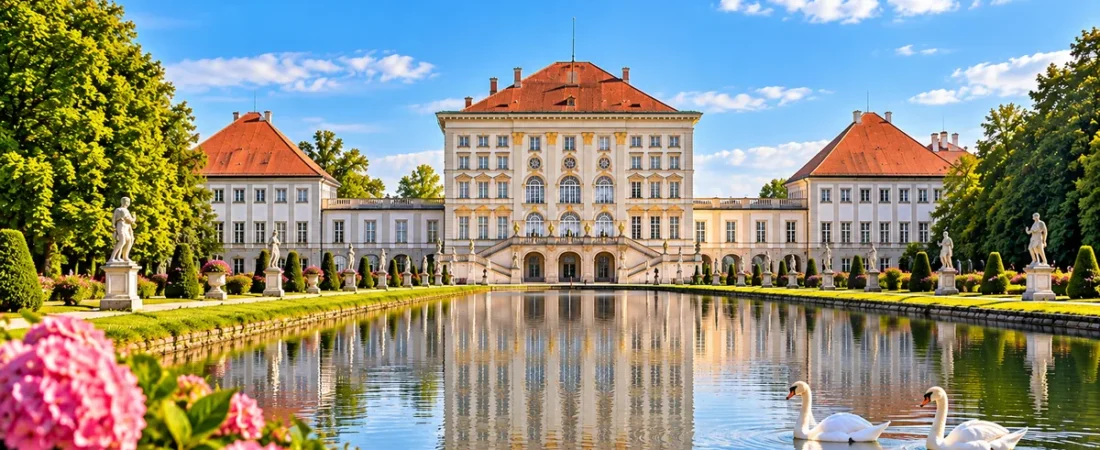
Planning 3 days in Munich gives you enough time to experience the Bavarian capital’s historic centre, royal palaces, famous museums, enormous parks and traditional food without rushing constantly between attractions. This Munich itinerary is designed especially for first-time visitors and groups nearby sights together to reduce unnecessary travel.
Over 3 days, you will explore Marienplatz and Munich’s Old Town, visit the magnificent Munich Residence, walk through the English Garden, discover Nymphenburg Palace and spend time at one of the city’s outstanding museums.
For a broader introduction before your trip, read our complete Munich Travel Guide. If you have not chosen your accommodation yet, our guide to Where to Stay in Munich compares the city’s most convenient neighbourhoods.
Price note: All prices in this article are approximate and were checked at the time of publication. Prices may change.
Top Tours & Experiences in Munich
Discover popular Munich tours and experiences. Check current availability, ratings and prices before you book.
Affiliate disclosure: If you book through these links, we may earn a commission from Viator. This does not increase the price you pay.
3 Days in Munich at a Glance
A well-paced first visit can be divided into 3 distinct days.
Day 1: Marienplatz, Frauenkirche, Viktualienmarkt, Munich Residence, Hofgarten and the Old Town.
Day 2: Deutsches Museum, Isar River, English Garden, Eisbach wave and a traditional beer garden.
Day 3: Nymphenburg Palace, palace gardens and additional sightseeing or museum time.
This itinerary keeps most attractions on each day reasonably close together while leaving enough time to enjoy Munich rather than simply checking landmarks off a list.
Day 1: Munich Old Town and Royal History
Your first day concentrates on Munich’s historic centre. Most of today’s route can be completed on foot.
Start at Marienplatz
Begin your Munich itinerary at Marienplatz, the historic heart of the city.
The square is dominated by the neo-Gothic Neues Rathaus, or New Town Hall, with its elaborate façade and famous Glockenspiel.
Arriving earlier in the morning gives you time to appreciate the architecture before the centre becomes busier.
From Marienplatz, several of Munich’s major Old Town sights are only a short walk away.
Walk to the Frauenkirche
Next, head towards the Frauenkirche, whose twin towers form one of the most recognisable features of Munich’s skyline.
The cathedral is close enough to Marienplatz that there is no reason to use public transport.
Rather than following the quickest possible route, spend some time wandering through the surrounding pedestrian streets. This part of Munich is packed with historic buildings, shops and small squares.
Explore Viktualienmarkt
Continue to Viktualienmarkt for late morning or lunch.
Munich’s famous food market is one of the easiest places to experience Bavarian ingredients and everyday city life in the heart of the tourist centre.
Browse stalls selling fruit, vegetables, cheese, meat, flowers, spices and regional products.
There is also a traditional beer garden, making Viktualienmarkt a convenient lunch stop before continuing your sightseeing.
Walk to Odeonsplatz
After lunch, make your way north towards Odeonsplatz.
The square is surrounded by impressive architecture and sits beside the Hofgarten and Munich Residence.
This is also a good point in the itinerary to slow down for photographs rather than immediately entering the next attraction.
Visit the Munich Residence
Spend the main part of your afternoon exploring the Munich Residence.
For centuries, this enormous palace complex served as the home and seat of government of Bavaria’s Wittelsbach rulers.
Highlights include elaborate state rooms, historic apartments, artworks and the spectacular Antiquarium.
For 2026, regular admission to the Residence Museum costs €10. The Treasury costs another €10, while a combined Residence Museum and Treasury ticket is €15.
Visitors who also want to see the Cuvilliés Theatre can purchase the full combination ticket for €20.
The Residence Museum and Treasury are generally open daily from 9:00 to 18:00 from late March until 19 October, with last admission at 17:00. Winter hours are generally 10:00 to 17:00, with last admission at 16:00.
Allow around 2 to 3 hours if you intend to see the Residence properly.
Relax in the Hofgarten
After leaving the Residence, walk into the adjacent Hofgarten.
Entry to the garden is free, and its formal paths provide a relaxing contrast to the ornate interiors of the palace.
From here you are also well positioned to continue towards the northern Old Town or return towards Marienplatz.
Spend the Evening in the Old Town
Finish your first day with dinner in central Munich.
This is a good evening to try Bavarian specialities such as Weißwurst, Schweinshaxe, Obatzda, dumplings or a large pretzel.
Traditional beer halls can be entertaining, but Munich also has plenty of smaller restaurants if you prefer a quieter evening.
Day 2: Deutsches Museum and the English Garden
Your second day combines one of Munich’s most important museums with its most famous green space.
Begin at the Deutsches Museum
Start early at the Deutsches Museum on Museum Island.
The museum covers science and technology across numerous fields, including aviation, physics, engineering, astronomy and transport.
Trying to see every exhibition is unrealistic. Instead, choose the sections that interest you most and spend approximately 3 hours exploring them.
The main Deutsches Museum is generally open daily from 9:00 to 17:00, although it closes on several specific dates during the year.
Regular adult admission is €16, while the family ticket costs €33.
Purchasing tickets ahead of time can simplify your morning, especially during busy periods.
Walk Along the Isar
After the museum, spend some time beside the Isar River.
The river provides another side of Munich that can easily be missed when concentrating entirely on palaces and museums.
Depending on the weather, this is a pleasant place for a walk before heading north towards the English Garden.
You can stop for lunch along the way or wait until you reach the park.
See the Eisbach Surfers
Enter the southern section of the English Garden near the Eisbach.
The standing Eisbach wave has become one of Munich’s most unusual sights. Experienced surfers ride the river wave while visitors watch from nearby.
Watching costs nothing, and you do not need long here unless you become absorbed in the surfing.
The wave also provides a convenient starting point for exploring the southern English Garden.
Walk Through the English Garden
Continue deeper into the park.
The English Garden stretches for several kilometres and is one of the world’s largest urban parks. Its combination of lawns, waterways, woodland and walking paths makes it feel surprisingly removed from the surrounding city.
One worthwhile stop is the Monopteros, a small classical-style temple on a hill that provides views towards Munich’s skyline.
Continue north through the park towards the Chinese Tower.
Stop at the Chinese Tower
The Chinese Tower is one of the English Garden’s best-known landmarks.
The surrounding beer garden is particularly enjoyable during warm weather and makes an easy late-afternoon or early-evening stop.
You do not need to drink alcohol to enjoy Munich’s beer-garden culture. Soft drinks and food are available, and the communal seating is part of the experience.
Evening in Schwabing
If you still have energy, continue towards Schwabing.
This northern Munich neighbourhood is known for cafés, restaurants and lively streets and provides a different atmosphere from the historic Old Town.
Alternatively, return to your accommodation and keep the evening relaxed. 3-day city itineraries are much more enjoyable when every evening is not overloaded with additional sightseeing.
Day 3: Nymphenburg Palace and More of Munich
The final day moves west of central Munich to one of Bavaria’s great royal residences.
Start Early at Nymphenburg Palace
Make Nymphenburg Palace your main morning attraction.
The palace served as a summer residence for Bavaria’s rulers and is surrounded by extensive formal gardens and parkland.
Inside, visitors can explore lavish state rooms and learn more about Bavaria’s royal history.
For 2026, regular admission to Nymphenburg Palace costs €10.
The combined Nymphenburg ticket costs €20 during the summer season from 1 April to 15 October. It includes the palace, Marstallmuseum and the smaller park palaces.
During the winter season, the combination ticket costs €16 because the park palaces are closed.
Nymphenburg Palace and the Marstallmuseum are generally open from 9:00 to 18:00 from April through 15 October.
Tickets for the palace use timed admission. Booking online in advance can therefore be useful during busy periods.
Explore Nymphenburg Park
Do not leave immediately after touring the palace interior.
The enormous palace park is a major part of the Nymphenburg experience, with canals, landscaped grounds and smaller historic buildings scattered throughout the estate.
During 2026, visitors should be aware that the fountain in the Great Parterre is not operating because of repair work. Fountain operations in front of the palace are also affected.
The Lacquer Cabinet inside the palace remains closed for restoration until the end of 2027, while the other state rooms remain accessible.
Even with these temporary restrictions, the palace complex deserves several hours.
Choose Your Final Munich Experience
After Nymphenburg, use your final afternoon according to your interests.
Art lovers can head towards Munich’s Kunstareal museum district in Maxvorstadt.
If you prefer outdoor sightseeing, return to the English Garden or spend more time along the Isar.
Travellers interested in shopping can return to the pedestrian streets around the Old Town.
Another option is simply to explore one of Munich’s neighbourhoods. Haidhausen, Schwabing and Glockenbachviertel each offer a different perspective on the city beyond the principal tourist landmarks.
Our Where to Stay in Munich guide explains the character of these neighbourhoods in more detail.
Getting Around During Your 3 Days in Munich
You can complete much of Day 1 on foot.
For Days 2 and 3, Munich’s U-Bahn, S-Bahn, tram and bus network makes travelling between attractions straightforward.
Most sightseeing within Munich takes place in fare Zone M.
For 2026, the standard adult single ticket for Zone M starts at €4.20. A Zone M single-day ticket costs €10.10 and provides unlimited journeys in the selected area until 6:00 the following morning.
A day ticket can therefore make sense on days when you expect to use public transport several times.
Always check whether a paper ticket requires validation before beginning your journey.
What If It Rains During Your Munich Itinerary?
Munich is relatively easy to adapt to bad weather because many of its strongest attractions are indoors.
If Day 2 is wet, spend longer at the Deutsches Museum and move your English Garden visit to whichever day has better weather.
The Residence is another excellent rainy-day attraction because its extensive interiors can occupy several hours.
Nymphenburg Palace also works in poor weather, although you will miss some of the appeal of walking through its park.
Keeping the order of Days 2 and 3 flexible is often more useful than following the itinerary rigidly.
Where to Stay for This 3-Day Munich Itinerary
Altstadt-Lehel is the easiest base if you want to minimise travel time and walk to many Day 1 attractions.
Maxvorstadt is particularly convenient for museums, while Haidhausen provides a quieter atmosphere with good transport connections.
Ludwigsvorstadt is convenient for Munich Central Station and particularly useful for visitors attending Oktoberfest.
For a full neighbourhood comparison, see our Where to Stay in Munich guide before booking accommodation.
How Much Public Transport Will You Need?
Not as much as you might expect.
Munich’s historic centre is compact, and grouping attractions geographically significantly reduces the number of journeys required.
Day 1 can be almost entirely walkable.
Day 2 may require public transport depending on your accommodation and how far you walk through the English Garden.
Day 3 will usually involve transport to and from Nymphenburg Palace.
If you are making several journeys on one day, compare individual fares with the €10.10 Zone M day ticket.
Can You See Munich in 3 Days?
Yes. 3 days is enough for a very satisfying first visit.
You will not see every museum or neighbourhood, but this itinerary covers Munich’s most important historic sights while still allowing time for parks, Bavarian food and slower exploration.
A fourth day becomes worthwhile if you want to visit several art museums or explore the city at a more relaxed pace.
Five days or longer gives you enough flexibility to consider a day trip outside Munich.
Tips for Making the Most of 3 Days in Munich
Start sightseeing early, especially at major attractions such as the Residence and Nymphenburg Palace.
Wear comfortable shoes. Even when using public transport, this itinerary involves substantial walking.
Book timed attractions in advance when possible, particularly Nymphenburg Palace.
Keep the English Garden flexible according to the weather. It is far more enjoyable on a dry afternoon than during persistent rain.
Avoid trying to fit too many museums into 3 days. Munich has enough major collections to fill an entire trip, so choose the ones that genuinely interest you.
Finally, leave some unplanned time. A spontaneous stop at a market, café, beer garden or neighbourhood street can become one of the most memorable parts of the trip.
For additional planning information covering transport, attractions and practical advice, return to our complete Munich Travel Guide.
Final Thoughts on Spending 3 Days in Munich
3 days gives first-time visitors an excellent introduction to Munich.
Day 1 reveals the city’s historic heart through Marienplatz, Viktualienmarkt and the Munich Residence. Day 2 combines science and technology at the Deutsches Museum with the open spaces of the English Garden. Day 3 explores Bavaria’s royal history at Nymphenburg Palace before giving you time to pursue your own interests.
The result is a balanced Munich itinerary combining history, architecture, museums, green spaces, food and local atmosphere without spending the entire trip rushing between attractions.
Book Your Munich Experiences
Ready to start planning? Compare popular Munich tours and activities, check current prices and availability, and book the experiences that suit your trip.
Affiliate disclosure: If you book through these links, we may earn a commission from Viator. This does not increase the price you pay.
Explore more places through our destinations page or browse our complete collection of itineraries.