
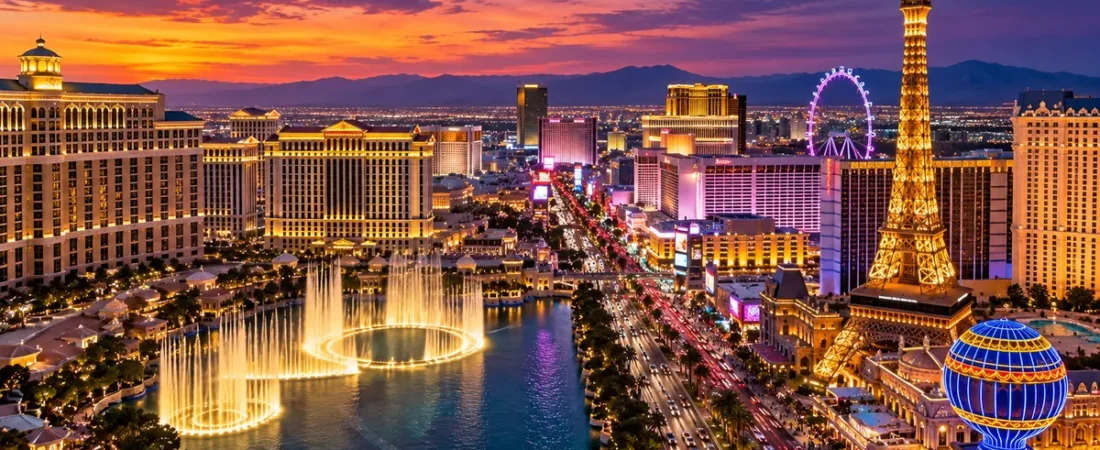
This Las Vegas travel guide covers everything a first-time visitor needs to know about one of the world’s most distinctive entertainment destinations. Famous for enormous casino resorts, spectacular shows and neon-lit nightlife, Las Vegas also offers excellent restaurants, museums, shopping, sports, desert scenery and plenty of attractions that have nothing to do with gambling.
Most first-time visitors concentrate on the Las Vegas Strip, but Downtown Las Vegas, the Arts District and destinations beyond the city are also worth exploring.
Whether you are planning a weekend getaway or a longer Nevada vacation, this guide will help you understand where to go, what to see, how to get around and how many days you need.
Price note: All prices in this article are approximate and were checked at the time of publication. Prices may change.
Top Tours & Experiences in Las Vegas
Discover popular Las Vegas tours and experiences. Check current availability, ratings and prices before you book.
Affiliate disclosure: If you book through these links, we may earn a commission from Viator. This does not increase the price you pay.
Why Visit Las Vegas?
Few cities deliver as many different experiences within such a compact tourism district.
In a single day, you can wander through elaborate resorts, see world-famous landmarks, eat food created by celebrated chefs, watch a major production show and finish the evening beneath the lights of Fremont Street.
Las Vegas has also developed far beyond its traditional casino identity.
Visitors now come for:
- Live entertainment
- Professional sports
- Restaurants
- Shopping
- Pool resorts
- Conventions
- Nightlife
- Immersive attractions
- Desert excursions
- Weddings
- Architecture and photography
You do not need to gamble to enjoy Las Vegas.
The Las Vegas Strip
The Strip is the centre of most first-time Las Vegas vacations.
Officially known as Las Vegas Boulevard, the resort corridor contains many of the city’s most recognisable hotels and attractions.
Famous properties include Bellagio, Caesars Palace, The Venetian, Wynn Las Vegas, MGM Grand, ARIA and numerous other enormous resorts.
One of the pleasures of a first trip is simply walking through several properties and seeing how dramatically their designs differ.
The distances, however, are deceptive.
Two hotels that appear close together on a map can require considerably more walking than expected because of resort entrances, pedestrian bridges and huge casino floors.
Do not plan to walk the entire Strip in one continuous sightseeing session, particularly during hot weather.
See the Fountains of Bellagio
The Fountains of Bellagio remain one of Las Vegas’ signature attractions.
The choreographed fountain performances take place on the lake in front of Bellagio and are free to watch.
Current schedules generally run every 30 minutes during the earlier part of the afternoon and evening, increasing to every 15 minutes from 8:00 p.m. until midnight.
Weekend and holiday performances begin earlier.
Schedules can change because of weather or special events, so check current information during your trip.
Try seeing the fountains both during daylight and after dark.
Explore Bellagio’s Conservatory
After seeing the fountains, step inside Bellagio.
The Bellagio Conservatory & Botanical Gardens features elaborate seasonal displays created with plants, flowers and large decorative installations.
The designs change throughout the year, giving repeat visitors something different to see.
Admission to the conservatory is generally free.
It is also an excellent indoor stop when temperatures outside become uncomfortable.
Walk Through The Venetian
The Venetian is another resort worth exploring even if you are not staying there.
Its elaborate interiors recreate elements of Venice with canals, bridges and Italian-inspired architecture.
Gondola rides are paid experiences, but walking around the resort and browsing the public shopping areas costs nothing.
It is a good example of the theatrical design that makes Las Vegas hotels attractions in themselves.
See the Eiffel Tower at Paris Las Vegas
Paris Las Vegas brings another instantly recognisable landmark to the Strip.
Its Eiffel Tower replica dominates this section of Las Vegas Boulevard and is especially striking after sunset.
Going up the tower requires a ticket, but viewing and photographing it from the Strip is free.
The area around Bellagio and Paris is particularly rewarding for first-time visitors because several iconic Las Vegas sights are concentrated close together.
Ride the High Roller
The High Roller observation wheel at The LINQ Promenade rises approximately 550 feet above Las Vegas.
Its enclosed, air-conditioned cabins provide wide views over the Strip and surrounding valley.
The ride requires a ticket, with prices varying by date and time.
Even if you decide not to ride, The LINQ Promenade is worth exploring for restaurants, shops and evening atmosphere.
Experience Sphere
Sphere has rapidly become one of modern Las Vegas’ most recognisable landmarks.
Its enormous exterior display is visible from numerous points around the city.
Inside, Sphere hosts concerts and immersive entertainment experiences.
Tickets are required to enter for scheduled experiences, but simply seeing and photographing the exterior is free.
It is particularly impressive after dark.
Visit Fremont Street Experience
Do not spend your entire Las Vegas trip on the Strip.
Downtown Las Vegas offers a different atmosphere centred around Fremont Street.
Fremont Street Experience is a pedestrian entertainment district covered by the enormous Viva Vision digital canopy.
Expect neon signs, casinos, street activity and live entertainment.
Walking through the area and experiencing the atmosphere does not require an admission ticket.
Downtown feels noticeably different from the modern mega-resorts of the Strip and deserves at least one evening during a first visit.
Discover Vintage Las Vegas
Downtown is also one of the best places to encounter the city’s older personality.
Historic casino signs, smaller gaming properties and classic neon create a different visual identity from newer Strip resorts.
Visitors interested in the history of Las Vegas should allow time to explore beyond Fremont Street’s central entertainment zone.
Explore the Arts District
The Las Vegas Arts District provides another alternative to the Strip.
The neighbourhood includes galleries, vintage shops, restaurants, bars and independent businesses.
It is a useful addition for travellers who want to see more of the city itself rather than spending every day inside resorts.
The area can be combined with Downtown Las Vegas.
Visit the Neon Museum
The Neon Museum preserves an important part of Las Vegas history through historic signs from hotels, casinos and businesses.
Its collection provides insight into how the visual identity of Las Vegas evolved over decades.
Admission is paid, and availability can vary.
If you are particularly interested in design, photography or Vegas history, consider adding it to your Downtown day.
Learn About Las Vegas at the Mob Museum
The Mob Museum in Downtown Las Vegas explores organised crime, law enforcement and their connections with American history.
It provides a completely different experience from the entertainment attractions on the Strip.
Allow several hours if you enjoy detailed museum exhibitions.
Admission is paid.
See the Welcome to Fabulous Las Vegas Sign
The famous Welcome to Fabulous Las Vegas sign stands toward the southern end of Las Vegas Boulevard.
Photographing the sign is free.
It is extremely popular, so queues can develop for the classic straight-on photograph.
You do not necessarily need to wait in the main line if you are happy taking a photograph from another angle.
Be particularly careful around traffic and use designated pedestrian areas.
Watch a Las Vegas Show
Live entertainment is one of the strongest reasons to visit Las Vegas.
Depending on your dates, options can include:
- Concert residencies
- Cirque-style productions
- Comedy
- Magic
- Tribute shows
- Theatre
- Major sporting events
Schedules change constantly.
Rather than deciding on a specific performer months in advance, check which shows are running during your actual travel dates.
Popular productions can sell out, so book priority shows ahead.
Experience Las Vegas Sports
Las Vegas has developed into a major professional sports destination.
The city is home to the NHL’s Vegas Golden Knights and the NFL’s Las Vegas Raiders, while major boxing, UFC and other sporting events regularly take place in the city.
Formula 1 also brings the Las Vegas Grand Prix to the Strip.
Sporting events can have a significant effect on hotel availability and traffic.
Check the event calendar before booking accommodation.
Take a Day Trip to Red Rock Canyon
Las Vegas is surrounded by spectacular desert landscapes.
Red Rock Canyon National Conservation Area is one of the easiest natural escapes from the city.
Its dramatic red sandstone formations provide hiking, scenic drives and viewpoints within relatively easy reach of the Strip.
Conditions can become extremely hot during warmer months.
Carry plenty of water and avoid underestimating desert temperatures.
Depending on the season and entry type, reservations or fees may apply.
Consider Hoover Dam
Hoover Dam is another popular excursion from Las Vegas.
Located southeast of the city on the Nevada-Arizona border, the enormous engineering landmark can be visited independently or through organised tours.
It is possible to combine Hoover Dam with other regional attractions, although trying to fit too many destinations into one day can make the trip rushed.
When Is the Best Time to Visit Las Vegas?
Las Vegas has a desert climate.
Summer is extremely hot, while winter is much cooler.
For many visitors, spring and autumn provide the most comfortable weather for exploring outdoors.
March through May and October through November can be particularly pleasant, although major events and conventions can increase accommodation prices.
Summer visitors should prepare for intense daytime heat.
Fortunately, Las Vegas is designed around air-conditioned indoor spaces.
Even so, walking long distances outdoors in extreme heat can be exhausting.
Winter can be surprisingly cool, especially after sunset.
Bring layers rather than assuming the desert is always hot.
How Many Days Do You Need in Las Vegas?
For a first visit, 3 to 4 days works well.
3 days gives you enough time to explore the Strip, spend an evening Downtown and experience several major attractions.
Four or five days allows a more relaxed pace and creates room for a desert excursion, museum or additional show.
A very short weekend can still be enjoyable, but avoid trying to see every famous hotel.
Las Vegas rewards slower exploration more than many first-time visitors expect.
Getting to Las Vegas
Most international and domestic visitors arrive through Harry Reid International Airport (LAS).
The airport is extremely close to the main resort corridor. Las Vegas tourism authorities describe it as roughly two miles from Las Vegas Boulevard.
Ground transportation options include:
- Taxi
- Rideshare
- Public bus
- Shuttle
- Rental car
- Limousine
Rideshare pickups use designated airport locations rather than ordinary curbside collection.
If you are staying entirely around the Strip, you may not need a rental car.
Getting Around Las Vegas
Walking
Walking works well for nearby resorts.
However, the Strip is much longer than it looks.
Use walking for short sections rather than assuming you can comfortably walk everywhere.
Las Vegas Monorail
The Las Vegas Monorail runs along the east side of the Strip.
It has seven stations between MGM Grand and SAHARA Las Vegas, including stops serving Paris/Horseshoe, Flamingo/Caesars Palace, Harrah’s/The LINQ and the Las Vegas Convention Center.
Trains typically arrive every four to eight minutes.
Current online ticket prices include approximately:
- One ride: $5.50
- 24-hour pass: $13.45
- 2-day pass: $23.75
- 3-day pass: $29.95
- 4-day pass: $37
- 5-day pass: $44.50
- 7-day pass: $57.50
A pass can be useful when your itinerary includes several destinations near Monorail stations.
The Deuce
The Deuce bus travels along Las Vegas Boulevard and connects the Strip with Downtown.
It can be useful for budget-conscious visitors, particularly when travelling to Fremont Street.
Free Transportation
Las Vegas also has several free transportation options.
The Downtown Loop provides free transportation around parts of Downtown Las Vegas, while the ARIA Express Tram connects several properties around the central Strip.
These routes will not replace all transportation, but they can reduce unnecessary walking and rideshare expenses.
Taxi and Rideshare
Taxis, Uber and Lyft are widely available.
Resorts usually have designated pickup areas.
When using rideshare, confirm the exact pickup location before requesting your vehicle because enormous resort complexes can have several entrances.
Do You Need a Rental Car?
Not necessarily.
If your itinerary focuses on the Strip and Downtown, walking, public transportation and occasional rideshares may be easier than driving.
A rental car becomes more useful if you plan to explore Red Rock Canyon, Hoover Dam or other destinations outside the central tourism areas.
Remember to include hotel parking, attraction parking, fuel and rental fees when comparing costs.
Where to Stay in Las Vegas
For most first-time visitors, staying on or close to the Strip is convenient.
Central Strip locations reduce travel time to many major attractions.
Downtown Las Vegas can work well for travellers who prefer Fremont Street’s atmosphere or want accommodation away from the largest Strip resorts.
Your ideal area depends on your budget and itinerary.
We will cover the main neighbourhoods and hotel zones in detail in our dedicated Where to Stay in Las Vegas guide.
Las Vegas for Families
Las Vegas is primarily known for adult entertainment, but families can still find plenty to do.
Potential family-friendly experiences include observation attractions, pools, interactive exhibits, shopping areas, museums and selected shows.
Remember that casino floors are regulated environments and children cannot participate in gambling.
Research individual resorts carefully because some properties are considerably more family-oriented than others.
Las Vegas for Couples
Las Vegas works particularly well for couples because it combines restaurants, entertainment, nightlife and resort experiences within a relatively small area.
A couple’s itinerary might include a sunset Strip walk, dinner, Bellagio fountains and a show.
For something quieter, add Red Rock Canyon or a day away from the casino resorts.
Is Las Vegas Expensive?
Las Vegas can be either surprisingly affordable or extremely expensive.
Accommodation rates vary dramatically according to:
- Day of the week
- Conventions
- Major sporting events
- Concerts
- Holidays
- Hotel category
Food ranges from inexpensive quick meals to some of the country’s most expensive restaurants.
One particularly important issue is resort fees.
Always check the final accommodation total rather than comparing hotels solely by their advertised room rates.
We will break these costs down in detail in our upcoming Las Vegas Travel Budget guide.
Las Vegas Travel Tips
Wear Comfortable Shoes
You will probably walk much farther than expected.
Comfortable footwear matters even if you plan to use taxis or the Monorail.
Drink Plenty of Water
The desert climate can cause dehydration quickly.
Carry water, especially when walking outdoors.
Check Resort Fees
Never assume the advertised hotel price represents the final cost.
Make Restaurant Reservations
Popular restaurants can fill quickly, particularly on weekends and during major events.
Book Priority Shows Early
If there is one performance you absolutely want to see, reserve it rather than relying on last-minute availability.
Don’t Overplan
Large resorts take time to explore.
Allow space in your schedule for spontaneous stops.
Check Event Dates Before Booking
Major conventions, concerts and sporting events can affect hotel prices and traffic across the city.
Suggested First-Time Las Vegas Plan
A simple first visit could look like this:
Day 1
Explore the central Strip, Bellagio, Paris Las Vegas, Caesars Palace and The LINQ area.
Day 2
Explore additional Strip resorts, visit Sphere and attend an evening show.
Day 3
Spend time Downtown around Fremont Street, then visit the Arts District or a museum.
Optional Day 4
Take a trip to Red Rock Canyon or Hoover Dam.
We will develop this into a detailed hour-by-hour route in our upcoming 3 Days in Las Vegas Itinerary.
Final Thoughts
Las Vegas is much more varied than its reputation suggests.
The Strip delivers the spectacular resorts, neon lights and entertainment most visitors expect, while Downtown offers vintage Vegas character and Fremont Street’s energetic atmosphere.
Beyond the casinos, you can explore museums, professional sports, world-class restaurants and spectacular desert scenery.
For a first trip, allow at least 3 days, stay somewhere convenient to your priorities and resist the temptation to schedule every hour.
The best Las Vegas trips combine famous attractions with time simply to wander and experience the city’s extraordinary atmosphere.
Whether you come for entertainment, food, nightlife, photography, sports or desert adventures, Las Vegas provides enough variety to create a completely different trip every time you return.
Book Your Las Vegas Experiences
Ready to start planning? Compare popular Las Vegas tours and activities, check current prices and availability, and book the experiences that suit your trip.
Affiliate disclosure: If you book through these links, we may earn a commission from Viator. This does not increase the price you pay.
Explore more places through our destinations page or browse our complete collection of itineraries.