
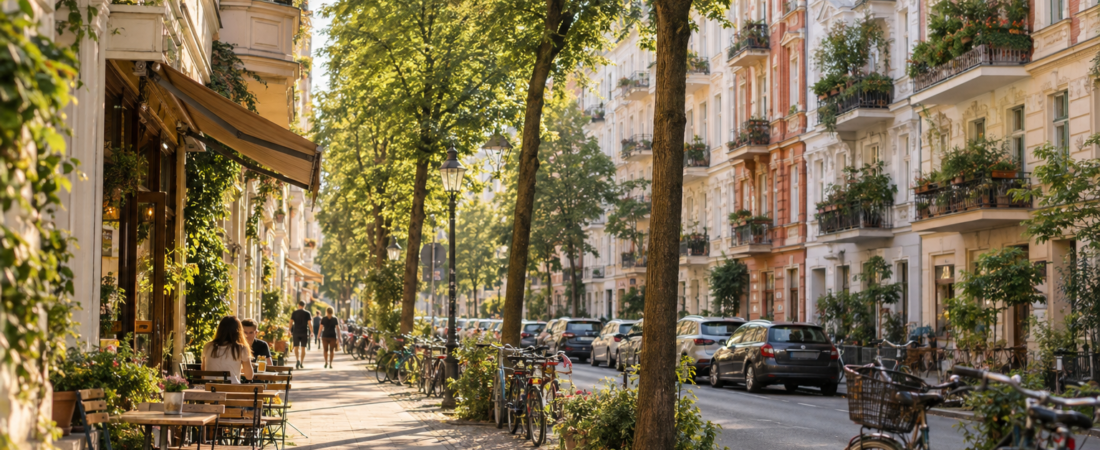
Choosing where to stay in Berlin can have a major effect on your trip. The city is large, its attractions are spread across several districts, and each neighborhood offers a noticeably different experience. Staying near Brandenburg Gate feels very different from waking up beside the cafés of Prenzlauer Berg or spending your evenings in lively Kreuzberg.
For most first-time visitors, Mitte is the easiest overall choice because many famous sights are nearby. However, it is not automatically the best area for everyone. Friedrichshain may suit travelers interested in nightlife and the East Side Gallery, while Charlottenburg offers a more polished and relaxed base in western Berlin.
This guide explains where to stay in Berlin, including the advantages and possible drawbacks of six popular areas. Before booking, you may also want to read our Berlin travel guide and 3 days in Berlin itinerary to see where the attractions on your list are located.
Quick guide to the best areas in Berlin
Mitte: Best overall for first-time visitors and major attractions.
Prenzlauer Berg: Best for cafés, attractive residential streets and a relaxed atmosphere.
Friedrichshain: Best for nightlife, the East Side Gallery and an energetic city experience.
Kreuzberg: Best for diverse food, independent culture and lively neighborhood streets.
Charlottenburg: Best for shopping, classic western Berlin and a quieter evening atmosphere.
Schöneberg: Best for a more local stay with convenient transport connections.
Mitte: Best overall for first-time visitors
Mitte is the most convenient place to begin your search if this is your first visit to Berlin. The district contains or provides easy access to Brandenburg Gate, the Reichstag, Museum Island, Unter den Linden, Alexanderplatz and several important memorials.
Staying here can reduce the amount of transport planning required during a short trip. Depending on the exact location of your accommodation, you may be able to walk to several major attractions and use public transport only when visiting neighborhoods farther away.
Mitte covers a substantial area, so look carefully at the map before booking. Accommodation around Friedrichstrasse is convenient for transport and central sightseeing. The streets near Museum Island work well for visitors interested in history and museums, while the area around Alexanderplatz offers numerous connections but can feel busier and more commercial.
The main disadvantage is price. Hotels in the most convenient parts of Mitte can be more expensive than comparable properties outside the center. Some areas also become quiet after offices and attractions close, while streets near major stations can remain busy.
Best for: First-time visitors, short stays, museum lovers and travelers who want famous sights within easy reach.
Possible drawback: Higher accommodation prices and a less residential atmosphere in some sections.
Prenzlauer Berg: Best for cafés and a relaxed stay
Prenzlauer Berg is a strong choice if you want attractive residential streets, neighborhood cafés and a calmer place to return to after sightseeing. Its restored apartment buildings, tree-lined roads and small local businesses create a welcoming atmosphere.
Areas around Kollwitzplatz and Helmholtzplatz are particularly appealing for leisurely mornings and evening walks. The neighborhood is popular with residents and families, so it generally feels more relaxed than the nightlife areas of Friedrichshain and Kreuzberg.
Prenzlauer Berg is not within walking distance of every major attraction, but public transport makes the center accessible. Check how close a hotel or apartment is to an U-Bahn, S-Bahn or tram stop. A property that looks convenient on a general Berlin map could still require additional walking or transfers.
This neighborhood suits visitors who prefer experiencing everyday Berlin between sightseeing trips. It may be less suitable if you want to step outside your hotel and immediately find Brandenburg Gate or Museum Island.
Best for: Couples, families, café lovers and travelers seeking a quieter neighborhood atmosphere.
Possible drawback: Fewer major attractions within walking distance and varying transport convenience across the district.
Friedrichshain: Best for nightlife and the East Side Gallery
Friedrichshain offers an energetic base with restaurants, bars, music venues and late-night activity. It is also convenient for visiting the East Side Gallery and walking beside the Spree toward Oberbaum Bridge.
The area around Boxhagener Platz has cafés, restaurants and a neighborhood feel during the day. Accommodation near Warschauer Strasse provides useful transport connections and easy access to nightlife, but the immediate surroundings can be noisy and crowded, particularly on weekends.
Friedrichshain can work especially well for younger travelers, groups of friends and anyone who wants active evenings without traveling far from their hotel. It is still possible to find quieter streets, but you should inspect the exact address and read recent guest reviews carefully.
Public transport connects the district to central Berlin, although reaching some western attractions may take longer. If most of your itinerary is concentrated around Mitte and Charlottenburg, another base could be more efficient.
Best for: Nightlife, live music, the East Side Gallery and travelers who enjoy an energetic atmosphere.
Possible drawback: Noise around nightlife areas and longer journeys to parts of western Berlin.
Kreuzberg: Best for food and independent culture
Kreuzberg is known for its diverse food choices, creative character and busy neighborhood streets. It can be an excellent base if local atmosphere matters as much to you as being close to traditional tourist attractions.
Different parts of Kreuzberg feel quite distinct. The streets around Bergmannkiez are generally more relaxed and suited to café visits and evening meals. Areas closer to Kottbusser Tor are busier, more urban and better positioned for nightlife. Accommodation near the Landwehr Canal can provide a pleasant setting for walking, especially in warmer weather.
The district is convenient for visiting the Topography of Terror and Checkpoint Charlie from its northern sections, while Oberbaum Bridge connects Kreuzberg with Friedrichshain. However, the exact travel time to Berlin’s main attractions depends heavily on where you stay.
Kreuzberg rewards visitors who want to explore beyond a checklist of landmarks. If you are sensitive to noise, avoid booking solely on the neighborhood’s reputation and examine recent reviews for the specific street.
Best for: Food lovers, repeat visitors, independent cafés, nightlife and neighborhood exploration.
Possible drawback: Some streets can be noisy or hectic, and the district’s large size makes the precise location important.
Charlottenburg: Best for classic western Berlin
Charlottenburg provides a more polished and traditional base in western Berlin. It is convenient for shopping around Kurfürstendamm, visiting Kaiser Wilhelm Memorial Church and exploring Charlottenburg Palace.
The neighborhood may appeal to visitors who prefer established hotels, broad avenues and quieter evenings. The streets around Savignyplatz combine restaurants and cafés with useful transport connections, while accommodation closer to Zoologischer Garten makes it easier to travel across the city.
Charlottenburg is farther from Museum Island, the East Side Gallery and several Berlin Wall sites. Public transport makes these places reachable, but you should expect more travel time than you would from Mitte.
For travelers interested in western Berlin—or those who value a calmer hotel location over walking to the largest concentration of historic attractions—Charlottenburg can be an excellent choice.
Best for: Shopping, classic hotels, western Berlin attractions and travelers seeking quieter evenings.
Possible drawback: Longer journeys to many sights in Mitte and eastern Berlin.
Schöneberg: Best for a local atmosphere
Schöneberg is worth considering if you want a residential base with restaurants, cafés and convenient transport rather than a neighborhood dominated by major attractions. It can offer better value than the most central parts of Mitte, depending on your travel dates.
The area around Winterfeldtplatz is known for its neighborhood atmosphere and market, while locations near an U-Bahn station make it relatively easy to reach the center. Schöneberg also places you within reasonable distance of western Berlin and districts farther south.
Because the neighborhood is not a major sightseeing center, you will probably use public transport every day. This is not necessarily a disadvantage if your accommodation has a direct connection to the places you plan to visit.
Schöneberg works well for travelers who prefer returning to a less tourist-focused area at the end of the day. Check the route from your chosen property rather than judging convenience only by distance.
Best for: A local experience, longer stays, restaurants and travelers who do not need attractions outside their door.
Possible drawback: Daily transport will usually be necessary for sightseeing.
Best area to stay in Berlin without a car
You do not need a car for a typical Berlin city break. The U-Bahn, S-Bahn, trams and buses connect the principal neighborhoods and attractions.
Mitte is the simplest base if you want to walk to several famous sights. However, Prenzlauer Berg, Friedrichshain, Kreuzberg, Charlottenburg and Schöneberg can all work well when the accommodation is close to a useful station.
When comparing hotels, open a transport map and check the closest station. A property beside a direct U-Bahn or S-Bahn line may be more convenient than a geographically closer hotel that requires multiple changes.
Berlin Brandenburg Airport is in fare zone C, so travel between the airport and central Berlin requires a ticket covering zones ABC. Most sightseeing within the city uses zones AB, but always check your planned route and current BVG ticket information.
Where should first-time visitors stay in Berlin?
Mitte is the best all-round recommendation for most first-time visitors. It keeps many important sights close and simplifies a short itinerary. It is especially convenient if you have only 2 or 3 full sightseeing days.
Choose Prenzlauer Berg if you prefer a more relaxed residential atmosphere and do not mind taking public transport into the center. Pick Friedrichshain or Kreuzberg if nightlife, food and neighborhood energy are priorities. Charlottenburg is better suited to visitors interested in western Berlin, shopping and a quieter evening environment.
There is no single perfect neighborhood for every traveler. The best choice depends on your budget, the attractions you want to see and the atmosphere you prefer after sightseeing.
How to choose your accommodation
Check the exact address before making a reservation. Berlin’s neighborhood names cover large areas, and two hotels listed in the same district can offer very different levels of convenience.
Look for the closest U-Bahn, S-Bahn or tram stop and check whether it provides a direct route to your priority attractions. Also read recent reviews about street noise, cleanliness, lift access and the surrounding area.
If you are visiting during a major event, festival or holiday period, reserve early and compare cancellation conditions. Accommodation rates change considerably according to demand, so there is no single price range that remains accurate throughout the year.
A central hotel can save travel time, but a well-connected property in a neighborhood you enjoy may create a better overall stay. Decide whether you value walking to attractions, active nightlife, quiet evenings or local cafés most, then choose accordingly.
Final recommendation
For a first visit of three days, start by comparing accommodation in Mitte. If the prices or atmosphere do not suit you, look near a convenient station in Prenzlauer Berg, Friedrichshain, Kreuzberg, Charlottenburg or Schöneberg.
Wherever you stay, inspect the precise location rather than booking based only on the district name. Berlin is a city of distinct neighborhoods, and choosing the right one will help you spend less time commuting and more time enjoying your trip.
Explore more places through our destinations page or browse our complete collection of itineraries.