
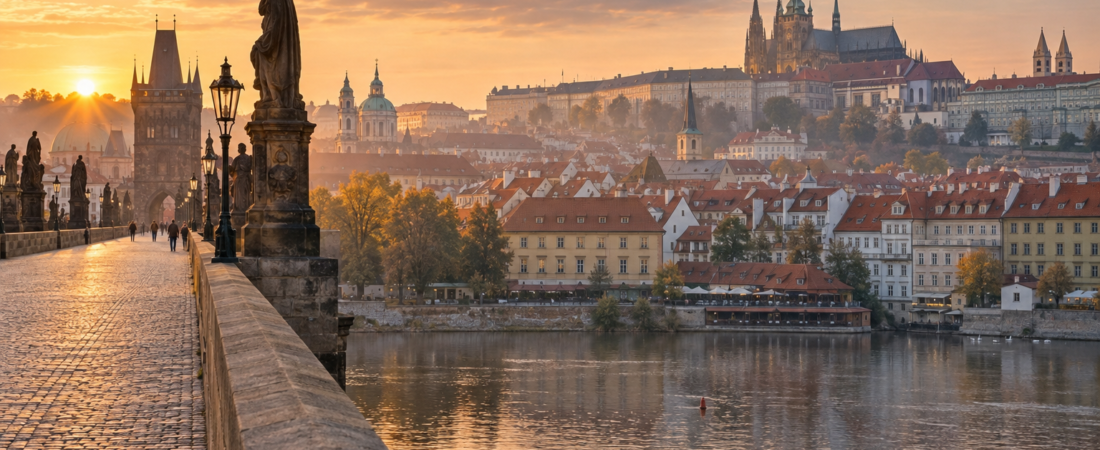
Prague combines medieval streets, Gothic churches, colourful Baroque buildings and riverside scenery in one of Europe’s most atmospheric capitals. The historic centre is compact enough to explore on foot, while an efficient network of trams and metro lines makes travelling between neighbourhoods straightforward.
This Prague travel guide covers the city’s essential attractions, best areas to stay, local food, public transport, expected costs and practical advice for first-time visitors.
Why Visit Prague?
Prague is the capital of the Czech Republic and is divided by the Vltava River. Its historic centre includes Old Town, the Jewish Quarter, Malá Strana and the Prague Castle district.
Visitors are drawn to the city for:
- Remarkable Gothic and Baroque architecture
- Prague Castle and St. Vitus Cathedral
- Charles Bridge and Vltava River views
- Historic squares and narrow streets
- Traditional Czech food and beer
- Classical music, theatres and museums
- Efficient and affordable public transport
- Easy day trips into the Czech countryside
Although Prague is one of Europe’s most visited cities, quieter neighbourhoods, parks and viewpoints can still provide a relaxed local experience.
Top Tours & Experiences in Prague
Discover popular Prague tours and experiences. Check current availability, ratings and prices before you book.
Affiliate disclosure: If you book through these links, we may earn a commission from Viator. This does not increase the price you pay.
Top Attractions in Prague
Prague Castle
Prague Castle is a large historic complex overlooking the city from the Hradčany district. Its most important sights include St. Vitus Cathedral, the Old Royal Palace, St. George’s Basilica and Golden Lane.
Visitors can walk through parts of the castle grounds without purchasing an admission ticket, but tickets are required to enter the main historical buildings.
The grounds open earlier than the interiors, making morning a good time to enjoy the courtyards before larger tour groups arrive. Tram 22 provides one of the easiest approaches to the castle.
Charles Bridge
Charles Bridge connects Old Town with Malá Strana across the Vltava River. The stone bridge is lined with statues and framed by historic towers at both ends.
It becomes extremely busy during the day. Visit around sunrise for quieter conditions, softer light and clearer views toward Prague Castle.
There is no charge to cross the bridge. Watch your belongings carefully when it becomes crowded.
Old Town Square
Old Town Square is surrounded by colourful façades, historic churches and important civic buildings.
Major landmarks include the Church of Our Lady before Týn, St. Nicholas Church and the Old Town Hall. Restaurants around the square can be expensive, but the surrounding streets contain more varied dining choices.
The square is particularly atmospheric early in the morning and after sunset.
Prague Astronomical Clock
The medieval Astronomical Clock is mounted on the southern side of the Old Town Hall.
Crowds gather before each hourly display. Arrive several minutes early if you want a clear view, or return later to examine the clock’s details without waiting for the performance.
A ticket is required to enter the Old Town Hall tower, which provides elevated views over the square and surrounding rooftops.
St. Vitus Cathedral
St. Vitus Cathedral dominates the Prague Castle skyline. Its Gothic interior contains stained glass, royal tombs, chapels and significant works of religious art.
Some areas may be viewed without a full castle ticket, while access to the main visitor route is included in the relevant castle circuit.
Dress respectfully and expect security checks when entering the castle complex.
Malá Strana
Malá Strana, or Lesser Town, lies below Prague Castle on the western side of the river.
The neighbourhood is known for Baroque architecture, quiet side streets, gardens and views toward the Old Town. Important sights include St. Nicholas Church, Kampa Island and the route leading up Nerudova Street.
Allow time to explore beyond the main route between Charles Bridge and Prague Castle.
Jewish Quarter
Prague’s Jewish Quarter, known as Josefov, contains historic synagogues, the Old Jewish Cemetery and the Jewish Museum.
A combined ticket covers several important sites. The area’s history is complex and moving, so allow sufficient time rather than treating it as a quick sightseeing stop.
Opening hours may be affected by Jewish holidays and the weekly Sabbath.
Wenceslas Square
Wenceslas Square is a broad boulevard in New Town rather than a traditional enclosed square.
It has played an important role in modern Czech history and leads toward the National Museum. Shops, hotels, restaurants and transport connections surround the area.
The square is convenient but busy, making nearby residential streets more suitable for a quieter stay.
Petřín Hill
Petřín Hill provides gardens, walking paths and panoramic views over Prague.
Visitors can walk uphill or use public transport when available. Attractions around the hill include Petřín Tower, a mirror maze and landscaped gardens.
The park is particularly pleasant during spring and autumn. Check the current status of the funicular before relying on it.
Vyšehrad
Vyšehrad is a historic fortress complex overlooking the Vltava River south of the centre.
Its grounds include defensive walls, the Basilica of St. Peter and St. Paul, a historic cemetery and peaceful parkland. General access to the outdoor complex is free, while some interiors require tickets.
Vyšehrad is usually quieter than Prague Castle and offers excellent river views.
Dancing House
The Dancing House is a modern architectural landmark beside the Vltava River.
Its curved design contrasts with Prague’s historic buildings. Visitors can photograph the exterior for free, while the building also contains commercial venues and a rooftop viewpoint.
Combine it with a riverside walk or a visit to nearby New Town.
Lennon Wall
The Lennon Wall in Malá Strana has been covered with colourful messages, artwork and references to peace and freedom.
It is free to visit and changes continuously. The site is relatively small, so combine it with Kampa Island and the surrounding streets.
Best Areas to Stay in Prague
Staré Město: Best for First-Time Visitors
Old Town places visitors within walking distance of Charles Bridge, Old Town Square and the Jewish Quarter.
It is extremely convenient but can be crowded and expensive. Ask for a room away from busy streets if noise is a concern.
Malá Strana: Best for Historic Atmosphere
Malá Strana offers cobbled streets, Baroque buildings and convenient access to Prague Castle and Charles Bridge.
The neighbourhood feels calmer during the evening after many daytime visitors leave.
Nové Město: Best for Convenience
New Town surrounds Wenceslas Square and extends toward the river.
It offers excellent transport connections, restaurants and a wide selection of hotels. Choose side streets away from nightlife areas for a quieter stay.
Vinohrady: Best for Local Restaurants
Vinohrady is a residential neighbourhood east of the historic centre.
It is known for cafés, restaurants, parks and attractive nineteenth-century buildings. Metro and tram services provide easy access to the major attractions.
Žižkov: Best for Budget Travellers
Žižkov has casual restaurants, pubs and accommodation that can be less expensive than the historic centre.
The terrain is hilly, but frequent tram connections make it practical for visitors who do not need to stay beside the main landmarks.
Holešovice: Best for Art and Modern Culture
Holešovice is a former industrial district with galleries, markets, cafés and contemporary cultural spaces.
It suits travellers looking for a different side of Prague while remaining connected to the centre by tram and metro.
Getting Around Prague
Prague has an integrated public-transport system consisting of metro lines, trams, buses and suburban services.
Metro
The metro is fast and useful for travelling between the city centre, main railway stations and outer neighbourhoods.
The network has three primary lines identified by letters and colours. Central transfer stations are clearly marked.
Trams
Trams are particularly useful within the historic districts and provide scenic journeys through the city.
Validate paper tickets when required before or immediately after beginning the journey. Mobile tickets must be activated according to the app’s instructions before travel.
Tickets
Ticket validity is based on time and allows transfers within the integrated system.
Current full-fare prices include:
- 30-minute mobile ticket: 36 CZK
- 90-minute mobile ticket: 46 CZK
- 24-hour mobile ticket: 140 CZK
- 72-hour mobile ticket: 340 CZK
Paper tickets cost slightly more. Prices can change, so confirm current fares through Prague Integrated Transport before travelling.
Walking
Most major attractions in Old Town and Malá Strana can be explored on foot.
Wear supportive shoes because cobblestones, hills and tram tracks can make walking tiring. Remain alert when crossing tram lines because trams have priority and approach quietly.
Travelling From Prague Airport
Václav Havel Airport Prague is located outside the city centre and is not directly connected to the metro.
A practical public-transport route is trolleybus 59 from the airport to Nádraží Veleslavín, followed by Metro Line A toward central Prague.
Other options include:
- Bus 100 connecting with Metro Line B at Zličín
- Bus 191 toward Anděl
- Airport Express bus to Prague Main Railway Station
- Official airport taxi service
- Pre-arranged private transfers
Regular public-transport tickets cannot be used on the special Airport Express service. Purchase the correct ticket for your chosen route.
What to Eat in Prague
Traditional Czech food is hearty and often includes meat, sauces, dumplings and potatoes.
Foods to try include:
- Svíčková, beef served with a creamy vegetable sauce and dumplings
- Goulash with bread dumplings
- Roast pork with cabbage and dumplings
- Fried cheese
- Open-faced sandwiches called chlebíčky
- Fruit dumplings
- Czech pastries and cakes
Trdelník is widely sold in the tourist centre, but it is not the best representation of everyday Czech baking.
Prague is also known for beer halls and traditional pubs. Order responsibly and check menu prices before choosing restaurants in heavily visited areas.
How Much Does Prague Cost?
Prague can be more affordable than several Western European capitals, although prices in the historic centre have increased.
Approximate daily spending, excluding accommodation, might include:
- Budget traveller: 1,000–1,800 CZK
- Mid-range traveller: 2,000–4,000 CZK
- Higher-end traveller: 5,000 CZK or more
Accommodation prices depend on the season, neighbourhood and local events. Restaurants immediately beside Old Town Square and Charles Bridge generally charge more than establishments a few streets away.
Always check whether service is included before deciding on a tip.
Best Time to Visit Prague
Spring and early autumn are excellent periods for sightseeing because temperatures are generally comfortable and the city is attractive for walking.
Summer brings long days, outdoor events and the largest crowds. Accommodation prices may also be higher.
Winter is cold and daylight hours are shorter, but Christmas markets and seasonal decorations create a distinctive atmosphere. Snow is possible but cannot be guaranteed.
Pack layers in every season because temperatures can change between morning and evening.
How Many Days Do You Need in Prague?
Three full days provide a good introduction to Prague.
A practical structure is:
- Day one: Old Town, Jewish Quarter and Charles Bridge
- Day two: Prague Castle, Malá Strana and Petřín
- Day three: New Town, Vyšehrad and riverside areas
Four or five days allow time for additional museums, neighbourhoods and a day trip.
Prague Visitor Pass
The official Prague Visitor Pass includes admission to numerous attractions and unlimited public transport, including journeys between the airport and the city.
It may provide value for travellers planning several paid attractions over a short period. Compare the pass price with the individual admission fees for the places you genuinely intend to visit before purchasing it.
Practical Prague Travel Tips
- The local currency is the Czech koruna, abbreviated CZK.
- Card payments are widely accepted, but carry some cash for smaller purchases.
- Decline unnecessary currency conversion when a payment terminal offers to charge your home currency.
- Use bank-operated cash machines and check all fees before confirming a withdrawal.
- Avoid exchanging money with individuals on the street.
- Wear comfortable shoes for cobblestones and hills.
- Keep valuables secure in crowded tourist areas and on public transport.
- Validate or activate the correct transport ticket before travelling.
- Tap water is generally safe to drink.
- English is commonly spoken in central hotels, restaurants and attractions.
- The standard European emergency number is 112.
- Check opening times because many museums close one day each week.
- Reserve popular attractions and restaurants in advance during peak season.
- Respect quiet residential streets, particularly late at night.
Is Prague Safe?
Prague is generally considered a safe destination for visitors. The most common concerns involve pickpocketing, tourist scams and overpriced services rather than violent crime.
Remain particularly careful around Old Town Square, Charles Bridge, busy tram services and major railway stations.
Use licensed or app-based transport, verify restaurant prices before ordering and keep payment cards and passports secure.
Book Your Prague Experiences
Ready to start planning? Compare popular Prague tours and activities, check current prices and availability, and book the experiences that suit your trip.
Affiliate disclosure: If you book through these links, we may earn a commission from Viator. This does not increase the price you pay.
Final Thoughts
Prague rewards travellers who explore beyond its most famous landmarks. Charles Bridge, Prague Castle and Old Town Square are essential, but neighbourhoods such as Vinohrady, Žižkov and Holešovice reveal a more relaxed side of the city.
Three days provide enough time for the principal attractions, while a longer stay allows visitors to enjoy parks, museums and neighbourhood restaurants without rushing.
Start early at major landmarks, use Prague’s efficient public transport and leave time for unplanned walks through the historic streets.
Continue planning your journey through our complete collection of city travel guides.