
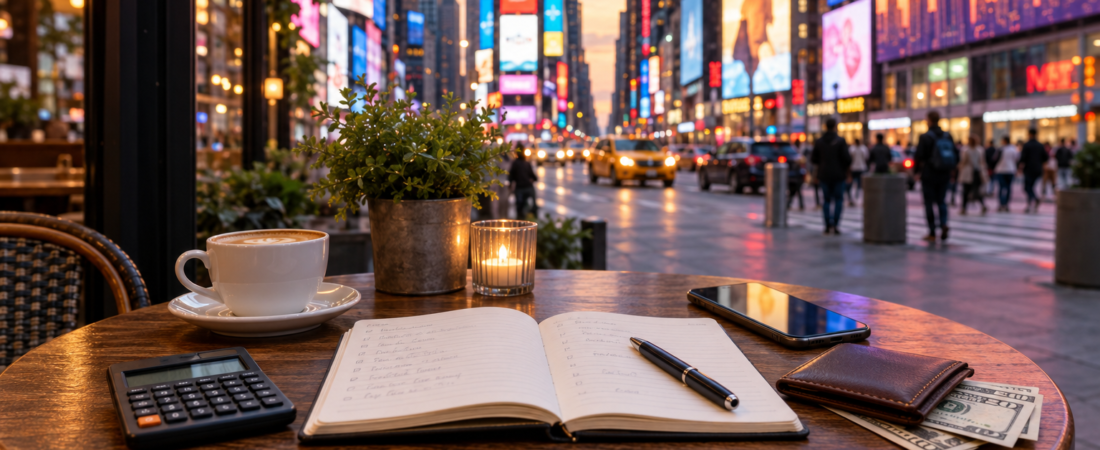
New York City is an expensive destination, but careful planning can make a visit manageable across several budgets.
Accommodation is usually the largest expense, followed by food and paid attractions. Public transport remains relatively affordable, while many famous sights—including Central Park, Brooklyn Bridge and the High Line—can be experienced for free.
This New York City travel budget explains the main costs, suggests realistic daily spending ranges and provides practical ways to save money without missing the city’s essential experiences.
Price note: All prices in this article are approximate and were checked at the time of publication. Prices may change.
How Much Does a Trip to New York City Cost?
A visitor should generally budget approximately:
- Budget trip: $130–$250 per person per day
- Mid-range trip: $300–$600 per person per day
- Comfortable or luxury trip: $600 or more per person per day
These estimates include accommodation, food, local transport and sightseeing but exclude international flights, shopping and travel insurance.
Solo travellers usually pay more per person for accommodation because they cannot divide the room cost. Couples and families may reduce the per-person expense by sharing a room, although larger rooms can be expensive.
Prices change according to travel dates, neighbourhood, hotel demand and major events. Always check live prices before finalising your budget.
Estimated Daily New York City Budget
Budget Traveller
A budget traveller using a hostel or basic room, public transport, inexpensive restaurants and mostly free attractions might spend:
- Accommodation: $60–$140
- Food: $35–$60
- Transport: $6–$15
- Attractions: $0–$40
- Other expenses: $15–$30
Estimated daily total: $130–$250
Finding accommodation at the lower end of this range may be difficult during busy periods. Booking early and considering Brooklyn, Queens or shared accommodation can help.
Mid-Range Traveller
A traveller staying in a standard hotel, eating at casual restaurants and visiting one or two paid attractions might spend:
- Accommodation: $200–$400
- Food: $70–$130
- Transport: $6–$25
- Attractions: $40–$100
- Other expenses: $25–$50
Estimated daily total: $300–$600
This range provides more flexibility but still requires comparing accommodation prices carefully.
Comfortable or Luxury Traveller
A visitor choosing a high-quality central hotel, restaurants, taxis and premium attractions might spend:
- Accommodation: $450 or more
- Food: $150 or more
- Transport: $30 or more
- Attractions and entertainment: $100 or more
- Other expenses: $50 or more
Estimated daily total: $600 or more
Luxury hotel rates and premium experiences can increase the total considerably.
Accommodation Costs in New York City
Accommodation will probably consume the largest portion of your budget. Rates vary dramatically according to season, events, neighbourhood and how early you book.
Typical options include:
- Hostel dormitories and shared rooms
- Basic private rooms
- Budget and limited-service hotels
- Standard 3- and 4-star hotels
- Apartment-style accommodation
- Luxury and boutique hotels
Manhattan is generally the most convenient location, but it is not always the most economical. Long Island City, Downtown Brooklyn and other well-connected neighbourhoods may provide better value on certain dates.
Compare the complete price rather than the first nightly rate displayed. Taxes and mandatory property fees can make the final amount significantly higher.
Check cancellation terms, room size, bed configuration and walking distance to the nearest subway station before booking.
Our guide to where to stay in New York City compares the advantages of the main neighbourhoods.
How to Save Money on Accommodation
Book Early
Reserve accommodation once your travel dates are confirmed, especially for spring, autumn and the December holiday period.
Choose a refundable rate when possible. You can continue checking prices and change the reservation if a better option appears.
Avoid the Most Expensive Dates
Hotel prices frequently increase around major holidays, festivals, sporting events and conferences.
Check New York’s event calendar before booking flights. Moving your trip by only a few days may produce a significant saving.
Stay Near Public Transport
A less expensive hotel outside Midtown can be a good choice when it is close to a direct subway connection.
However, a very cheap room with a lengthy or complicated commute may waste valuable sightseeing time.
Compare the Final Price
Do not compare hotels using only their advertised nightly rates. Proceed far enough through the booking process to see taxes, mandatory fees and the complete cost of the stay.
Food Costs in New York City
New York offers everything from inexpensive pizza slices and food carts to internationally recognised restaurants.
A reasonable daily food estimate is:
- Budget: $35–$60 per person
- Mid-range: $70–$130 per person
- Higher-end: $150 or more per person
Breakfast from a bakery or bagel shop can be considerably cheaper than a full hotel breakfast. Pizza, sandwiches, food halls, markets and casual neighbourhood restaurants are useful for affordable lunches.
Dinner prices vary widely. Remember that menu prices may not include sales tax, and tipping is customary at table-service restaurants.
How to Eat for Less
Choose a Simple Breakfast
Buy a bagel, pastry, fruit or coffee from a local bakery or deli instead of paying for a large restaurant or hotel breakfast.
Use Lunch Specials
Some restaurants offer better prices at lunch than during dinner. This can be a useful way to try a popular restaurant without paying its highest prices.
Explore Neighbourhood Restaurants
Restaurants in heavily visited areas such as Times Square can charge more because of their location. Walk several streets away or explore neighbourhoods such as Chinatown, Jackson Heights and Astoria.
Visit Food Halls and Markets
Food halls allow travellers to compare prices and choose from several cuisines. They are particularly convenient for families or groups with different preferences.
Carry Water
Bring a reusable bottle and refill it where permitted. Repeatedly purchasing drinks can quietly increase the daily total.
New York Transportation Costs
The subway and local buses are usually the most economical way to travel around New York.
As of September 2026, the standard subway and local-bus fare is $3 for most passengers. OMNY allows you to pay using a contactless bank card, smartphone, wearable device or OMNY card.
A seven-day automatic fare cap applies when eligible journeys are paid using the same card or device. Current fares and cap amounts can change, so check the MTA website before travelling.
Most visitors can limit daily transport spending by grouping attractions geographically and using the subway for longer distances.
Saving Money on Transport
- Use the subway rather than taxis for most journeys.
- Walk between attractions located in the same neighbourhood.
- Use the same card or device for every OMNY journey.
- Avoid travelling repeatedly between Uptown and Downtown during one day.
- Check airport public-transport options before booking a private transfer.
- Use taxis selectively when travelling with luggage or sharing the fare with several people.
Airport transport costs depend on the airport, destination, traffic and type of service. Compare public transport with the complete taxi or private-transfer cost.
Attraction Costs
Paid attractions can quickly increase your New York City travel budget. Observation decks, museums, harbour cruises and Broadway performances can each require a significant amount.
For example, standard adult admission to the Metropolitan Museum of Art is currently listed at $30, while Empire State Building observation-deck tickets begin at a higher price and can increase according to the experience selected.
Ticket prices and booking fees change. Check each attraction’s official website before adding it to your budget.
Instead of visiting multiple observation decks, select the one offering your preferred view. Similarly, choose museums that genuinely match your interests rather than attempting to visit every famous institution.
Free Things to Do in New York City
New York has enough free attractions to fill several days.
Popular free experiences include:
- Walk through Central Park.
- Cross Brooklyn Bridge.
- Explore Brooklyn Bridge Park.
- Walk along the High Line.
- Visit Times Square.
- See the 9/11 Memorial.
- Explore Grand Central Terminal.
- Walk through Greenwich Village and SoHo.
- Ride the Staten Island Ferry.
- Visit public areas of the New York Public Library.
- Explore neighbourhoods in Brooklyn and Queens.
- Enjoy waterfront parks and skyline viewpoints.
Some museums provide free or discounted admission at specific times or for eligible visitors. Conditions can vary, so confirm the details directly with the institution.
Are New York Sightseeing Passes Worth It?
A sightseeing pass can save money when it includes several expensive attractions you already intend to visit.
Before purchasing one:
- List the attractions you genuinely want to see.
- Find their normal admission prices.
- Add any required reservation or booking fees.
- Compare the total with the pass price.
- Check whether timed reservations are still necessary.
- Confirm the pass validity period.
Do not add unwanted attractions simply to justify buying a pass. A slower itinerary using individual tickets may provide better value and a more enjoyable experience.
Broadway and Entertainment Costs
Broadway tickets range from discounted seats to expensive premium locations. Prices depend on the production, day, demand and seating area.
To reduce costs:
- Compare weekday and weekend performances.
- Consider matinee shows.
- Check official same-day discount options.
- Enter authorised ticket lotteries where available.
- Remain flexible about the production and seating location.
- Avoid unofficial ticket sellers.
Comedy clubs, live music venues and sporting events also vary widely in price. Check whether food or drink minimums apply before booking.
Sample 3-Day New York Budget
The following example is for one mid-range traveller sharing a hotel room with another person:
Accommodation
3 nights at an estimated $150–$220 per person per night:
Estimated total: $450–$660
Food
Approximately $80–$110 per day:
Estimated total: $240–$330
Transport
Subway and bus journeys, plus occasional additional transport:
Estimated total: $25–$60
Attractions
One observation deck, one museum and one additional paid attraction:
Estimated total: $100–$200
Other Expenses
Snacks, small purchases and contingency money:
Estimated total: $60–$120
Estimated 3-Day Total
Approximately $875–$1,370 per person, excluding flights, insurance and shopping.
This is an example rather than a guaranteed cost. Accommodation prices alone can move the final total substantially.
Follow our 3-day New York City itinerary to organise nearby attractions efficiently.
Budgeting for Taxes and Tips
Advertised prices in New York may not include sales tax. Hotel bookings can also include taxes and mandatory fees.
Tipping is customary in restaurants, taxis and several personal-service situations. Research current local expectations before your trip and include tips within your daily allowance.
Check restaurant bills carefully because some establishments may automatically add a service charge, particularly for larger groups.
When Is New York Cheapest to Visit?
January and February often provide better accommodation value after the New Year holiday period. Cold weather and shorter days are the main trade-offs.
Summer hotel prices can vary, but July and August may offer occasional deals outside major events. The weather can be hot and humid.
Spring, autumn and December are popular periods, so accommodation demand is often stronger.
See our guide to the best time to visit New York City before selecting your dates.
Practical Money-Saving Tips
- Set a realistic daily limit before travelling.
- Reserve accommodation early using flexible cancellation where possible.
- Compare final prices including taxes and fees.
- Use public transport and walk between nearby attractions.
- Select one observation deck instead of several.
- Combine paid attractions with free neighbourhood experiences.
- Eat some meals at bakeries, markets and casual restaurants.
- Carry a reusable water bottle.
- Avoid unofficial ticket sellers.
- Keep emergency money separate from your main wallet.
- Notify your bank before travelling if required.
- Use a payment card without foreign-transaction fees when available.
- Check currency-conversion charges before accepting a card terminal’s suggested conversion.
Is New York City Possible on a Budget?
Yes. New York can be visited on a controlled budget if you secure affordable accommodation and limit expensive attractions.
The city’s parks, bridges, neighbourhoods, waterfronts and public spaces provide many memorable experiences without admission fees.
Spend money on a few priorities that matter to you and build the rest of the itinerary around free attractions, walking routes and affordable food.
Final Thoughts
A realistic New York City travel budget should account for accommodation, food, transport, attractions, taxes, tips and a contingency amount.
Accommodation will probably be your largest expense. Book early, compare total prices and consider well-connected areas outside the most expensive parts of Manhattan.
Use the subway, group nearby attractions together and balance paid experiences with New York’s many free sights.
For complete sightseeing, neighbourhood and transport advice, read our New York City travel guide.