
Choosing where to stay in Barcelona can significantly affect your experience of the city. Each neighbourhood has a distinctive atmosphere, and the best option will depend on whether you prioritise major attractions, historic character, nightlife, beaches or a quieter local setting.
This guide covers six of the best areas for first-time visitors, including their advantages, possible disadvantages and the types of travellers they suit.
Quick Guide to Barcelona’s Best Areas
Eixample: Best overall area for first-time visitors
Gothic Quarter: Best for history and central sightseeing
El Born: Best for culture, restaurants and atmosphere
Gràcia: Best for a relaxed local experience
Barceloneta: Best for beaches and the waterfront
Poblenou: Best for families and quieter coastal stays
1. Eixample: Best Overall Area
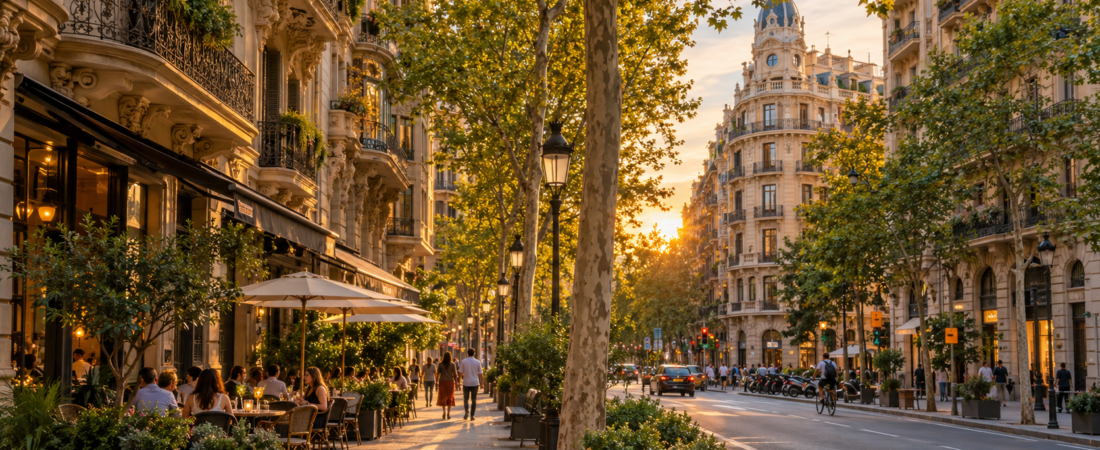
Eixample is our top recommendation for most first-time visitors. Its broad avenues, grid-like streets and central location make it easy to navigate, while excellent metro connections provide convenient access to the rest of Barcelona.
The neighbourhood contains several celebrated modernist buildings, including the Sagrada Família, Casa Batlló and La Pedrera. It also has a wide selection of hotels, restaurants, cafés and shops.
Eixample is divided into several sections. Staying near Passeig de Gràcia places you close to luxury shopping and famous architecture, while the Sagrada Família area provides convenient access to Gaudí’s basilica.
Best for: First-time visitors, couples, sightseeing and convenient transport.
Things to consider: Accommodation near Passeig de Gràcia can be expensive, and some streets experience considerable traffic.
2. Gothic Quarter: Best for History
The Gothic Quarter is the historic heart of Barcelona. Staying here places you among medieval streets, atmospheric squares, Barcelona Cathedral and many of the city’s oldest buildings.
La Rambla, Plaça de Catalunya, Port Vell and El Born are within walking distance. Numerous restaurants and cafés make the neighbourhood lively throughout the day and evening.
The Gothic Quarter is ideal for visitors who want to step outside their accommodation and immediately experience historic Barcelona.
Best for: History, short visits, central sightseeing and lively surroundings.
Things to consider: Some streets can be noisy at night, taxis may not reach every property, and older buildings sometimes have small rooms or limited lifts.
3. El Born: Best for Culture and Restaurants
El Born combines medieval architecture with fashionable restaurants, independent shops and cultural attractions. It is home to the Picasso Museum, the Basilica of Santa Maria del Mar and streets filled with cafés and boutiques.
The neighbourhood is within walking distance of the Gothic Quarter, Ciutadella Park and the waterfront. It offers a lively atmosphere while generally feeling slightly less dominated by large tourist groups than La Rambla.
El Born works particularly well for couples and travellers interested in dining, art and evening walks.
Best for: Couples, culture, restaurants and boutique accommodation.
Things to consider: Weekend evenings can be noisy, and some pedestrian streets are difficult to access by car.
4. Gràcia: Best for a Local Atmosphere
Gràcia was once a separate village and still retains a strong neighbourhood identity. Its narrow streets, small plazas, markets and independent businesses create a more relaxed atmosphere than central Barcelona.
Park Güell is located nearby, and metro services make it relatively easy to reach Eixample and the historic centre. Gràcia is a good option for travellers who prefer residential surroundings and local restaurants.
The area around Plaça del Sol is livelier, while streets farther away generally feel quieter.
Best for: Longer visits, local character, independent cafés and relaxed evenings.
Things to consider: It is farther from the Gothic Quarter and waterfront, so you will use public transport more frequently.
5. Barceloneta: Best for the Beach
Barceloneta is Barcelona’s traditional seafaring neighbourhood, located beside the Mediterranean. It provides quick access to Barceloneta Beach, the waterfront promenade, seafood restaurants and Port Vell.
This area suits visitors who want to combine city sightseeing with beach time. The Gothic Quarter and El Born are accessible on foot or by public transport.
Barceloneta becomes particularly lively during summer when the beaches and waterfront attract large crowds.
Best for: Beach lovers, summer trips and waterfront walks.
Things to consider: Accommodation choices are more limited, rooms may be compact and the area can become crowded and noisy during warmer months.
6. Poblenou: Best for Families and Quieter Stays
Poblenou combines residential streets, modern developments and convenient beach access. Rambla del Poblenou contains restaurants, cafés and shops, while the surrounding area has a calmer atmosphere than central Barcelona.
The neighbourhood is suitable for families and travellers who prefer more space and quieter evenings. Metro connections provide access to the main sightseeing areas.
Poblenou also appeals to visitors interested in Barcelona’s modern architecture and regenerated former industrial districts.
Best for: Families, quieter accommodation, beaches and longer stays.
Things to consider: It is farther from many historic attractions, making regular public-transport journeys necessary.
Best Area for First-Time Visitors
Eixample is the most practical choice for a first visit because it combines major attractions, good transport connections and a broad selection of accommodation and restaurants.
El Born and the Gothic Quarter are excellent alternatives for travellers who prioritise historic atmosphere and central sightseeing. Choose Gràcia for a more residential experience or Barceloneta and Poblenou for easier beach access.
Where to Stay Without a Car
A car is unnecessary for most visitors to Barcelona. Parking can be expensive, and many central streets are narrow, restricted or designed primarily for pedestrians.
Choose accommodation within walking distance of a metro station. Eixample, the Gothic Quarter, El Born and Gràcia all offer convenient access to public transport.
Tips for Booking Accommodation
Reserve early if travelling during summer, major festivals or large conferences. Accommodation prices can rise considerably when demand is high.
Read recent guest reviews and check whether the property has air conditioning, soundproofing and lift access. These details are particularly important in historic buildings.
Confirm the precise location before booking because property descriptions sometimes use the name of a famous neighbourhood even when the accommodation is situated farther away.
Keep valuables secure and remain aware of your surroundings in crowded tourist areas and public-transport stations.
How Many Nights Should You Stay?
3 nights is enough for a focused first visit covering Barcelona’s principal attractions. Four or five nights provides more time for museums, beaches, neighbourhood exploration or a day trip.
Follow our 3-day Barcelona itinerary for a practical sightseeing plan, and read our complete Barcelona travel guide for more attraction and transportation advice.
Final Thoughts
The best place to stay in Barcelona depends on your budget, interests and preferred atmosphere. Eixample offers the most balanced option for first-time visitors, while the Gothic Quarter and El Born provide historic surroundings close to central attractions.
Gràcia delivers a more local experience, and Barcelona’s coastal neighbourhoods are ideal for travellers who want to combine sightseeing with time beside the Mediterranean.