
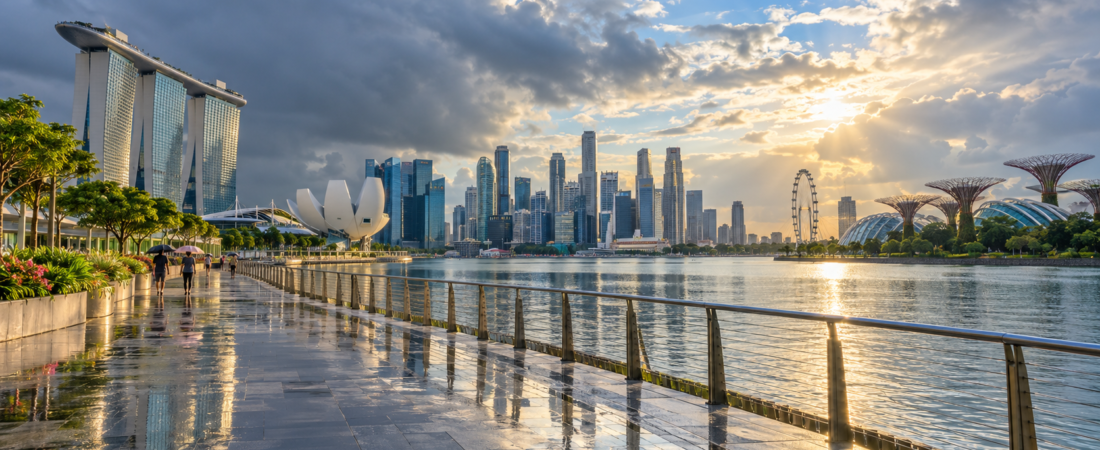
The best time to visit Singapore depends less on finding a completely dry season and more on balancing rainfall, humidity, hotel demand and major events. Singapore has a tropical climate, with warm temperatures and possible rain throughout the year.
For many first-time visitors, February to April offers a useful balance for outdoor sightseeing. However, Singapore remains enjoyable in every month if you carry an umbrella, plan outdoor activities for the morning and keep indoor alternatives available.
Price note: All prices in this article are approximate and were checked at the time of publication. Prices may change.
Best Time to Visit Singapore at a Glance
- Best overall period: February to April
- Best for relatively drier conditions: February and March
- Best for outdoor sightseeing: February to April
- Best for shopping and major events: June to September
- Best for Christmas atmosphere: December
- Best for Chinese New Year: January or February, depending on the year
- Best chance of lower hotel prices: Dates outside public holidays, school breaks and major events
- Generally wettest month: December
- Warmest-feeling period: Usually April to June
- Best for fewer event-related crowds: Selected weekdays in February, March, May and October
Singapore does not have four traditional seasons. Its weather is shaped by two monsoon periods and the transitional periods between them.
Understanding Singapore’s Climate
Singapore is close to the equator and remains warm, humid and rainy throughout the year.
The official tourism guidance describes typical temperatures of approximately 25–33°C. Temperatures can occasionally rise higher, particularly during warm and dry spells.
Visitors should expect:
- High humidity
- Strong sunshine
- Sudden tropical showers
- Afternoon thunderstorms
- Warm evenings
- Strong air conditioning indoors
- Relatively small seasonal temperature differences
Rain does not necessarily continue throughout an entire day. A morning can be sunny, followed by an intense afternoon shower and a dry evening.
Singapore’s Weather Seasons
Northeast Monsoon
Approximately December to early March
The Northeast Monsoon has two broad phases.
The wetter phase usually occurs during December and early January, when prolonged or widespread rain can develop.
The later dry phase, generally from late January into February or early March, can bring drier and occasionally breezier conditions.
First Inter-Monsoon Period
Approximately late March to May
Winds become lighter and more variable. Afternoon and early-evening thunderstorms are common.
Conditions can feel particularly hot because of strong sunshine, high humidity and reduced wind.
Southwest Monsoon
Approximately June to September
The Southwest Monsoon often brings warm, humid conditions and short showers, sometimes accompanied by strong winds.
Some periods are relatively dry, but rain remains possible. Singapore’s official weather service notes that daily highs can occasionally approach 35°C during this part of the year.
Second Inter-Monsoon Period
Approximately October and November
Light winds, high humidity and frequent afternoon thunderstorms are common.
Rainfall generally increases as Singapore approaches the wetter Northeast Monsoon period.
January: Wet Weather and Major Celebrations
January is warm and humid, with the Northeast Monsoon influencing local conditions. Periods of heavy rain remain possible, particularly earlier in the month.
Chinese New Year sometimes falls in January and sometimes in February. When it occurs in January, Chinatown becomes decorated and especially lively.
Advantages of Visiting in January
- Festive atmosphere
- Chinese New Year activities in some years
- Warm weather for indoor and outdoor attractions
- Green gardens and parks
- Extensive year-round attractions
Disadvantages
- Heavy rain remains possible
- Hotel demand can rise around Chinese New Year
- Some businesses alter their hours during holidays
- Popular cultural districts become crowded
Best Activities
- Chinatown decorations
- Gardens by the Bay
- Museums
- Jewel Changi Airport
- Hawker centres
- Marina Bay between showers
January is best for: Travellers who prioritise cultural celebrations and can remain flexible around rain.
February: One of the Best Months to Visit Singapore
February often falls within the drier phase of the Northeast Monsoon. Conditions can be breezier and rainfall may be more manageable than in December.
Chinese New Year frequently occurs in February, creating colourful celebrations but also additional demand.
Advantages
- Often relatively drier
- Good conditions for walking
- Possible Chinese New Year festivities
- Suitable for parks and neighbourhoods
- Comfortable breezes on some days
Disadvantages
- Accommodation demand around Chinese New Year
- Holiday closures or adjusted hours
- Crowds in Chinatown
- Rain remains possible
Best Activities
- Marina Bay waterfront
- Singapore Botanic Gardens
- Southern Ridges
- Chinatown
- Kampong Gelam
- Sentosa beaches
February is best for: First-time visitors seeking a strong balance of weather and outdoor sightseeing.
March: Excellent for Outdoor Sightseeing
March is another favourable month for many travellers. The Northeast Monsoon gradually transitions towards the inter-monsoon period.
Temperatures remain warm, but conditions can be useful for combining gardens, neighbourhood walks and waterfront attractions.
Afternoon thunderstorms become more likely as the month progresses.
Advantages
- Generally good sightseeing conditions
- Useful balance between rain and sunshine
- Suitable for walking and nature
- Outside the year-end peak
- Long daylight hours
Disadvantages
- Increasing heat
- Afternoon thunderstorms
- School-holiday demand during certain weeks
- Strong midday sunshine
Best Activities
- Gardens by the Bay
- Singapore Botanic Gardens
- Fort Canning Park
- East Coast Park
- Cultural neighbourhood walks
- Sentosa
March is best for: Outdoor attractions, parks and first-time itineraries.
April: Hot, Humid and Festive
April is part of the inter-monsoon period. Light winds and strong sunshine can make conditions feel particularly hot, while thunderstorms frequently develop later in the day.
Cultural and religious events vary by calendar year. Hari Raya Aidilfitri and other celebrations may fall around this period in certain years.
Advantages
- Lively cultural atmosphere
- Suitable for combining indoor and outdoor attractions
- Attractive evening activities
- No cold-weather preparation required
Disadvantages
- High heat and humidity
- Frequent afternoon thunderstorms
- Outdoor walking can be tiring
- Event dates may increase accommodation demand
Best Activities
- Early-morning Botanic Gardens
- Indoor museums during the afternoon
- Evening walks around Marina Bay
- Kampong Gelam
- Gardens by the Bay after sunset
April is best for: Festival travellers and visitors comfortable with tropical heat.
May: Hot Weather and Possible Better Value
May remains within or near the inter-monsoon period. It can feel very warm, and afternoon thunderstorms are common.
Because May sits outside several major international holiday periods, selected dates may offer better hotel value. Rates still depend on conferences, concerts and local holidays.
Advantages
- Potential accommodation value
- Fewer year-end visitors
- Good indoor-attraction options
- Suitable for food-focused trips
- Long evenings for sightseeing
Disadvantages
- Intense heat
- High humidity
- Afternoon thunderstorms
- Outdoor attractions require early starts
Best Activities
- Museums
- Hawker centres
- Cultural neighbourhoods
- Jewel Changi Airport
- Morning gardens
- Evening Marina Bay walks
May is best for: Flexible travellers seeking a possible balance between value and visitor numbers.
June: School Holidays and the Southwest Monsoon
June generally marks the beginning of the Southwest Monsoon. Days remain warm and humid, with showers and occasional thunderstorms.
Singapore school holidays and international summer travel can increase demand for family attractions.
Advantages
- Shopping activity
- Family events
- Warm evenings
- Suitable for Sentosa
- Mixture of indoor and outdoor attractions
Disadvantages
- School-holiday crowds
- Higher family-travel demand
- Hot afternoons
- Rain and thunderstorms remain possible
- Popular attractions can be busy
Best Activities
- Sentosa
- Orchard Road
- Gardens by the Bay
- Museums
- Singapore Oceanarium
- East Coast Park
June is best for: Families, shopping and travellers who enjoy a lively atmosphere.
July: Warm, Busy and Event-Focused
July continues the Southwest Monsoon pattern. Conditions can be warm and humid, but there may also be extended dry periods.
Shopping campaigns, school-holiday travel and cultural events can create a busy atmosphere.
Advantages
- Lively shopping districts
- Seasonal events
- Suitable for family attractions
- Good evening activity
- Possible dry periods
Disadvantages
- High humidity
- Visitor demand during holidays
- Strong sunshine
- Sudden showers
- Event-related hotel increases
Best Activities
- Shopping around Orchard Road
- Sentosa
- Night attractions
- Cultural districts
- Hawker centres
- Marina Bay
July is best for: Shopping, family entertainment and a busy city atmosphere.
August: National Day and Celebrations
Singapore celebrates National Day on 9 August. Decorations, rehearsals and events create a festive atmosphere around Marina Bay and other areas.
Exact public-access arrangements change each year. Roads, public spaces and transport can be affected during major rehearsals and the official celebration.
Advantages
- National Day atmosphere
- Flags and decorations
- Public events
- Possible fireworks
- Lively Marina Bay area
Disadvantages
- Crowds around celebration zones
- Road closures
- Higher hotel demand
- Restricted access to certain viewpoints
- Hot and humid weather
Best Activities
- National Day events
- Marina Bay
- Gardens by the Bay
- Museums
- Cultural neighbourhoods
- Evening waterfront walks
August is best for: Travellers who want to experience Singapore’s national celebrations.
September: Major Events and Hotel Demand
September remains part of the Southwest Monsoon period. Weather is warm and humid, with rain possible.
The Formula 1 Singapore Grand Prix is normally held around September or early October, although dates should be confirmed for the relevant year.
During the race period:
- Hotel prices can rise sharply
- Marina Bay becomes crowded
- Roads close around the circuit
- Public transport becomes busier
- Some attractions alter access arrangements
- Restaurants and rooftop venues fill quickly
Advantages
- Major international events
- Energetic nightlife
- Evening entertainment
- Exciting city atmosphere
Disadvantages
- Expensive event-period accommodation
- Road closures
- Crowded transport
- Noise near the circuit
- Restricted central access
September is best for: Formula 1 fans and travellers who actively want a major-event atmosphere.
Visitors not attending the event should compare alternative dates.
October: Thunderstorms and Cultural Events
October is part of the second inter-monsoon period. Afternoon thunderstorms can be frequent and intense.
Deepavali sometimes falls in October and sometimes in November. Little India becomes decorated with lights and festival displays.
Advantages
- Potential Deepavali celebrations
- Colourful Little India
- Possible shoulder-period hotel value
- Green parks and gardens
- Fewer year-end tourists
Disadvantages
- Frequent thunderstorms
- High humidity
- Outdoor schedules require flexibility
- Festival dates can increase local crowds
Best Activities
- Little India
- Indoor museums
- Gardens by the Bay
- Hawker centres
- Jewel Changi Airport
- Short neighbourhood walks between showers
October is best for: Cultural experiences and travellers comfortable with changing weather.
November: Rain, Festivals and Year-End Transition
November remains within the inter-monsoon period before the Northeast Monsoon becomes established.
Thunderstorms are common, but the month can also bring cultural events and early Christmas decorations.
Deepavali may fall during November in some years. Orchard Road’s festive displays also normally begin before December.
Advantages
- Festival atmosphere
- Christmas lights may begin
- Cultural events
- Attractive evening displays
- Possible value before peak year-end dates
Disadvantages
- Frequent rain
- High humidity
- Afternoon thunderstorms
- Increasing year-end demand
November is best for: Travellers who enjoy celebrations and do not mind tropical rain.
December: Wet Weather and Festive Crowds
December is generally Singapore’s wettest month according to long-term official climate information.
Northeast Monsoon surges can bring prolonged rain, cooler-feeling conditions and stronger winds. This is different from a short afternoon thunderstorm.
Christmas and New Year create lights, shopping activity and special events, particularly around Orchard Road and Marina Bay.
Advantages
- Christmas decorations
- New Year atmosphere
- Shopping and entertainment
- Slightly cooler-feeling rainy periods
- Excellent indoor attractions
Disadvantages
- Highest general rainfall
- Prolonged rain is possible
- Year-end hotel demand
- Crowded shopping districts
- Expensive holiday-period accommodation
- Outdoor plans may require changes
December is best for: Festive atmosphere, shopping and travellers who are comfortable prioritising indoor attractions during rain.
Singapore Weather by Month
| Month | General Conditions | Visitor Demand | Best For |
|---|---|---|---|
| January | Wet Northeast Monsoon conditions | High around Lunar New Year | Festivals and indoor attractions |
| February | Often drier and breezier | High around Lunar New Year | Outdoor sightseeing |
| March | Warm with increasing thunderstorms | Moderate | Parks and walking |
| April | Hot, humid and stormy | Variable | Cultural events and evenings |
| May | Hot with afternoon storms | Moderate | Possible hotel value |
| June | Southwest Monsoon; warm and humid | High during school holidays | Families and shopping |
| July | Warm with showers and events | Medium–high | Shopping and entertainment |
| August | Hot, humid and festive | High around National Day | National celebrations |
| September | Warm; major event demand | Very high around Formula 1 | Events and nightlife |
| October | Inter-monsoon thunderstorms | Moderate | Cultural districts |
| November | Frequent thunderstorms | Rising | Festivals and early Christmas displays |
| December | Generally the wettest month | High | Christmas and New Year |
Seasonal patterns are not guarantees. Check Singapore’s official short-term forecast during your visit.
Best Time for Singapore’s Main Attractions
Marina Bay
Visit throughout the year. Early morning and evening offer cooler conditions.
During major events, public areas and roads may be restricted.
Gardens by the Bay
The outdoor gardens are most comfortable early or after sunset. The Flower Dome and Cloud Forest are useful during hot or rainy afternoons.
Outdoor elevated attractions can close temporarily during storms.
Singapore Botanic Gardens
February and March are strong months for longer garden walks, but the gardens are suitable year-round.
Arrive early and avoid exposed routes during thunderstorms.
Sentosa
February to April can provide a useful balance for beaches and outdoor attractions. Rain remains possible in every month.
Water attractions may suspend operations during lightning or severe weather.
Chinatown
Chinatown is especially atmospheric around Chinese New Year, but expect crowds and altered business hours.
Outside festival periods, weekday mornings are quieter.
Little India
Visit around Deepavali for decorations and celebrations. Confirm the current year’s dates because the festival follows a religious calendar.
Kampong Gelam
Kampong Gelam is interesting throughout the year and particularly atmospheric around Ramadan and Hari Raya.
Religious dates change annually, so check current arrangements.
Southern Ridges
Plan this outdoor walk for a relatively dry morning. Avoid the exposed bridges during thunderstorms.
Best Time to Visit for Lower Hotel Prices
Singapore accommodation prices are influenced more by events and demand than by weather alone.
The greatest savings often come from avoiding:
- Chinese New Year
- Singapore school holidays
- National Day
- Formula 1
- Christmas and New Year
- Large exhibitions and conferences
- International concerts
- Long weekends
Potentially better-value periods include selected dates in:
- February after Chinese New Year
- March outside school holidays
- May
- October outside major events
- November before the year-end peak
These are general patterns. Always compare several date combinations.
Read our Singapore travel budget for detailed accommodation, food and transport estimates.
Best Time for Fewer Crowds
Singapore is a working city rather than a seasonal resort, so public transport and commercial districts remain busy throughout the year.
To reduce sightseeing crowds:
- Visit Marina Bay at sunrise.
- Enter Gardens by the Bay conservatories when they open.
- Visit the Botanic Gardens early.
- Explore Chinatown on a weekday morning.
- Avoid Sentosa during weekends and school holidays.
- Eat before or after standard mealtimes.
- Avoid major event dates.
- Reserve timed attractions in advance.
Best Time for Festivals and Events
Chinese New Year
Usually January or February. Chinatown is the centre of decorations and celebrations.
Some businesses close or reduce their hours during the main holiday.
Hari Raya Aidilfitri
The date changes annually. Kampong Gelam and Geylang Serai are important celebration areas.
National Day
Held on 9 August. Expect decorations, rehearsals, transport changes and crowds around celebration zones.
Formula 1 Singapore Grand Prix
Normally held around September or early October. Hotel demand and prices can rise dramatically.
Deepavali
Usually October or November. Little India is illuminated and decorated.
Christmas and New Year
Orchard Road and Marina Bay host lights and festive events. New Year’s Eve creates major crowds and transport demand.
Always verify current dates through official event organisers or Singapore’s official tourism calendar.
When Should You Avoid Singapore?
There is no month when every traveller should avoid Singapore, but certain periods may be unsuitable for specific preferences.
Avoid December If Rain Is Your Main Concern
December generally has the highest rainfall. Prolonged wet periods can affect beaches and long walking routes.
Avoid Formula 1 Dates If You Are Not Attending
Central accommodation becomes expensive, roads close and Marina Bay access can be complicated.
Avoid School Holidays for Quieter Family Attractions
Sentosa, wildlife attractions and shopping centres become busier.
Avoid Major Festivals If You Need Normal Business Hours
Public holidays can alter restaurant, shop and attraction schedules.
What to Pack for Singapore
Bring similar essentials throughout the year:
- Lightweight, breathable clothing
- Compact umbrella
- Light rain jacket
- Comfortable walking shoes
- Sunscreen
- Hat and sunglasses
- Refillable water bottle
- Insect repellent
- Light layer for air-conditioned interiors
- Modest clothing for religious sites
- Waterproof pouch for electronics
Quick-drying clothing is useful because humidity can slow normal drying.
How to Plan Around Rain
Begin Outdoors
Visit parks, waterfronts and neighbourhoods early, when conditions are often cooler.
Keep an Indoor Alternative
Useful wet-weather options include:
- Flower Dome
- Cloud Forest
- National Gallery Singapore
- National Museum
- ArtScience Museum
- Jewel Changi Airport
- Shopping centres
- Hawker centres
- Indoor Sentosa attractions
Check Lightning Risk
Leave exposed bridges, beaches, pools and elevated viewpoints when storms approach. Follow attraction staff and official safety warnings.
Use Covered Connections
Many MRT stations, shopping centres and central buildings have covered or underground connections.
Remain Flexible
Do not organise every hour around non-refundable outdoor activities. Tropical weather can change faster than long-range forecasts suggest.
Where to Stay in Different Seasons
During Wetter Months
Choose accommodation near an MRT station or connected shopping centre. Bugis, City Hall, Orchard Road and Marina Bay have useful covered infrastructure.
During Major Events
Stay outside the immediate event zone unless attending. MRT access usually makes it unnecessary to pay event-area hotel premiums.
During School Holidays
Book family rooms early, especially on Sentosa.
Compare the advantages of each neighbourhood in our guide to where to stay in Singapore.
Frequently Asked Questions
What is the single best month to visit Singapore?
February is one of the strongest choices because it can fall within the drier phase of the Northeast Monsoon. Chinese New Year may increase crowds and prices, depending on the year.
March is another good option outside school-holiday periods.
What is Singapore’s driest month?
Rainfall varies from year to year. February is generally associated with the drier Northeast Monsoon phase, but rain remains possible.
What is Singapore’s wettest month?
December is generally the wettest month based on long-term official climate patterns.
Does it rain all day?
Usually not, but Northeast Monsoon surges can bring prolonged rain. Many other showers are intense but relatively short.
Is December a bad time to visit?
No. December has Christmas and New Year activities, but visitors should prepare for heavier rain, crowds and higher hotel demand.
Is Singapore too hot in June?
June is hot and humid, and temperatures can occasionally become particularly high. Start outdoor activities early and take air-conditioned breaks.
When is Singapore cheapest?
There is no guaranteed cheapest month. Look for dates outside school holidays, Formula 1, Chinese New Year and the year-end festive period.
How many days should I spend in Singapore?
Three days cover the principal highlights, while four or five days allow Sentosa, museums and nature attractions at a slower pace.
Follow our 3 days in Singapore itinerary for an efficient first-time route.
Final Verdict
For most first-time visitors, February to April is the best time to visit Singapore. February and March often provide a useful balance for outdoor sightseeing, although rain and humidity remain possible.
June to September suits travellers interested in shopping, National Day or major events. October and November offer cultural celebrations but frequent thunderstorms, while December provides festive atmosphere alongside the year’s highest general rainfall.
Singapore can be visited successfully during any month. Choose dates that avoid expensive events when necessary, schedule outdoor attractions early and keep flexible indoor alternatives available.
Continue planning with our complete Singapore travel guide and discover affordable rainy-day and outdoor options among the best free things to do in Singapore.
Explore more places through our destinations page or browse our complete collection of itineraries.